
 1 hour ago
23
1 hour ago
23
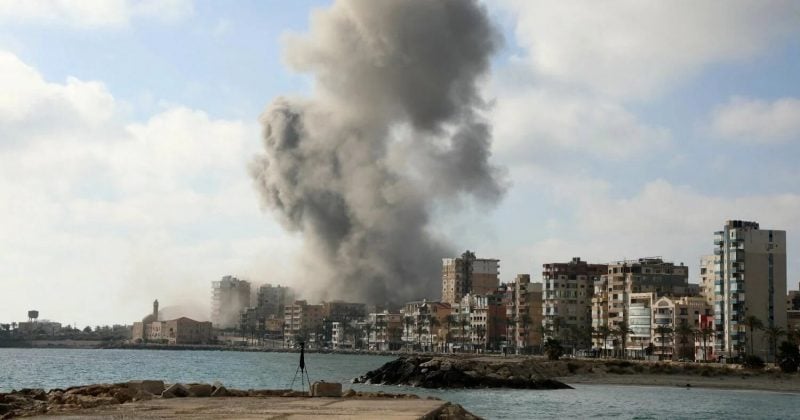
The European Union sanctioned Iranian military entities and individuals on June 8, 2026, marking the first time the bloc has deployed its newly created freedom of navigation sanctions regime. The targets: the Hormozgan Provincial Command of the Islamic Revolutionary Guard Corps Navy, along with two individuals, Mohammad Akbarzadeh and Hamid Hosseini, accused of disrupting maritime transit through the Strait of Hormuz.
The Strait of Hormuz handles roughly 20% of the world’s oil supply.
What the sanctions actually do
EU foreign policy chief Kaja Kallas confirmed the measures received unanimous backing from all member states.
The sanctions represent the inaugural use of a framework the EU adopted specifically to protect freedom of navigation and maritime trade routes.
The US imposed sanctions on Nobitex, Iran’s largest cryptocurrency exchange, just six days earlier on June 2, 2026. The reason cited was Nobitex’s connections to the IRGC. Washington had previously frozen $344 million in assets linked to Iranian entities.
The crypto angle no one can ignore
Iran has reportedly been exploring the use of cryptocurrencies, including Bitcoin, as a mechanism for toll payments through the Strait of Hormuz.
Iran’s cryptocurrency economy is estimated at $7.8 billion.
The US sanctioning of Nobitex was a direct shot at that infrastructure. Nobitex was Iran’s largest crypto exchange, serving as a critical on-ramp and off-ramp for digital asset activity across the country.
What this means for crypto investors
Compliance-focused blockchain solutions, the companies building tools that help exchanges and financial institutions screen for sanctioned wallets and flagged transactions, stand to benefit from exactly this kind of geopolitical tension.
The $7.8 billion figure attached to Iran’s crypto economy raises questions about how much sanctioned-nation activity is already flowing through major networks like Bitcoin and Ethereum without adequate detection. If that number is accurate, it represents a non-trivial source of transaction volume that could face sudden disruption as enforcement actions escalate.
Disclosure: This article was edited by Editorial Team. For more information on how we create and review content, see our Editorial Policy.






 English (US) ·