
 17 hours ago
19
17 hours ago
19
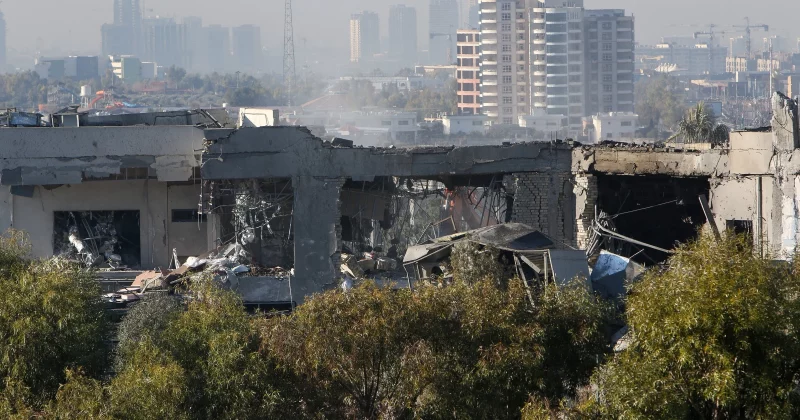
Israel struck military targets across western and central Iran on June 8, in what it described as a response to Iranian missile attacks on northern Israel. The exchange marks the first significant military escalation since the ceasefire that ended the 2026 Iran War in April, and the crypto market wasted no time pricing in the fear.
Liquidations across crypto markets exceeded $1 billion within hours of the strikes. Bitcoin fell more than 2%, Ethereum dropped roughly 7%, and the broader crypto market declined over 3% as traders hit the exits.
The geopolitical context
The two nations fought a direct conflict from February to April 2026, sometimes referred to as the 2026 Iran War, which ended with a fragile ceasefire. Before that, the Twelve-Day War in June 2025 had already demonstrated how quickly tensions in the region could spiral.
Iran’s missile launch, which targeted northern Israel, was the first reported attack since that April ceasefire. Israel’s airstrikes on Iranian military installations followed shortly after.
How crypto markets reacted
Bitcoin’s 2%-plus decline was relatively modest by its own standards, but it set the tone. Ethereum’s roughly 7% single-session drop was more painful, reflecting the broader altcoin rout that tends to amplify during risk-off episodes.
TON, the token associated with The Open Network, took one of the hardest hits, falling about 8% within 24 hours of the airstrikes.
The $1 billion-plus in liquidations is the headline number that matters most for understanding market mechanics. That figure represents leveraged positions, both long and short, that got forcibly closed as prices moved too fast for margin requirements.
What this means for investors
No major crypto protocols or companies have direct exposure to the Israel-Iran conflict. There’s no DeFi protocol with servers in Tehran, no stablecoin backed by Iranian sovereign debt. The impact is entirely sentiment-driven.
The flight-to-safety pattern is well-established at this point. Investors rotate out of high-volatility assets like crypto and into the US dollar and gold. The same dynamic played out during the Twelve-Day War in June 2025 and during the early days of the Iran War in February.
For traders, the key metrics to watch are trading volumes and liquidation data over the coming days. Elevated liquidations combined with high volume suggest a market that is actively de-risking, not just drifting lower on thin activity. The distinction matters because the former tends to create sharper bottoms, while the latter can grind on for weeks.
Disclosure: This article was edited by Editorial Team. For more information on how we create and review content, see our Editorial Policy.






 English (US) ·