
 3 months ago
100
3 months ago
100
- Five Bitcoin transactions sent a combined 107 BTC to a well-known burn address
- The coins are now effectively removed from circulation permanently
- Traders are debating whether the move was intentional, symbolic, or a costly mistake
Crypto traders are trying to figure out why someone just sent roughly $8.3 million worth of Bitcoin into one of the blockchain’s most infamous dead-end addresses. A series of five transactions moved a combined 107 BTC into the address 1111111111111111111114oLvT2, a long-recognized Bitcoin burn address tied to an all-zero public-key hash.
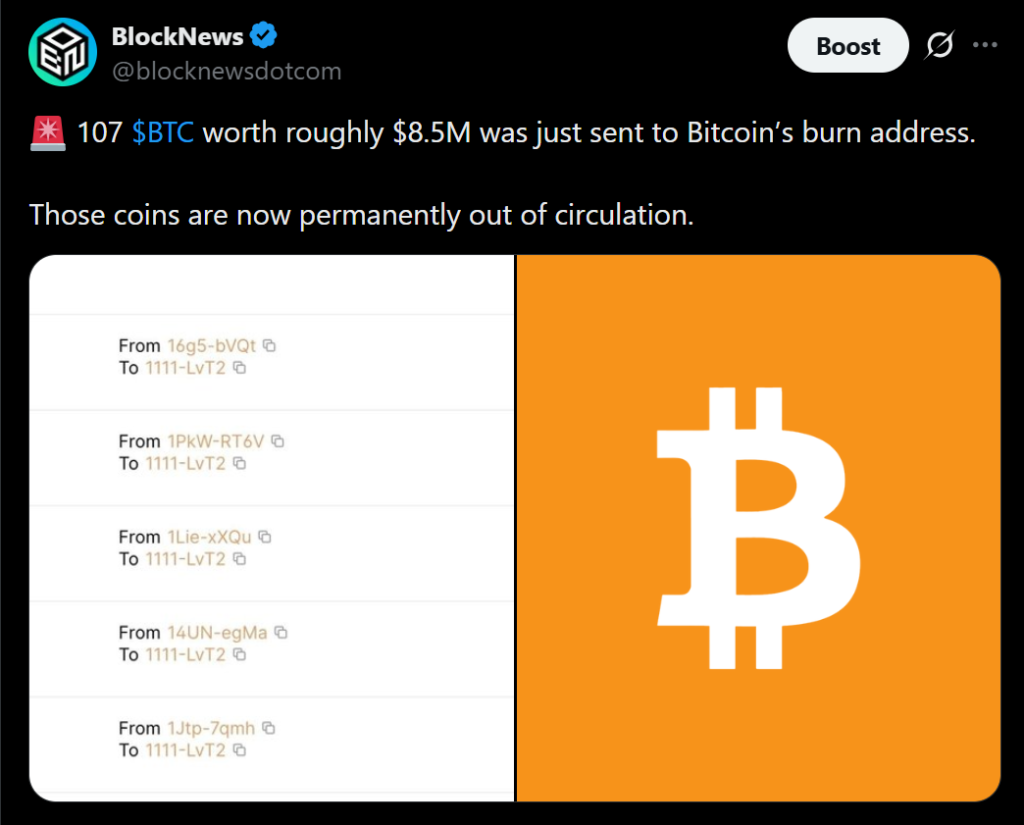
In simple terms, the Bitcoin now appears permanently inaccessible. The address is considered practically unspendable because no known private key exists that could retrieve the funds. Once coins land there, they effectively disappear from usable circulation forever.
This Wasn’t A Normal Whale Transfer
Large Bitcoin movements usually trigger speculation around exchange deposits, institutional custody, OTC settlements, or potential selling pressure. But this situation is different because the destination itself changes the meaning entirely.
The coins were not routed toward an exchange, custodial platform, or treasury wallet. They were sent directly into an address historically associated with proof-of-burn activity, blockchain experiments, dust accumulation, and intentionally destroyed Bitcoin.
That distinction matters a lot. A whale moving BTC toward Paxos or Coinbase suggests liquidity or custody restructuring. A company adding Bitcoin to reserves tells a different story tied to treasury management. But sending coins into a burn address creates a much cleaner supply effect, the Bitcoin still exists visibly onchain, but it effectively leaves the active market permanently.
Unless someone somehow discovers a private key for an address specifically designed to be unreachable, those coins are gone.
Burn Addresses Carry A Strange Role In Crypto
Burn addresses have existed for years across multiple blockchain ecosystems. Sometimes they are used symbolically, sometimes for tokenomics mechanisms, and occasionally for technical experiments or proof-of-burn systems designed to demonstrate commitment or reduce supply intentionally.
In Bitcoin’s case, the address involved here has accumulated countless tiny outputs over time from random users, developers, and experiments. What makes this event unusual is simply the scale.

107 BTC is not dust. It’s a very real amount of money, especially at current market prices hovering near the $77,000 range per Bitcoin. That’s why traders immediately started debating whether the transfer represented intentional burning, operational error, or something more symbolic entirely.
And honestly, crypto history contains enough accidental wallet disasters that nobody seems fully comfortable assuming intent immediately.
The Incident Highlights Self-Custody Risks Again
Beyond the mystery itself, the event also serves as another reminder of how unforgiving blockchain transactions remain. Sending funds to the wrong address, approving malicious transactions, or interacting with compromised wallets can permanently remove assets from user control with almost no recovery options afterward.
That risk extends far beyond Bitcoin alone. Ethereum and other smart contract ecosystems have seen rising address-poisoning attacks, phishing campaigns, and wallet manipulation tactics exploiting copy-paste habits and lookalike addresses.
Unlike traditional banking systems, blockchain transactions generally cannot be reversed once confirmed. That immutability is part of crypto’s appeal, but it also creates an environment where even a single operational mistake can become catastrophically expensive almost instantly.
Nobody Knows Why The Bitcoin Was Burned
At the moment, there’s still no confirmed explanation behind the 107 BTC transfer. The move could have been intentional destruction, symbolic signaling, a custody restructuring experiment, or simply an irreversible operational error.
But regardless of motive, the blockchain outcome remains the same. The coins now sit inside an address built around permanently inaccessible outputs, visible publicly forever while effectively removed from active market liquidity.
And in Bitcoin, scarcity stories always get attention eventually.
Disclaimer: BlockNews provides independent reporting on crypto, blockchain, and digital finance. All content is for informational purposes only and does not constitute financial advice. Readers should do their own research before making investment decisions. Some articles may use AI tools to assist in drafting, but every piece is reviewed and edited by our editorial team of experienced crypto writers and analysts before publication.








 English (US) ·