
 1 hour ago
26
1 hour ago
26
If you’re experiencing déjà vu watching AI chip stocks crater because of a Chinese AI model, you’re not imagining things. It happened in January 2025 with DeepSeek. And now it’s happening again, only bigger.
Moonshot AI’s release of the Kimi K3 model on July 17 sent the PHLX Semiconductor Index (SOXX) tumbling 10% in a single week, its steepest weekly decline since April 2025. The index has now fallen more than 20% from its recent peak, officially entering bear-market territory.
What happened and why it matters
Kimi K3 is not your average model update. With 2.8 trillion parameters, it’s a behemoth, and Moonshot AI is making the entire thing open-source. That combination, massive scale plus free availability, is the part that has Wall Street reaching for the antacids.
The damage was widespread across US markets. Nvidia, Broadcom, AMD, Arm, Intel, and Micron all took hits during the selloff week.
The contagion spread to Asia by late July. On July 28, South Korea’s Kospi index plummeted nearly 11%. SK Hynix, a major supplier of the high-bandwidth memory chips that power AI data centers, dropped 14%. Samsung Electronics fell 13%.
The DeepSeek playbook, round two
We’ve seen this movie before. When DeepSeek released its R1 model in January 2025, the result was approximately $1 trillion in losses across global tech stocks.
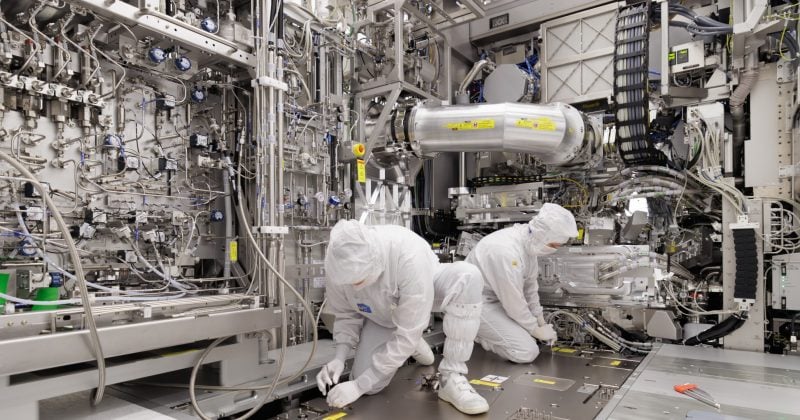
That acceleration has happened partly because of US policy, not despite it. Export controls initiated in 2025 were designed to slow China’s AI progress by restricting access to advanced chips. Instead, they appear to have turbocharged China’s push toward semiconductor self-sufficiency. State-led domestic equipment production efforts have bolstered Chinese chip manufacturing capabilities, creating an ecosystem that’s increasingly independent of Western supply chains.
What this means for investors
On the short-term side, the SOXX selloff coincided with profit-taking behavior following extensive prior gains in the sector.
The AI-crypto intersection has become one of the most active sectors in digital assets. AI tokens, decentralized compute networks, and GPU tokenization protocols all derive their fundamental value proposition from the assumption that compute remains expensive and scarce. If Chinese competition drives down the cost of AI hardware and inference, it could reshape the economics of projects like Render, Akash, and the broader decentralized compute thesis.
The risk that’s harder to model is regulatory escalation. If the US responds to Kimi K3 by tightening export controls further, it could create additional short-term disruption for chip companies that derive significant revenue from Chinese customers. Nvidia, for instance, has already seen its China business constrained by existing restrictions.
Disclosure: This article was edited by Editorial Team. For more information on how we create and review content, see our Editorial Policy.




 English (US) ·