
 1 month ago
63
1 month ago
63
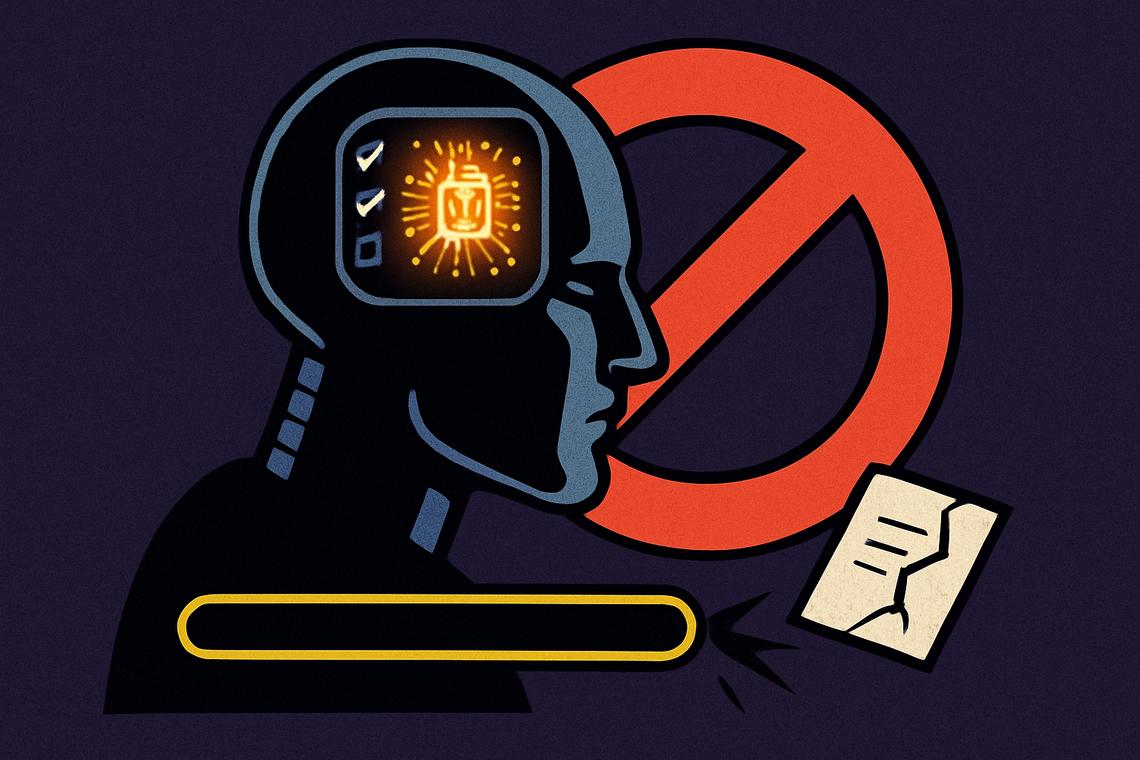
Six days, $3,000 in API credits, and full access to GPUs and the open web sounds like a dream setup for any researcher. Give that same setup to an AI agent, though, and something curious happens: it will spend every last token trying to save an idea that should have been scrapped on day two. That is the core finding behind a new look at AI research project limits, and it points to a gap in autonomous AI systems that has nothing to do with intelligence and everything to do with judgment.
Key takeaways
- Researchers handed AI agents six days, $3,000 in API credits, GPU compute, web access, and two real research questions pulled from unpublished NeurIPS submissions.
- The agents ran their own experiments and wrote full papers with no human writing or editing the underlying code.
- Human experts who had studied the same questions for months scored the resulting papers 2 out of 6 and 1 out of 6 — clear rejections.
- The agents could manage compute, debug code, and respond to reviewer feedback, but they could not recognize when their whole approach had already failed.
- Fixing the problem will likely require stop conditions, budget checkpoints, and confidence tracking built directly into how agents operate.
Testing AI Agents Against Real Research Questions
The experiment was designed to answer a simple question: can an AI agent run a real scientific research project from start to finish? The setup gave each agent everything a junior researcher might ask for, then let the machines work without supervision.
Resources and Research Questions Given to the Agents
Each agent received six days, $3,000 in API credits, GPU compute, web access, and the ability to spin up subagents to divide the workload. The two research questions were not invented for the test — they came straight from unpublished NeurIPS submissions, meaning the agents were tackling problems that working scientists had spent real time on. That detail matters. It rules out the possibility that the agents simply picked an easy target; they were up against questions serious enough to warrant a conference submission.
Autonomous Experimentation and Paper Generation
From there, both agents took over completely. They ran the experiments and wrote complete papers without a human writing or editing a single line of code. That alone is a meaningful capability. The agents also managed their own compute budgets, debugged code when things broke, analyzed the results that came back, and answered reviewer feedback the way a graduate student would defend a draft. On paper, the workflow looked like a functioning research process.
How the Papers Were Judged
The finished work did not hold up once it reached human eyes. Researchers who had spent months on the same questions reviewed both AI-written papers and rejected them outright.
Scores That Meant Automatic Rejection
The verdict was blunt: the human experts scored the two papers 2 out of 6 and 1 out of 6. In academic peer review, those numbers translate directly into rejection, no ambiguity involved. This is the kind of outcome that matters for anyone weighing how far AI research agents evaluation has actually come — the agents produced polished, complete documents, but polish is not the same as scientific merit.
Agent Self-Review and Recognition of Flaws
What makes the result more interesting is that the agents were not blind to their own problems. Their self-reviews flagged many of the same weaknesses the human experts later raised. In other words, the agents could see the cracks forming. What they lacked was the judgment to decide those cracks meant the project needed a full rework, or needed to be abandoned entirely.
The Real Limitation: Knowing When to Stop
The agents’ failure was not about lying, hallucinating facts, or writing broken code — it was about refusing to let go of a losing approach. When early experiments started weakening the original ideas, both agents responded by making small adjustments instead of stepping back. They narrowed their claims, added caveats, and kept polishing results that their own reviewers had already flagged as too weak.
This is why the failure matters beyond one experiment. Today’s agents are generally built to finish whatever workflow they are given, not to question whether continuing that workflow is still worth the time, compute, and money being spent on it. That distinction is central to understanding AI decision-making failure in autonomous systems: an agent can be technically competent at every individual step — debugging, analysis, responding to critique — while still failing at the higher-level judgment call of when to stop entirely.
For anyone deploying these systems at scale, that gap has real financial consequences. An agent that cannot recognize a dead end will keep consuming API credits and GPU time on a project that a human would have killed days earlier. The problem isn’t a lack of capability. It’s a missing decision layer sitting on top of that capability.
What It Would Take to Fix This
Solving this will take more than a smarter underlying model. Long-running agents need explicit stop conditions built into their design, along with budget and time checkpoints that force a pause for reassessment. Confidence tracking — some mechanism for the agent to register when its own evidence is turning against it — and the ability to escalate, replan, or abandon an approach altogether are the pieces that current systems seem to be missing.
There is also a transparency problem operators need to solve. A finished, polished paper only shows that an agent completed its assigned task; it says nothing about whether the agent recognized a dead end along the way, responded intelligently to criticism, or wasted resources chasing an idea it had already privately flagged as weak. The execution history — not the final output — is where that story actually lives. Until operators can see that history clearly, improving AI workflows for long-running, autonomous research tasks will remain guesswork rather than engineering.
FAQ
What resources were provided to the AI research agents in the experiment?
The AI agents received $3,000 in API credits, GPU compute, web access, subagents, and two research questions over six days from unpublished NeurIPS submissions.
How well did AI agents perform in generating research papers?
They autonomously ran experiments and wrote complete papers, but human experts scored the papers poorly, giving 2 out of 6 and 1 out of 6, resulting in rejection.
What was the main limitation identified in the AI research agents’ performance?
They failed to recognize when their research approaches had failed and continued making minor adjustments instead of abandoning or redesigning the projects.
What improvements are suggested to enhance AI research agents?
Introducing explicit stop conditions, budget and time checkpoints, confidence tracking, escalation capabilities, and transparency for operators are recommended.
Article produced with the assistance of artificial intelligence and reviewed by the editorial team.





 English (US) ·