
 4 months ago
76
4 months ago
76
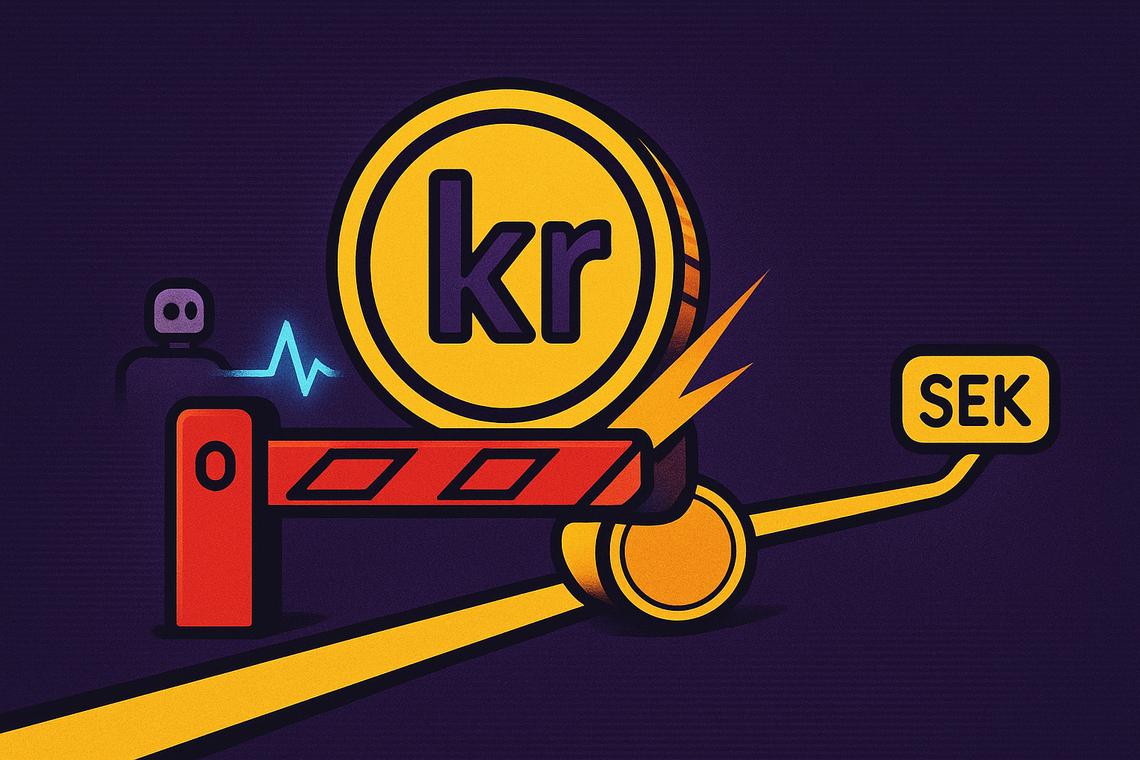
AllUnity is pushing deeper into Europe’s stablecoin race with a new move that ties local-currency digital money to AI-era payments. The Frankfurt-based firm plans to launch SEKAU, an AllUnity SEK stablecoin backed by Swedish krona reserves, while also rolling out a payment system built for transactions initiated by software agents.
That combination makes this more than a token launch. AllUnity is trying to build two things at once: a regulated Swedish krona stablecoin for a market still dominated by dollar-pegged crypto, and a payment rail for businesses that want to accept automated, programmable transactions.
The timing matters as well. The company is targeting a June debut for SEKAU, pending approvals, as European firms race to establish local-currency alternatives under the European Union’s crypto rules.
AllUnity plans a Swedish krona stablecoin
SEKAU is designed as a Swedish krona-backed stablecoin, and AllUnity says the token will be fully backed by Swedish krona reserves.
The company is aiming for a June launch, although that timeline depends on final approvals. If it arrives on schedule, the AllUnity SEK stablecoin would expand the firm’s lineup beyond products tied to the euro and Swiss franc, which it has already launched over the past year.
That broader product set matters because it points to a regional strategy rather than a one-off experiment. Instead of focusing only on the biggest European currency markets, AllUnity is building stablecoins linked to multiple local units. In turn, that suggests the company sees room for regulated digital money beyond the euro.
Issued under MiCA and overseen from Frankfurt
SEKAU is set to be issued under the European Union’s Markets in Crypto-Assets framework, placing it firmly inside Europe’s new regulated crypto structure.
AllUnity operates from Frankfurt and is regulated by BaFin. That gives the project a distinctly European identity at a time when the global stablecoin market is still overwhelmingly centered on dollar-backed tokens.
This is one reason the launch is drawing attention. A MiCA stablecoin tied to the Swedish krona offers a local-currency option in a sector where about 99% of the market is still dollar-denominated. For businesses and crypto users watching Europe’s digital asset rules take shape, SEKAU is more than a niche product. It is part of a broader contest over whether regulated regional currencies can win real usage in crypto payments.
AllUnity also has heavyweight backing behind it. The venture is supported by DWS, Flow Traders, and Galaxy Digital, a mix that strengthens its position in the market for regulated crypto products.
Agentic Payments extends AllUnity into AI transactions
Alongside the stablecoin push, AllUnity introduced Agentic Payments, a system designed for AI-driven transactions.
The setup is aimed at businesses that want to accept payments from autonomous software agents, especially for digital services, online content, and data. According to the company, the platform settles funds directly into local bank accounts and uses Coinbase’s x402 payment standard.
That gives the story a second layer. The stablecoin side is about issuing regulated digital money; the payments side is about making that money usable in automated commerce.
Why this matters is straightforward: much of the crypto payments conversation has focused on consumers and traders, but Agentic Payments is pitched at machine-led transactions. If businesses begin to use software agents to buy data, tools, content, or services automatically, then payment infrastructure has to work without manual intervention. AllUnity is trying to place itself in that flow early, using regulated rails and programmable payment standards rather than treating AI commerce as a future concept.
What AllUnity says the system is for
Chief technology officer Peter Grosskopf framed the new platform as a way for companies to operationalize agentic payments at scale. He also said businesses could develop new revenue streams through the system.
That language points to AllUnity’s broader pitch: not just crypto for trading, but blockchain-based payments that businesses can use inside real operating models.
Chief executive Alexander Höptner tied the SEKAU launch to Sweden’s role in the shift toward cashless payments, arguing that digital money needs to stay interoperable and globally accessible. In practical terms, that message aligns with AllUnity’s effort to combine regulated local-currency stablecoins with infrastructure that can plug into programmable commerce.
There is also a competitive backdrop. On the same day, Qivalis expanded its euro stablecoin initiative, and the banking consortium now includes 37 banks across 15 countries. That underlines how quickly the European market is moving as firms and financial groups try to build regional alternatives under clearer crypto rules.
For now, the challenge is execution. The company says both SEKAU and its new agentic payments system are waiting on final regulatory and operational approvals before the planned June rollout. If those launches move ahead, the bigger test will not just be whether Europe can produce more local stablecoins, but whether regulated digital currencies can become the payment layer for software agents as well as people.




 English (US) ·