
 1 hour ago
23
1 hour ago
23
Major fintech Revolut and some of its clients falling into a fraudsters’ extortion trap have once again highlighted the inefficiency and dangers of KYC/AML policies. Below, you will find alternatives to some platforms that require KYC, which will help you better manage your risks.
Key Takeaways
- Revolut attackers reportedly leaked sensitive customer data and demanded a ransom, highlighting the risks of centralized KYC databases.
- Non-KYC exchanges, VPNs, marketplaces and other services can help bitcoiners reduce exposure of their personal data.
- KYC services may offer better pricing and protections, but growing breaches raise questions about whether their costs and risks outweigh the benefits.
While Revolut claims that “a limited number” of its customers were affected by criminals posing as a government agency and requesting personal information, including bitcoin transactions, International Cyber Digest found that the attackers have already posted stolen sensitive data online.
According to the post, the fraudsters shared personal information about tennis player Alexander Shevchenko and Felix Römer, CEO of Gamdom and Skinscom. The criminals reportedly demanded that Revolut pay a ransom or face the publication of more customer data, alongside “insights into how the Revolut team operates.” Bitcoin.com News has contacted Revolut for comment on these claims and will update the story if it responds.
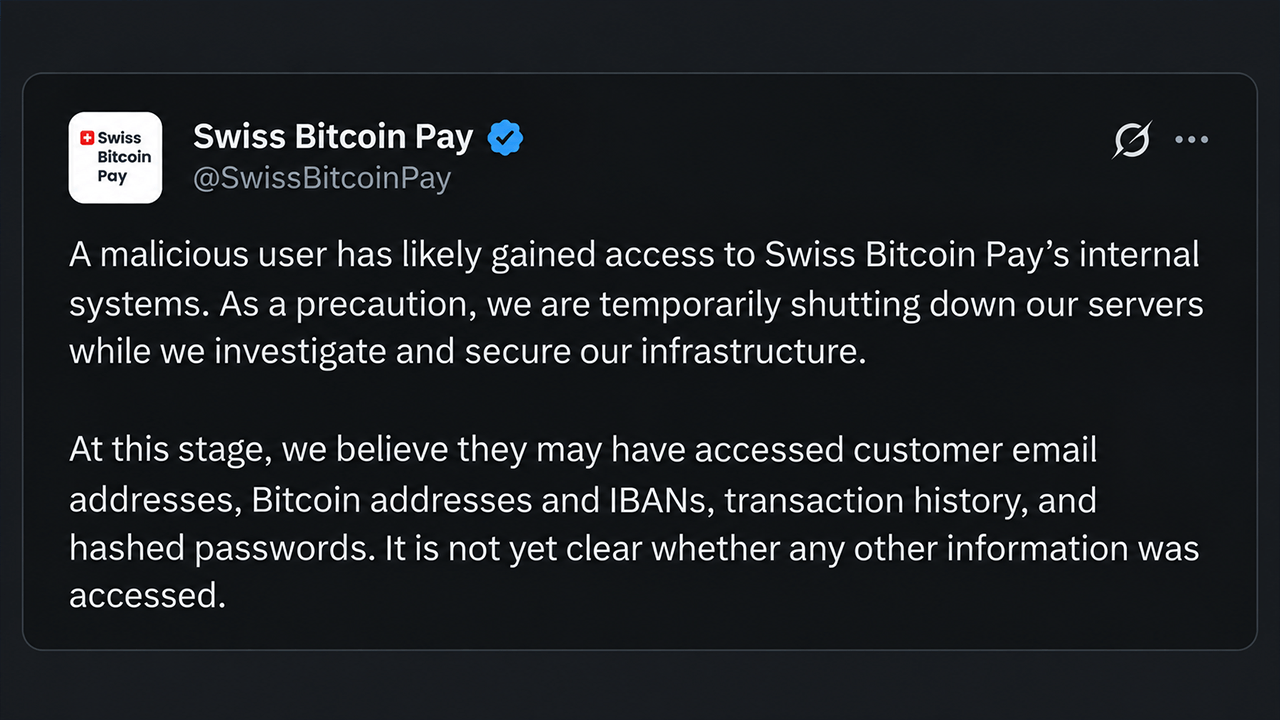
Meanwhile, today, Swiss Bitcoin Pay, a BTC payment processing company, said that it “believes” someone “may have accessed customer email addresses, Bitcoin addresses and IBANs, transaction history, and hashed passwords,” adding another example of ID-verification risks.
ID Verification Risks and Alternatives
Leaked personal information about bitcoin and crypto users has already led to multiple thefts and physical attacks, and the Revolut case might be just another source for criminals looking to target more people. As reported, onchain sleuth ZachXBT estimates that the incident was relatively small, targeting high-net-worth individuals.
While it might be true that your personal data has already been leaked somewhere and used by scammers to target you, you can opt out of many platforms that use KYC/AML (know your customer/anti-money laundering) policies to decrease the risk of further attacks.
For example, the six-year-old project Kycnot.me lists hundreds of platforms and tools across multiple categories that could help you decrease your KYC-related risks. However, this resource, founded by developer pluja, should be used carefully. According to its own warning, some projects have been uploaded by the community, have not been verified, or have turned out to be scams. You can filter the projects by their level of verification, but before using any platform, do your own research and keep track of its KYC policies, as these might change over time.
Non-KYC Bitcoin Exchanges, VPNs and Hosting Services
In either case, multiple non-KYC services, including P2P exchanges, VPNs, shopping platforms, SIMs, payment cards and others, have already been helping bitcoiners protect their personal data for many years.
For example, you can buy and sell bitcoin anonymously on peer-to-peer platforms such as Bisq, Hodl Hodl, RoboSats and Vexl, among others.
When it comes to non-KYC VPN services, Mullvad, NymVPN, and Obscura VPN might be options of choice. What’s more, they accept payments in both BTC and monero (XMR).
If you’re looking for non-KYC hosting services, Private Alps and Servers Guru claim they will never ask you to verify your identity. However, according to pluja, these platforms can still suspend your account if something goes wrong.
Non-KYC Marketplaces, SIM and Gift Cards
Meanwhile, VPNs might help with non-KYC peer-to-peer marketplaces such as Xmrbazaar, as internet service providers can still see that you visited the marketplace.
For non-KYC SIM cards, including eSIMs, simsup, nadanada and Crypton.sh might provide a solution. However, for example, simsup is flagged by Kycnot.me because its code is closed, while Crypton.sh is also criticized for “poor or no customer support,” and there is also a risk that your data might be shared with authorities.
In the non-KYC shopping and gift card category, Stealths promises not to ask for your personal data. However, it might reject payments via mixers or funds flagged as illegal, as these transactions are handled by a third party. Meanwhile, Shopstr, a marketplace powered by the Nostr protocol, not only offers non-KYC shopping but also does not have the technical ability to suspend your account.
The Key Question for Governments
This list of non-KYC services is not exhaustive and is still shorter than what the KYC world can offer. Moreover, government-regulated services with mandatory ID verification can still offer better pricing, such as on exchanges, a wider selection of goods and services on marketplaces, or better user protection and customer support.
Also, while some might see this as a disadvantage, others might benefit from having a paper trail for their transactions on exchanges, making it easier to deal with tax-related matters. However, non-KYC services are seemingly catching up on many fronts, making these platforms more attractive.
The key remaining question is what governments will do — will they keep tightening their KYC gates, or will they finally admit that KYC costs, risks, and damage outweigh all the benefits? The Basel Institute has already confirmed that its 2025 Global Money Laundering Index barely moved despite increased global spending on the AML fight.


 English (US) ·