
 9 hours ago
12
9 hours ago
12
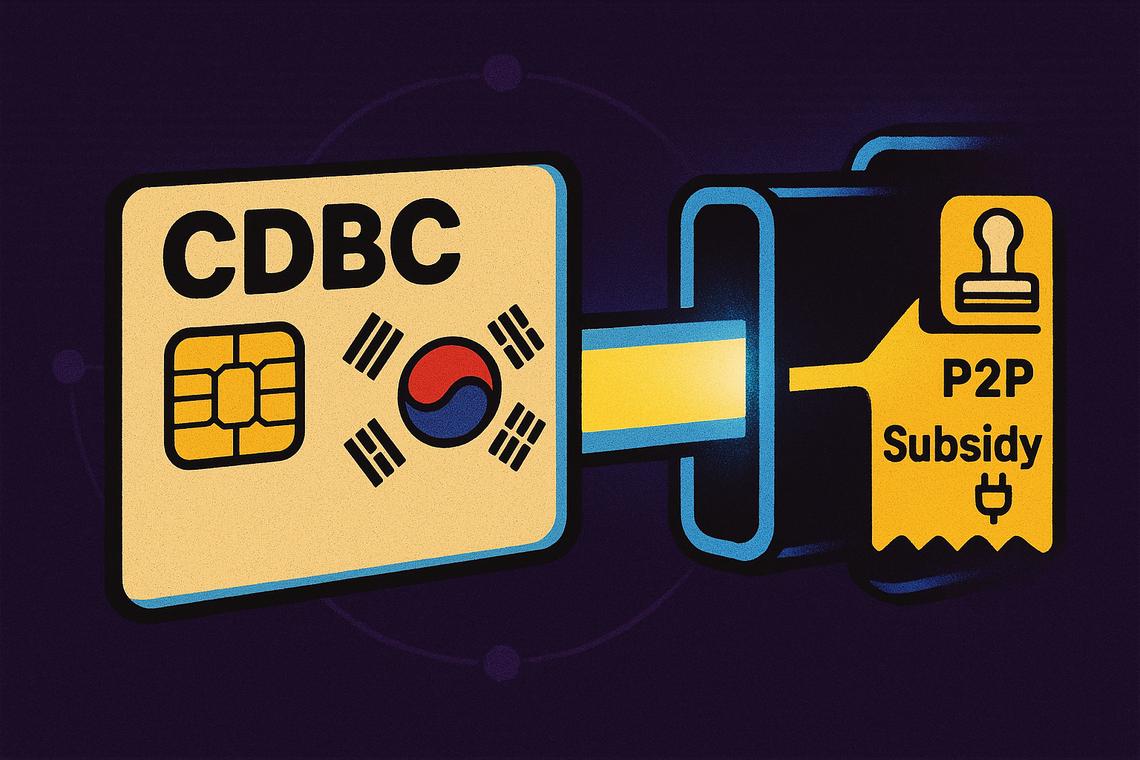
South Korea’s deposit tokens are moving closer to everyday financial life. The Bank of Korea is pushing its deposit token project toward full-scale deployment, expanding well beyond the initial pilot that verified basic payment functionality last year. What started as a controlled test with electronic wallets is now evolving into a system that could reshape how Koreans transfer money, receive government subsidies, and conduct business-to-business payments.
Key takeaways
- The Bank of Korea is preparing a second round of deposit token testing that adds person-to-person transfers, more merchants, and bank-specific services.
- Government subsidies for South Korea’s electric vehicle charging initiative will be distributed to companies through deposit tokens.
- Participating banks are calling for a long-term commercialization roadmap and investment in anti-money laundering and fraud detection systems.
- Deposit tokens are digital bank deposits issued on top of a wholesale CBDC infrastructure operated by the Bank of Korea.
- Toss Bank separately signed a memorandum of understanding with the Solana Foundation to explore blockchain-based cross-border remittances and stablecoin payments.
Bank of Korea Moves Toward Full-Scale Deposit Token Deployment
The scale of ambition here is significant. According to briefing materials submitted by the Korea Federation of Banks to the office of People Power Party lawmaker Lee Heon-seung, the Bank of Korea and its participating commercial banks have been actively discussing how to operate deposit tokens on a continuous basis — the kind of operational continuity that signals a genuine push toward formal rollout rather than indefinite experimentation.
What the First Pilot Established
The first pilot, conducted last year, had a clear and limited goal: prove that deposit tokens could work as a real payment instrument. Consumers used electronic wallets to complete actual purchases, validating the basic payment infrastructure. That phase was about functionality, not scale.
A financial industry official described the first test as focused primarily on payments, noting that the coming phase marks a qualitative shift into transfers and broader financial services. That distinction matters: payment and transfer are different legal, technical, and compliance categories, and moving into both simultaneously makes the next phase considerably more complex.
Next Phase to Expand User and Merchant Base
The second round of testing will expand across multiple dimensions at once. The Bank of Korea and participating banks plan to increase the number of users and merchants, introduce person-to-person transfers, and allow individual banks to launch their own services built around deposit tokens. That last element — bank-specific services — means South Korean lenders could differentiate their own deposit token offerings, creating a competitive layer on top of the shared wholesale CBDC infrastructure.
Banks themselves acknowledged the scale of this shift. In documents reviewed by the Korea Federation of Banks, commercial lenders argued that the expanded scope was not a simple continuation of the first pilot — it resembled a new project entirely, given the larger user and merchant networks and the additional financial functions involved.
EV Subsidies and Business-to-Business Treasury Payments
One of the most concrete new applications is a business-to-business treasury payment program. Under this plan, government subsidies tied to South Korea’s electric vehicle charging infrastructure initiative would be distributed to companies in the form of deposit tokens. This is a meaningful real-world use case: rather than routing subsidies through conventional banking transfers, the government would issue tokenized payments directly into a CBDC-backed system.
That move could serve as an important proof-of-concept for programmable government disbursements — a capability that central banks globally have identified as one of the most compelling arguments for CBDC-adjacent infrastructure. If the EV subsidy program works smoothly, it creates a template for other government payment flows.
Banks Push Back on Scope, Demand Long-Term Roadmap
Expanded ambition comes with expanded demands. Participating banks told the Bank of Korea that the new functions would require significant investment across several infrastructure categories.
Their requirements included:
- Anti-money laundering systems and suspicious transaction reporting capabilities
- Fraud detection infrastructure
- Further technology development and dedicated budget allocations
- A long-term commercialization roadmap covering plans beyond the testing phase
The banks also urged authorities to adopt a more realistic implementation schedule — a pointed message that the current pace of expansion is creating operational pressure. The Bank of Korea subsequently adjusted the project timeline after discussions with participating institutions and provided consulting support related to commercialization preparations.
The industry’s call for a long-term roadmap reflects a tension common to central bank digital infrastructure projects globally: regulators and central banks move at policy timelines, while commercial banks face the practical cost of building compliance systems that may or may not be required, depending on how regulatory frameworks eventually settle. For Korean lenders, committing to major anti-money laundering and fraud detection investments without clarity on commercialization creates real financial exposure.
Toss Bank and Solana Foundation Enter the Picture
The Bank of Korea’s deposit token effort is not the only tokenized money development in South Korea right now. On June 22, Toss Bank announced a memorandum of understanding with the Solana Foundation to test blockchain infrastructure for cross-border remittances and settlements. Under that agreement, the two parties will study stablecoin-based transfers, payment models, tokenized assets, and other digital asset services, beginning with a proof-of-concept focused on international remittances.
The Toss Bank–Solana collaboration sits in a notably different part of the digital payments ecosystem. The Bank of Korea’s deposit token initiative operates through a CBDC-based banking framework, grounded in the central bank’s wholesale infrastructure. The Toss Bank project, by contrast, focuses on public blockchain networks and stablecoin applications — a distinction that matters for regulatory treatment, interoperability, and systemic risk. Both represent Korean financial institutions increasing their involvement with tokenized money, but they reflect different philosophies about where that infrastructure should be anchored.
Together, these developments signal that South Korea’s financial sector is running parallel experiments across the tokenized money spectrum — from central bank-controlled CBDC frameworks to public blockchain stablecoin applications — hedging against uncertainty about which model will ultimately dominate.
FAQ
What are deposit tokens in the Bank of Korea project?
Deposit tokens are digital bank deposits issued by commercial banks on top of a wholesale central bank digital currency infrastructure provided by the Bank of Korea. They allow consumers and businesses to transact using tokenized versions of conventional bank deposits.
What new functionalities will the next phase of the deposit token project include?
The second round of testing will add person-to-person transfers, expand the number of participating merchants, allow individual banks to launch their own deposit token services, and introduce a business-to-business treasury payment program.
How are government subsidies related to the deposit token project?
Government subsidies linked to South Korea’s electric vehicle charging infrastructure initiative will be distributed to companies in the form of deposit tokens, serving as a real-world test of programmable government disbursements through the CBDC-backed system.
What challenges have banks highlighted in expanding the deposit token project?
Banks cited the need for anti-money laundering systems, suspicious transaction reporting, fraud detection infrastructure, additional technology development, dedicated budget allocations, and a long-term commercialization roadmap that provides clarity on plans beyond the testing phase.
Article produced with the assistance of artificial intelligence and reviewed by the editorial team.






 English (US) ·