
 2 months ago
32
2 months ago
32
- Bitcoin’s quantum threat is more about governance than technology
- Several solutions exist, but each comes with trade-offs and risks
- Institutional pressure could accelerate decisions if consensus lags
Bitcoin developers, at least on paper, already have ways to deal with quantum computing risks. The tricky part isn’t building the solution, it’s getting everyone to actually agree on one before it’s too late. That’s really the heart of the issue. According to Guillaume Girard from UTXO Management, the real challenge isn’t technical at all, it’s political, and maybe even social in a way that Bitcoin hasn’t fully dealt with before.
In his recent commentary, Girard points out something people often overlook. A quantum computer powerful enough to break Bitcoin doesn’t exist yet, and honestly, it might not for years, maybe longer. But Bitcoin moves slowly when it comes to change, almost like a government body debating laws, and that delay could matter more than the threat itself.
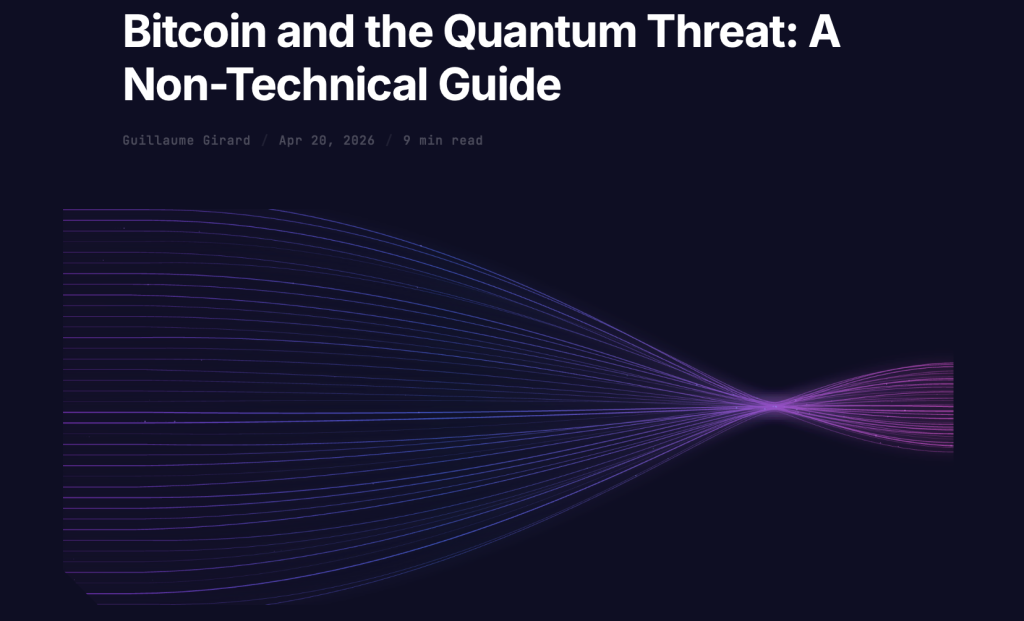
The Quantum Risk Is Real, Even If It’s Distant
Bitcoin’s security today relies on elliptic curve cryptography, which is what keeps private keys safe and wallets secure. The concern is that a sufficiently advanced quantum computer, using something like Shor’s algorithm, could reverse-engineer those keys from public data. If that happens, well… it opens the door to large-scale theft, not just isolated incidents.
Some recent research from Google suggests the bar for this kind of machine might be lower than previously thought, potentially under 500,000 qubits instead of the earlier 10 million estimate. That’s still a massive technical hurdle, but it brings the timeline closer, at least theoretically. And there’s already a weak spot, around 1.7 million BTC sitting in older wallet formats where public keys are exposed, making them easier targets if quantum capabilities ever reach that level.
Solutions Exist, But None Are Simple
There are proposals floating around that try to address this. One of them, BIP-360, introduces a new transaction type designed to hide public keys more effectively, reducing exposure. Another, BIP-361, outlines a phased migration plan away from vulnerable systems, though it comes with a catch, wallets that don’t upgrade in time could end up frozen, which… isn’t exactly ideal.
Then there’s a more unconventional idea called Hourglass. Instead of preventing theft entirely, it would limit how quickly stolen coins could be moved, maybe just one BTC per block. It’s a bit like damage control rather than prevention, slowing things down enough to reduce chaos in the market.
Still, none of these options are perfect. Some proposals even suggest burning vulnerable coins after a deadline, which would fix the issue technically but raises serious concerns about censorship and Bitcoin’s core principles. And that’s where things get messy, because every solution has trade-offs, and not everyone will agree on which compromise is acceptable.
Consensus Might Be the Real Bottleneck
What makes this whole situation more complicated is that Bitcoin doesn’t have a central authority. Any major change requires broad agreement across developers, miners, users, and now, increasingly, large institutions. And that last group is becoming harder to ignore.
Some institutions are already reacting. Jefferies, for example, removed Bitcoin from a pension portfolio earlier this year, citing quantum risk as a concern. At the same time, Michael Saylor has launched a Bitcoin Security Program, framing the issue more as a long-term engineering challenge rather than an immediate crisis. Meanwhile, analysts at Citi have estimated that the broader quantum threat to crypto could be worth trillions, which… puts things into perspective.
A Race Against Time, Even Without a Clock
In the end, Girard’s view is fairly balanced. The real race isn’t just about building a quantum computer, it’s about whether Bitcoin can adapt quickly enough before one exists. Right now, things seem manageable, but the timeline is unclear, and that uncertainty is part of the risk.
What’s changing, though, is who’s paying attention. The marginal buyer of Bitcoin isn’t just retail anymore, it’s governments and major asset managers, and they tend to have less patience for slow-moving decisions. If they feel progress isn’t happening fast enough, they might push for change in ways the network isn’t fully prepared for.
And that’s the uncomfortable part. The threat may still be years away, but waiting for certainty… might actually be the bigger gamble.
Disclaimer: BlockNews provides independent reporting on crypto, blockchain, and digital finance. All content is for informational purposes only and does not constitute financial advice. Readers should do their own research before making investment decisions. Some articles may use AI tools to assist in drafting, but every piece is reviewed and edited by our editorial team of experienced crypto writers and analysts before publication.









 English (US) ·