
 2 hours ago
16
2 hours ago
16
Bitcoin’s price broke $85,200 earlier today for the first time in over eight months, yet the Coinbase Premium Index, the market’s favorite gauge of U.S. spot demand, slid back below zero.
Key Takeaways
- Cryptoquant’s Coinbase Premium Index read about -0.02 on Sept. 21 as BTC trades near $85,000.
- Over $260 million in shorts were liquidated within 60 minutes as bitcoin cleared $84,000.
- Bitcoin ETFs netted just $6.21 million from Sept. 14-18; a sustained positive premium is the next test.
The Number That Didn’t Move
BTC has climbed about 6% over the past day and printed an intraday high of $85,248 just as $260+ million in short positions were liquidated in just 60 minutes. That is a sharp turn from the weekend, when Bitcoin.com News described bitcoin’s price hitting an $82K wall after a $7,000 rebound.
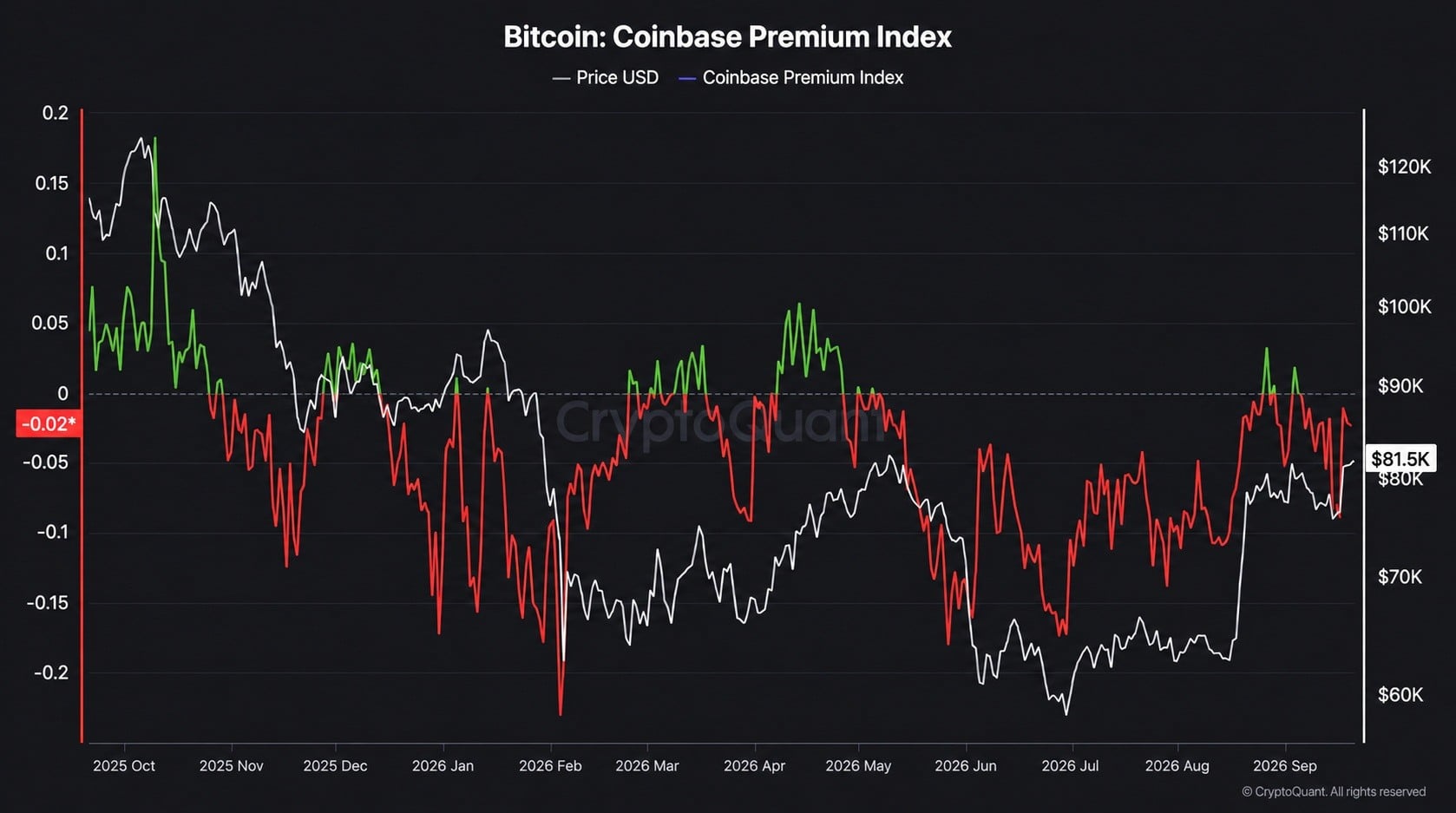
That said, one prominent market gauge didn’t join in on the celebration. Onchain analytics firm Cryptoquant flagged that the Coinbase Premium Index had turned negative again, and its chart showed the index at roughly -0.02 with BTC near $81,500. The firm noted:
But from a market-structure perspective, a sustained return to positive territory would make the current BTC recovery more convincing.
What Is the Coinbase Premium Metric, Anyway?
The index measures the gap between bitcoin’s price on Coinbase, which trades against the U.S. dollar, and on Binance, which trades against the tether stablecoin (USDT). Coinbase serves as a proxy for American institutional and dollar-based buyers, so a negative reading means U.S. buyers are paying less than the rest of the world.
This has been the default setting for most of 2026. In July, Bitcoin.com News reported that the premium had spent 50 straight days in negative territory, the longest run on record at that point. Cryptoquant’s chart shows only brief green stretches since, including a short one in late August.
There is a nuance worth keeping since the reading is less negative than it was last week. On Sept. 15, the day the CLARITY Act failed in the Senate, the discount deepened to about -0.07%. So while U.S. selling pressure has eased, it just hasn’t turned into buying.
Who Actually Pushed Bitcoin’s Price Up?
If Americans weren’t bidding, the obvious suspect is leverage and prominent trader Fabius argued recently that the bounce “looks mostly driven by leverage + a short squeeze, not clean spot demand,” adding that derivatives volume had been running at four to seven times spot volume. The $260 million liquidation wave fits that story, given that when shorts are forced to buy back, prices jump without any new long-term buyer showing up.
Cryptoquant had flagged the same split a week earlier. With BTC near $77,600 on Sept. 14, the firm’s data showed a negative premium alongside a taker buy/sell ratio of 1.12, which signals aggressive leveraged buying. The same report laid out Cryptoquant’s bull-market confirmation line, i.e., a close above $81,700, the average closing price of the past year.
Bitcoin’s price is now trading above that line intraday, but the confirmation requires a close, and the premium is the second half of that test.
The Macro Backdrop Hasn’t Changed
The Federal Reserve raised its target range by 25 basis points to 3.75%-4% on Sept. 16, its first increase in 1,148 days. The 10-year Treasury yield had also climbed above 5% as of that week. That is not the environment in which cautious U.S. allocators rush back into risk.
A negative premium during a rally doesn’t mean the rally is fake; it means buyers who tend to hold haven’t confirmed it.







 English (US) ·