
 2 months ago
75
2 months ago
75
- Bitcoin briefly fell to around $57,700 before rebounding above $60,000 after weaker-than-expected U.S. jobs data.
- A softer labor market increased hopes that the Federal Reserve could pause or cut interest rates sooner.
- Despite the recovery, the Crypto Fear & Greed Index remains deep in Extreme Fear, signaling continued market uncertainty.
Bitcoin staged a dramatic recovery after briefly falling to around $57,700 overnight, its lowest level of the year, before climbing back above the $60,000 mark. The sharp reversal followed a weaker-than-expected U.S. jobs report that initially rattled financial markets before investors shifted their focus to what the data could mean for future Federal Reserve policy.
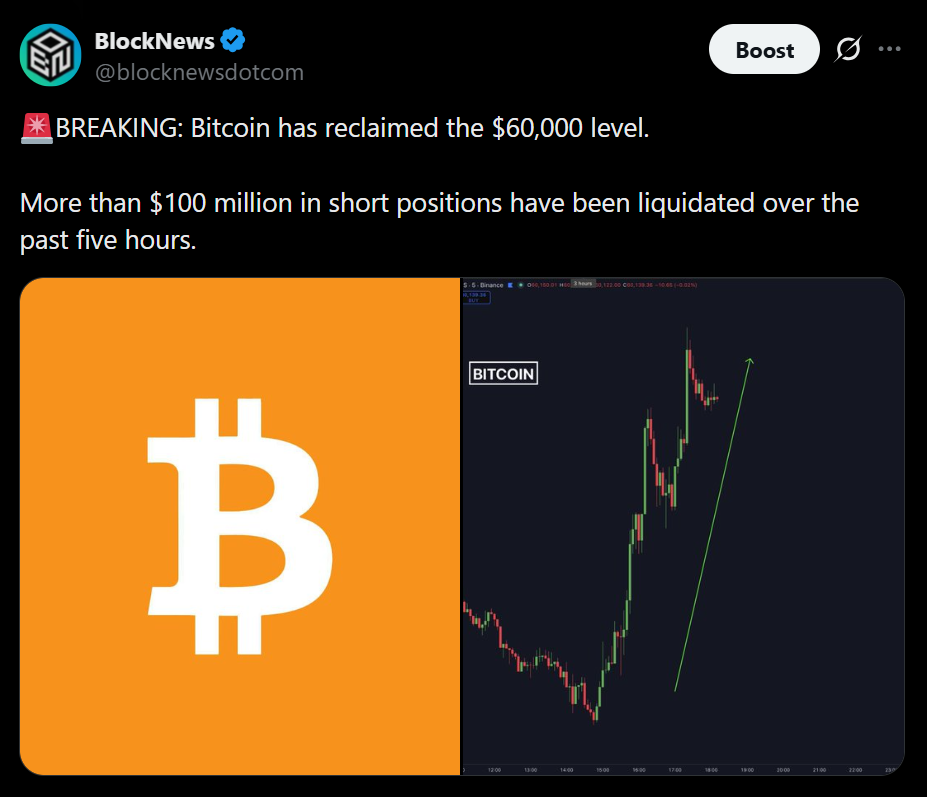
Although volatility remains elevated, the rebound suggests buyers are still willing to step in whenever Bitcoin approaches key psychological support levels.
Weak Jobs Report Shakes Markets
The latest U.S. employment report showed private employers added just 98,000 jobs in June, falling roughly 20,000 short of economists’ expectations.
At first, the disappointing data triggered a broad selloff across risk assets, sending Bitcoin below $58,000. However, markets quickly reversed course as investors reassessed the report.
A slowing labor market increases the possibility that the Federal Reserve could pause further interest rate hikes or potentially begin cutting rates sooner than expected. Lower borrowing costs generally improve liquidity and tend to support higher-risk assets such as cryptocurrencies and technology stocks.
That shift in expectations helped fuel Bitcoin’s rapid recovery.
Bitcoin Climbs Back Above $60K
Following the rebound, Bitcoin traded more than 2% higher over the previous 24 hours, recovering nearly 4% from its overnight low.
The move also lifted several major altcoins. Ethereum gained roughly 3% while trading near $1,600, Solana outperformed with an increase of nearly 5%, and XRP remained relatively stable around the $1.05 level.
Traditional financial markets also stabilized after the initial reaction, with both the S&P 500 and Nasdaq trading largely sideways as investors weighed the economic implications of the weaker employment data.

Fear Remains Elevated
Despite Bitcoin’s recovery, investor sentiment remains extremely cautious.
The Crypto Fear & Greed Index currently sits at 11, placing the market firmly in the “Extreme Fear” category. The reading has declined further from the previous week’s level, showing that many investors remain hesitant even after prices bounced.
Historically, extremely low sentiment has often appeared near market bottoms, although it can also persist during prolonged periods of weakness. While pessimism alone does not guarantee a recovery, it often signals that much of the selling pressure has already occurred.
Why the Fed Still Matters
For crypto investors, the employment report matters less because of the labor market itself and more because of its potential impact on Federal Reserve policy.
If economic growth continues slowing without falling into a severe recession, the Fed could eventually adopt a more accommodative stance. Lower interest rates generally improve conditions for speculative assets by increasing market liquidity and reducing the appeal of lower-risk investments.
That expectation appears to have driven much of Bitcoin’s overnight rebound.
What Comes Next?
Bitcoin’s recovery has placed renewed attention on the $57,700 area, which now represents an important support level. If buyers continue defending that price during future pullbacks, it could strengthen confidence that the recent correction is stabilizing.
However, if Bitcoin falls below that level again, many technical analysts will likely shift their focus toward the next major psychological support near $55,000.
For now, Bitcoin remains caught between improving macro expectations and extremely weak investor sentiment. Whether the recovery develops into a sustained rally or proves to be a temporary bounce will likely depend on upcoming economic data, Federal Reserve expectations, and whether institutional demand begins returning to the market.
Disclaimer: BlockNews provides independent reporting on crypto, blockchain, and digital finance. All content is for informational purposes only and does not constitute financial advice. Readers should do their own research before making investment decisions. Some articles may use AI tools to assist in drafting, but every piece is reviewed and edited by our editorial team of experienced crypto writers and analysts before publication.








 English (US) ·