
 3 months ago
72
3 months ago
72
- A CryptoQuant analyst believes Bitcoin could still be roughly 119 days away from its cycle bottom.
- Earlier Bitcoin cycles bottomed at different speeds, with more recent cycles taking significantly longer to complete.
- Extended accumulation periods have historically helped create the foundation for major bull market recoveries.
One of the most frustrating aspects of Bitcoin investing is that history rarely repeats in exactly the same way. Every market cycle seems familiar until it suddenly doesn’t. That is why investors continue debating whether the current market is following the fast recovery pattern of Bitcoin’s early years or the slower, more prolonged cycles that have emerged in recent history.
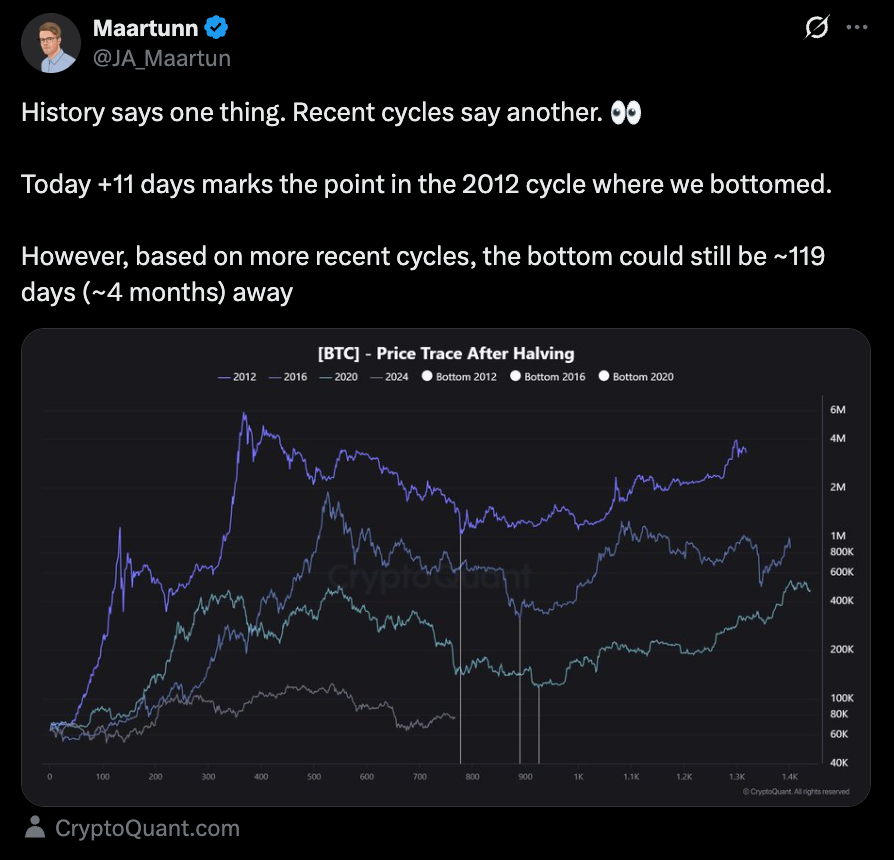
CryptoQuant analyst Maartunn recently highlighted an interesting observation. Based on historical cycle comparisons, Bitcoin has reached roughly the same relative point where the 2012 cycle found its ultimate bottom. If the market followed that exact roadmap, investors may already be looking at the lows. The problem is that Bitcoin has evolved considerably since then, and its more recent cycles tell a very different story.
Bitcoin Cycles Have Been Getting Longer
There is growing evidence that Bitcoin’s market cycles have gradually expanded over time. While the 2012 bear market reached its bottom relatively quickly, later cycles required much longer periods of consolidation before a sustainable recovery emerged. The market has matured, institutional participation has increased, and the sheer size of Bitcoin’s ecosystem has changed how capital moves through each cycle.
According to Maartunn’s analysis, if Bitcoin follows the pace of more recent cycles rather than its earliest one, the final bottom may still be around 119 days away. That would place a potential cycle low sometime near the end of summer or the beginning of autumn. While that timeline may disappoint investors hoping for a rapid recovery, it would remain consistent with patterns seen during previous market resets.
Accumulation Often Takes Time
CryptoQuant researchers have previously noted that major market bottoms rarely form overnight. Even after heavy selling pressure fades, markets often spend months moving sideways as investors gradually accumulate positions. These periods can feel frustrating because prices show little excitement, yet they frequently play a critical role in building the foundation for the next uptrend.
Historical data shows that previous Bitcoin cycle lows were followed by lengthy accumulation phases before momentum returned. During those periods, weaker hands often exit the market while long-term holders steadily increase exposure. Over time, that shift in ownership can create healthier market conditions and reduce speculative excess.
Veteran Traders See Similar Patterns
Maartunn is not the only market observer suggesting patience may still be required. Veteran trader Peter Brandt recently shared a similar outlook, arguing that Bitcoin could spend much of 2026 establishing a bottom before entering its next major expansion phase. While predictions should always be viewed cautiously, the fact that multiple analysts are identifying similar patterns has attracted attention throughout the crypto community.
The idea challenges the belief that every correction must immediately lead to a new bull market. Markets often need time to repair sentiment, absorb excess leverage, and rebuild confidence before a sustained advance can begin. That process is rarely exciting, but historically it has been important.
Why a Delayed Bottom Could Be Positive
At first glance, the prospect of waiting several more months for a definitive bottom may sound bearish. However, longer accumulation periods have often produced stronger recoveries later. Extended consolidations allow speculative leverage to unwind, improve market structure, and transfer assets into the hands of investors with longer time horizons.
Maartunn’s analysis highlights an uncomfortable possibility that many investors would rather avoid: Bitcoin may not be following the quick recovery script some expect. Yet if recent history is a better guide than 2012, a few more months of sideways price action may simply be part of the process. Markets rarely reward impatience, and if the current cycle continues to resemble 2016 and 2020 more than Bitcoin’s earliest years, the months ahead could be less about panic and more about preparation for the next major move higher.
Disclaimer: BlockNews provides independent reporting on crypto, blockchain, and digital finance. All content is for informational purposes only and does not constitute financial advice. Readers should do their own research before making investment decisions. Some articles may use AI tools to assist in drafting, but every piece is reviewed and edited by our editorial team of experienced crypto writers and analysts before publication.







 English (US) ·