
 2 months ago
36
2 months ago
36

The post Bitcoin Transaction Fees Hit Historic Lows Since 2017 appeared first on Coinpedia Fintech News
Bitcoin has recently rebounded, closing its first positive month after five consecutive monthly declines, a key psychological milestone for traders. However, the recovery has not been smooth.
BTC Price action remains volatile and uneven; the current structure is non-linear, marked by alternating upward and downward moves. While sentiment has slightly improved, the market is still searching for a clear direction within a wide trading range.
Bitcoin Transaction Fees Fall Below $0.40 as Network Stays Active
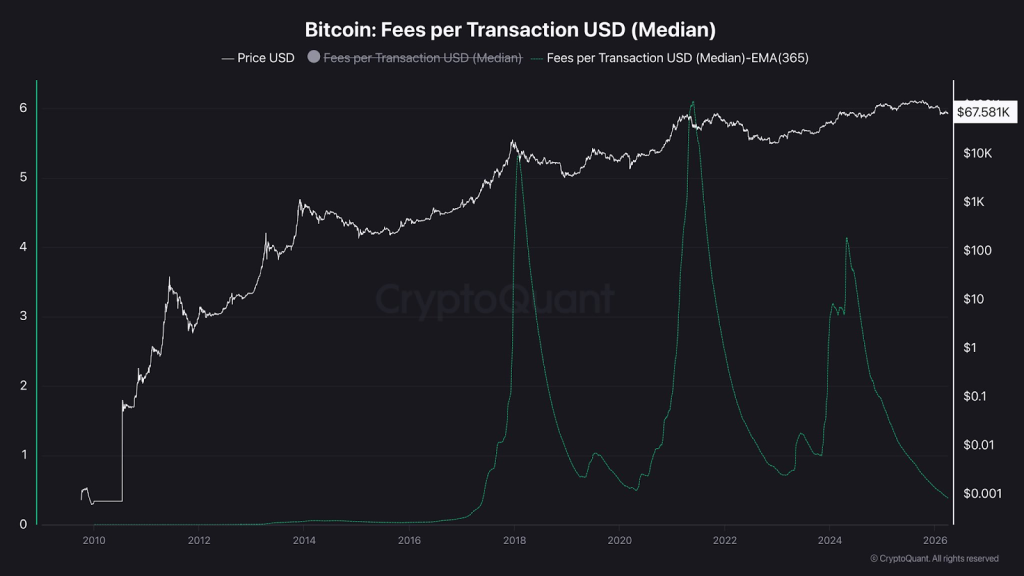
According to CryptoQuant Analyst, Bitcoin Transaction costs have dropped to their lowest levels since 2017, with the yearly average now falling below $0.40. This is a major shift for a network that has historically seen fees surge during periods of congestion.
Importantly, network activity has not declined significantly. Daily transactions are still averaging above 3,000, showing that Bitcoin remains actively used despite the drop in fees.
This decline is largely driven by the introduction of inscriptions, which help limit the weight of transactions included in each block. Even though this change came through a soft fork, it represents a meaningful improvement in how the network manages block space and efficiency.
Historically, Bitcoin fees tend to peak during price highs and fall during bear market phases, making the current low-fee environment consistent with broader market conditions.
Bitcoin Whales Stack Sell Orders as BTC Approaches Breakout Zone
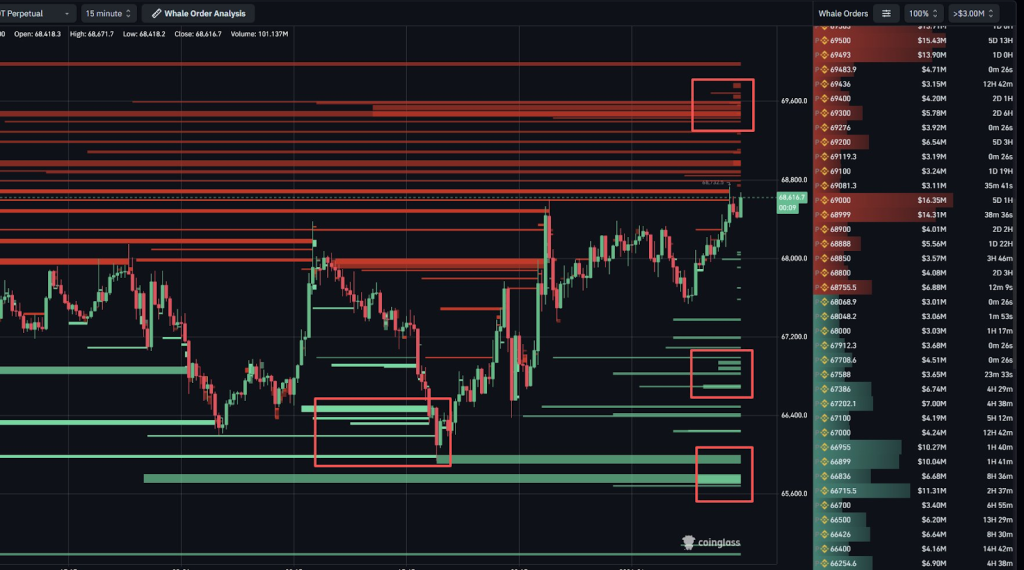
As per Coinglass data, Order book data shows Bitcoin is moving into a heavy cluster of whale sell walls. Significant overhead liquidity is concentrated between $68,800 and $69,600, with the strongest resistance sitting just above $69,000.
On the downside, support levels are layered at $67,200, $66,400, and deeper around $65,800. Price is currently being pulled toward overhead liquidity, making the $69K zone a critical level to watch.
If bulls manage to absorb selling pressure above $69K, a continuation move higher could happen quickly. If not, the market may see another rejection and liquidity sweep to the downside.
Bitcoin Dominance and Price Action at Critical Turning Points
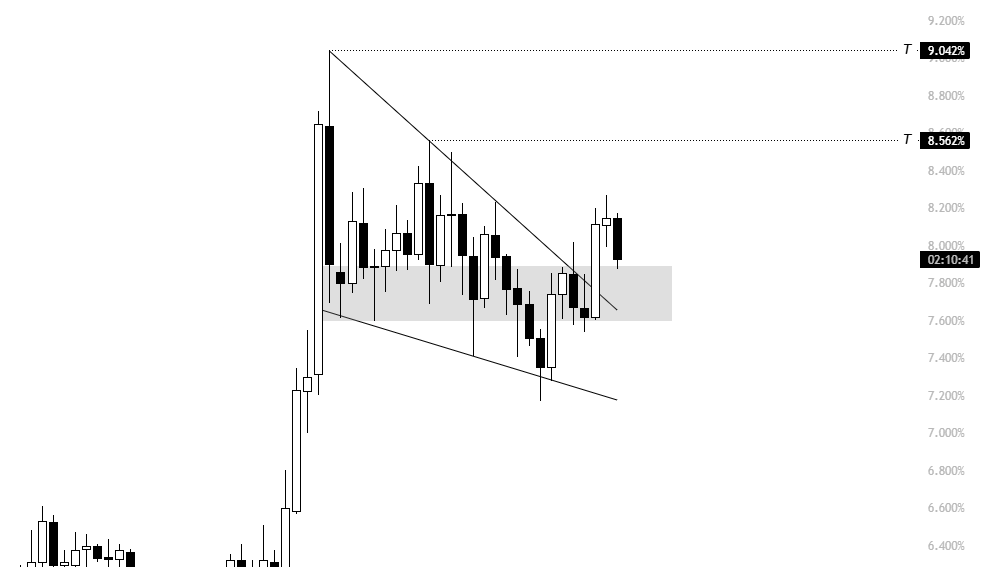
daily and weekly timeframes. If the current support zone holds and forms a higher low, dominance could push toward 8.56%–9.04%.
However, losing this support would invalidate the setup and could send dominance toward 7%, which may align with Bitcoin pushing higher toward the $76K–$78K range.
BTC Price Movement Hinges on Key Intraday Levels
In the short term, the $67,800–$68,200 range is seen as a key intraday zone. If price holds here, a breakout to the upside becomes more likely. However, a breakdown could trigger another downward move, which some analysts currently see as the more probable scenario.
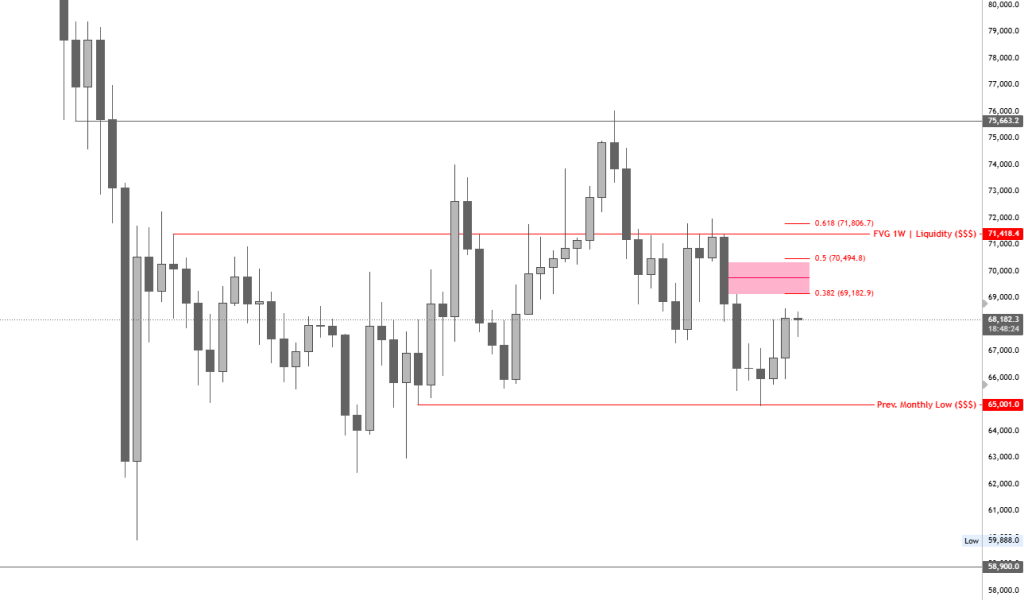
From a daily perspective, Bitcoin has already cleared liquidity from the lows around $65K and is now bouncing upward for a potential bearish retest. Early moves at the start of a new month are often misleading, and a push higher could still favor a continuation to the downside.
The immediate resistance zone between $68,800 and $69,100 remains critical. A rejection here could lead to a strong move lower, while a breakout could trigger a pullback followed by a push toward the $71,400 region, where additional liquidity sits.
FAQs
Fees are low due to improved block efficiency and lighter transactions, reducing congestion even while the network remains actively used.
Transaction fees are a key incentive for miners, especially as block rewards decrease over time. Persistently low fees could raise concerns about whether miners will remain sufficiently incentivized, potentially impacting the long-term security model of the Bitcoin network.
External factors such as interest rate decisions by the Federal Reserve, inflation data, or global liquidity conditions often influence risk assets. A shift in macro sentiment can override technical setups and drive Bitcoin’s direction regardless of chart patterns.









 English (US) ·