
 7 hours ago
15
7 hours ago
15
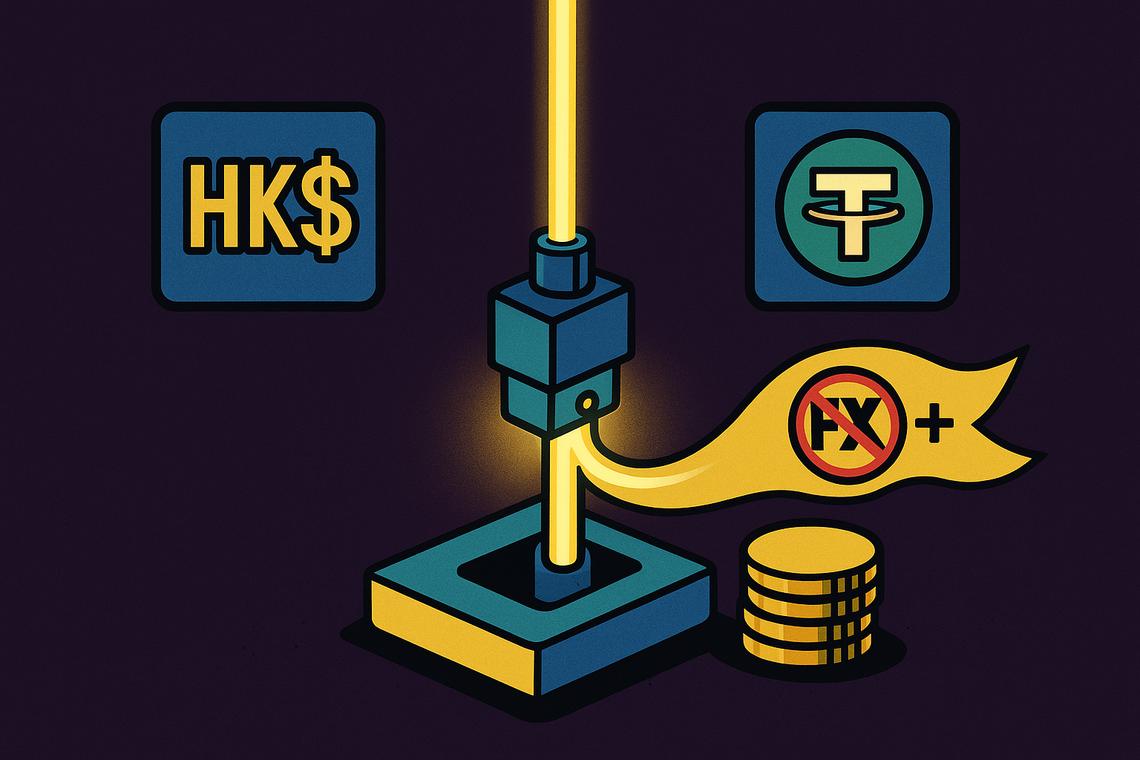
Currency conversion has long been the hidden tax on global trading — a friction point that forces investors to swap their stablecoins for local currencies before they can touch foreign equities. Bitget just moved to eliminate that entirely. The exchange has launched what it describes as the industry’s first TradFi Quanto Futures tied to traditional financial assets, allowing traders to buy exposure to non-USD stocks using USDT directly, with no currency exchange required at any step.
Key takeaways
- Bitget launched the industry’s first TradFi Quanto Perpetual Futures, enabling USDT-settled trading of non-USD stocks without forex conversion.
- The first contract, MINIMAXHKDUSDT, tracks Hong Kong-listed AI company MiniMax, priced in HKD but settling margin, funding fees, and P&L entirely in USDT.
- The system treats local currency prices as numerically equivalent to USDT at 1:1, matching price movement exactly without fiat involvement.
- Contracts support up to 20x leverage, 24/7 trading access, and funding fee settlement every 8 hours.
- TradFi perpetuals hit $268 billion in monthly volume in June 2026, with Bitget ranking second globally at 11.01% market share, according to TokenInsight.
Bitget Unveils the World’s First TradFi Quanto Perpetual Futures
The new product category works through a structure called a quanto contract — a mechanism that has existed in crypto derivatives for some time but had never been applied to traditional financial assets by a major exchange, until now. The contract prices the underlying stock in its native currency, such as HKD for Hong Kong equities, but settles every component of the trade — margin, funding fees, and realized profit or loss — entirely in USDT.
The mechanism that makes this work is deceptively straightforward. Rather than converting HKD prices into USDT using a live exchange rate, the system numerically treats the local currency price as USDT at a 1:1 ratio. That means if MiniMax stock moves from 30 to 50 HKD across 10 contracts, the trader earns exactly 200 USDT — calculated as the price difference multiplied by contract count — with no forex transaction at any point in the process.
The MINIMAXHKDUSDT Contract in Detail
The first live contract under this structure is MINIMAXHKDUSDT, tracking the Hong Kong-listed AI company MiniMax. It is available exclusively on Bitget with up to 20x leverage, continuous 24/7 trading access, and funding rate settlements every eight hours. The contract is fully live now.
The practical implication for traders is significant. Normally, anyone holding USDT who wants exposure to Hong Kong equities has to convert stablecoins to HKD first — taking on exchange rate risk on both the entry and exit of the position. The quanto structure eliminates both conversions and the currency risk that comes with them.
Why This Matters for Global Retail Traders
The forex conversion barrier is not just a technical inconvenience. It adds cost, introduces a second variable that traders must manage, and often requires access to traditional banking infrastructure that crypto-native users do not have. By routing everything through USDT, Bitget opens foreign equity exposure to anyone with a stablecoin balance and an account — no bank account, no currency exchange, no conversion spread.
Gracy Chen, CEO at Bitget, put it directly: “The Quanto contracts remove the last barrier for global traders: currency conversion. Anyone holding USDT can now trade Hong Kong and other non-USD stocks as easily as they trade Bitcoin. This is convergence in practice which Bitget has been able to crack.”
Features and Trading Benefits of Quanto Futures
The MINIMAXHKDUSDT contract gives traders a clean, stablecoin-native path into a non-USD equity with institutional-grade leverage. The product supports up to 20x leverage, which amplifies both potential gains and losses relative to the underlying price move. Funding fees settle every eight hours, consistent with how most perpetual futures operate across crypto markets. Trading runs around the clock, unlike traditional stock exchanges with fixed market hours.
The 1:1 numerical equivalence between the HKD-denominated price and USDT settlement also removes a layer of complexity that would otherwise force traders to model currency exposure alongside their equity thesis. In effect, the quanto structure lets a trader treat MiniMax as if it were a USDT-denominated asset — even though the Hong Kong exchange prices it in HKD.
That design choice reflects a broader strategic direction Bitget has been pursuing: bringing crypto settlement infrastructure into contact with traditional financial markets, rather than forcing traditional markets to adapt to crypto conventions.
TradFi Perpetual Futures Market Growth and Bitget’s Position
The launch arrives at a moment when TradFi perpetuals are one of the fastest-growing segments in the entire crypto exchange industry. According to TokenInsight’s Crypto Exchange Report for Q2 2026, monthly volume in the category surged from roughly $52 billion in January to $268 billion in June — a fivefold expansion in just six months. Equity perpetuals overtook commodities as the primary driver of that growth during the period.
Bitget has been one of the main beneficiaries of that expansion. The exchange generated approximately $69 billion in TradFi perpetual volume during Q2 2026, capturing 11.01% market share and ranking second among all exchanges globally, per TokenInsight data.
Bitget’s Broader TradFi Product Ecosystem
The quanto launch is not a standalone product. It sits within a broader TradFi ecosystem that Bitget has been assembling over the past year. The exchange added tokenized stock perpetual contracts offering synthetic equity exposure with USDT settlement and up to 100x leverage, then introduced CFD trading in late 2025 covering global equities, commodities, and forex through stablecoin settlement. In April 2026, Bitget launched IPO Prime — the industry’s first Pre-IPO trading service — in partnership with Republic, giving users access to private companies before they list publicly. In July, the exchange became the only major crypto platform offering US stock options, with long call and long put strategies on US-listed equities alongside crypto and CFD markets.
Together, these products position Bitget as a platform attempting to dissolve the boundary between crypto-native trading and global financial markets. The quanto perpetual structure is the clearest expression yet of that strategy: not wrapping traditional assets in crypto packaging, but rebuilding the settlement layer entirely around stablecoins while keeping price fidelity to the underlying market intact.
Whether other exchanges move quickly to replicate the structure — and whether regulators in various jurisdictions weigh in on its classification — will likely determine how fast this product category scales beyond its first contract.
FAQ
What is unique about Bitget’s TradFi Quanto Perpetual Futures?
They allow trading of non-USD stocks using USDT without any currency conversion, by pricing contracts in the local currency of the underlying stock but settling all margin, funding fees, and realized P&L entirely in USDT.
Which stock does the first TradFi Quanto Perpetual Future contract track?
The first contract, MINIMAXHKDUSDT, tracks the Hong Kong-listed AI company MiniMax, with the contract priced in HKD and settled in USDT.
How does the quanto structure benefit traders?
It eliminates forex conversion risk by treating local currency prices as numerically equivalent to USDT at 1:1, so traders gain full price exposure to foreign equities and settle entirely in USDT without any currency exchange taking place.
What are the trading features of the MINIMAXHKD Quanto Perpetual Contracts?
The contract supports up to 20x leverage, operates 24/7, and has funding fees settled every eight hours, consistent with standard perpetual futures mechanics.
Article produced with the assistance of artificial intelligence and reviewed by the editorial team.





 English (US) ·