
 2 months ago
45
2 months ago
45
- Cardano’s Midnight sidechain sparked concern over a temporary one-way bridge design
- Critics fear liquidity could leave Cardano, while supporters say a two-way bridge is planned
- Hoskinson denies any intent to harm Cardano, but trust concerns remain unresolved
The Cardano community is getting louder, and not in a good way. Midnight, Cardano’s privacy-focused sidechain, has turned into the center of a pretty intense argument. Some users think it solves a real gap in the ecosystem, while others believe it could quietly drain value from Cardano itself.
And once that kind of fear starts spreading, it moves fast. People aren’t just debating tech anymore—they’re debating trust, and that’s always harder to repair.
The Core Fear: A One-Way Bridge That Traps Liquidity
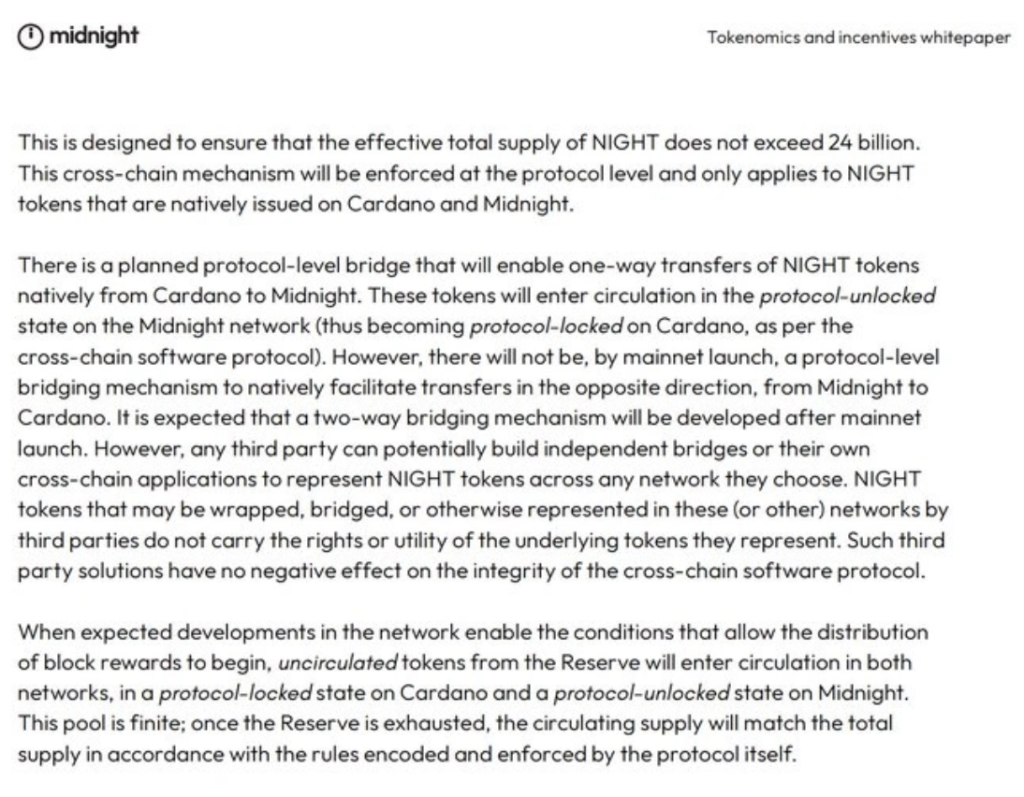
At the heart of the issue is one simple concern. If users can move assets from Cardano to Midnight, but can’t move them back, then liquidity gets stuck. Over time, that could weaken Cardano’s main chain and shift value away from the ecosystem.
That fear picked up speed after Bliss Pool, a stake pool operator, pointed to a tokenomics document describing a one-way bridge in Midnight’s early phase. For critics, that was enough. Even if it’s temporary, they argue, the damage could still be real—because users react to what exists now, not what might come later.
And honestly, the logic isn’t hard to understand. If value flows one direction and stays there, Cardano loses some of its pull.
The Full Plan Tells a Different Story
But the same document also includes later stages, and this is where things get more nuanced. According to the roadmap, Midnight is expected to move toward a two-way bridge setup, meaning assets would eventually be able to return to Cardano.
That changes the narrative a bit. It suggests the one-way bridge isn’t a permanent feature, just part of an early rollout phase. Still, that doesn’t erase the concern completely. In crypto, temporary design choices can have long-term consequences if users lose confidence before the full system is live.
And that’s really the problem here—communication. Midnight may be built for privacy, but users still want clarity, and right now, they feel like they’re not getting enough of it.
Hoskinson Calls the Criticism Misleading
Charles Hoskinson has stepped in again, trying to calm things down. He’s been clear in his response: the one-way bridge is a phase, not a policy. In his view, critics are twisting the design and turning a rollout detail into a conspiracy.
He also pushed back hard on claims that Midnight is meant to drain Cardano’s liquidity. No hidden agenda, no secret plan, no attack on ADA—at least, that’s his position. And he’s repeating it publicly because the pressure inside the community keeps rising.
Still, when trust gets shaky, even direct statements don’t always fix it overnight.
Supporters Say Midnight Solves a Real Problem
Not everyone is against it, though. Some Cardano voices are defending Midnight strongly, saying it’s being misunderstood. One DRep, dori, described Midnight as a parallel chain, not a rival. In that view, it expands Cardano’s reach instead of competing with it.
The key argument is privacy. Most blockchains still struggle with privacy-focused infrastructure, and Midnight is trying to address that directly. If it works, it could give Cardano something many ecosystems still don’t have—a usable privacy layer that doesn’t rely on patchwork solutions.
That’s why supporters see this as a necessary step, even if the rollout looks messy right now.
This Debate Is Bigger Than Midnight
What’s happening here isn’t just about a bridge design. It’s about how blockchain communities handle uncertainty, and how quickly confidence can crack when communication feels incomplete.
Midnight is already gaining attention beyond Cardano, even landing on CoinSpot, which signals growing outside interest. But inside the community, the debate is far from settled. People want stronger guarantees, clearer timelines, and fewer assumptions.
Because in crypto, trust is fragile. And once it breaks, it takes a long time to rebuild—if it rebuilds at all.
Disclaimer: BlockNews provides independent reporting on crypto, blockchain, and digital finance. All content is for informational purposes only and does not constitute financial advice. Readers should do their own research before making investment decisions. Some articles may use AI tools to assist in drafting, but every piece is reviewed and edited by our editorial team of experienced crypto writers and analysts before publication.





 English (US) ·