
 3 months ago
72
3 months ago
72
- Hedera (HBAR) and Stellar (XLM) have climbed the crypto rankings as investors increasingly favor utility-driven projects.
- The memecoin sector has lost momentum, shedding nearly 15% of its market capitalization this year.
- Cardano’s exit from the top 10 highlights a broader shift toward fundamentals, adoption, and real economic activity.
A noticeable reshuffling is taking place across the cryptocurrency market, particularly among the top 50 digital assets by market capitalization. While some long-established names have quietly slipped down the rankings, others have steadily climbed higher, offering a valuable glimpse into where investor capital may be heading.
What’s interesting is that this shift is happening during a broader risk-off environment. Typically, when market confidence weakens, traders gravitate toward short-term speculative plays in search of quick gains. In previous cycles, that often meant memecoins soaked up a large share of liquidity. This time, however, the market appears to be telling a different story.
Rather than aggressively chasing hype-driven narratives, investors seem increasingly focused on projects that can demonstrate real-world utility, active ecosystems, and measurable growth. The latest market cap rankings suggest that fundamentals may finally be reclaiming center stage.
HBAR and XLM Climb as Investors Reward Utility
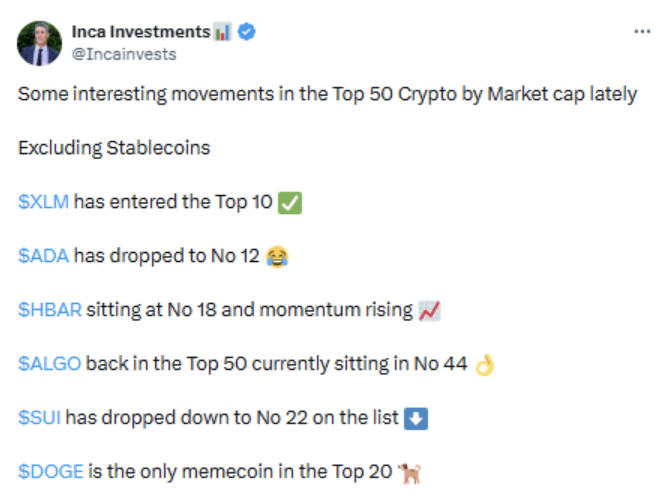
One of the clearest examples of this trend is Hedera (HBAR). The network recently climbed to the 18th spot among cryptocurrencies after its market capitalization expanded to approximately $4.6 billion. That rise comes despite the broader market remaining relatively cautious.
Meanwhile, Stellar’s native token, XLM, achieved an even more significant milestone. The asset recently entered the top 10 rankings after its market capitalization surged to a record $10 billion. Such a move is difficult to ignore, particularly when many other assets are struggling to maintain momentum.
The simultaneous rise of HBAR and XLM doesn’t appear accidental. Both projects have spent years focusing on infrastructure, enterprise partnerships, payment solutions, and network development. While neither has benefited from the kind of speculative mania often associated with memecoins, both have steadily expanded their utility and adoption.
That distinction matters.
Investors increasingly seem willing to reward networks that generate consistent activity rather than simply promising future potential.
Memecoin Momentum Continues to Fade
The shift becomes even more obvious when looking at the memecoin sector.
Historically, periods of uncertainty often pushed traders toward highly speculative assets as they searched for outsized returns. Yet that behavior appears to be losing some of its strength. While Dogecoin remains the only memecoin currently holding a position inside the top 20, the broader memecoin sector has struggled throughout the year.
Market data shows the sector has lost nearly 15% of its total market capitalization so far this year. Liquidity that once flowed aggressively into meme-driven narratives has become harder to attract, particularly as investors grow more selective about where they allocate capital.
That doesn’t mean memecoins are disappearing. Far from it. But their ability to dominate market attention appears weaker than in previous cycles, especially when compared to networks offering clearer utility and long-term development roadmaps.
Cardano’s Exit Highlights a Larger Trend
Perhaps the most symbolic change involves Cardano (ADA).
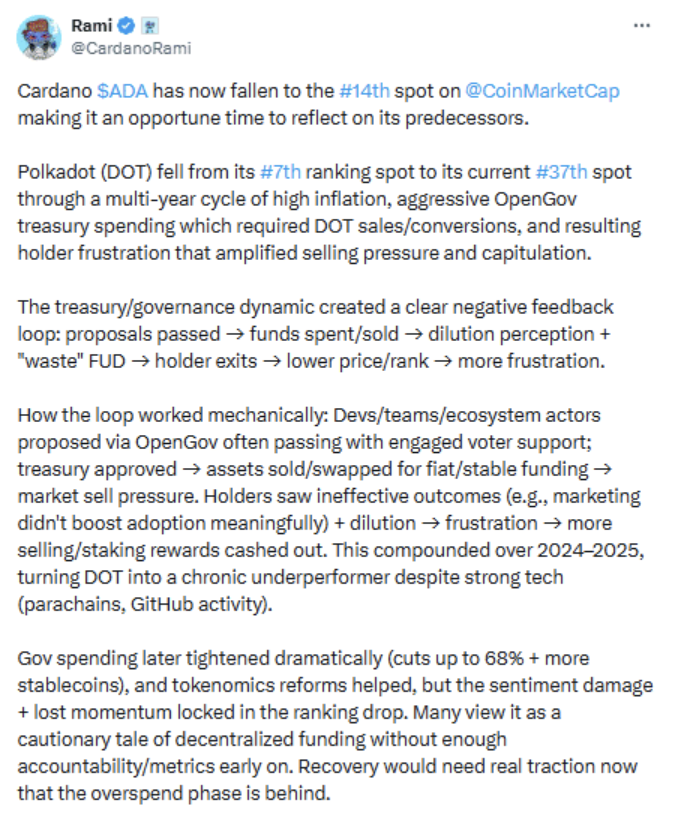
According to CoinMarketCap data, ADA has fallen out of the top 10 and currently sits around 13th place. Its market capitalization has dropped to roughly $8 billion, marking one of the weakest periods for the asset in nearly three years.
The decline has fueled discussions among analysts who see parallels with other projects that gradually lost market relevance despite maintaining strong communities. Some observers have compared Cardano’s recent trajectory to Polkadot (DOT), which once ranked among the market’s largest assets before slipping significantly lower over time.
Critics argue that investors are becoming less patient with ecosystems that struggle to convert spending, development efforts, or governance initiatives into measurable growth. Whether that criticism is entirely fair remains open for debate, but the market’s reaction is becoming increasingly difficult to ignore.
Simply having a strong narrative is no longer enough.
A New Crypto Leadership Cycle May Be Emerging
The broader message behind these ranking changes is relatively clear. Investors appear to be evolving.
Instead of chasing narratives alone, market participants are increasingly evaluating projects through a more practical lens. Network activity, user adoption, transaction growth, ecosystem development, and economic value creation are becoming more important factors in determining where capital flows.
This doesn’t mean speculation has disappeared from crypto. Speculation remains a core part of the industry and likely always will. However, the latest shifts suggest investors are demanding stronger evidence before assigning premium valuations to projects.
As HBAR and XLM continue climbing while other assets lose ground, a new market hierarchy may be starting to take shape. In a risk-off environment where capital becomes more selective, projects capable of demonstrating real utility and sustainable growth appear to be gaining the upper hand.
The rankings may continue changing in the months ahead, but one thing is becoming increasingly apparent: the market is rewarding substance more than hype, and that could have significant implications for the next phase of the crypto cycle.
Disclaimer: BlockNews provides independent reporting on crypto, blockchain, and digital finance. All content is for informational purposes only and does not constitute financial advice. Readers should do their own research before making investment decisions. Some articles may use AI tools to assist in drafting, but every piece is reviewed and edited by our editorial team of experienced crypto writers and analysts before publication.





 English (US) ·