
 2 months ago
81
2 months ago
81
- Cardano remains down roughly 92% from its 2021 all-time high near $3.10.
- The project’s Vision 2030 roadmap aims to attract institutions and grow TVL to $3 billion.
- Competition from Ethereum, Solana, Sui, and Avalanche continues creating major pressure on ADA’s long-term growth outlook.
Five years ago, Cardano [ADA] looked like one of the easiest bets in crypto. Back during the massive 2021 bull market, ADA surged all the way to an all-time high near $3.10, turning early believers into very happy investors almost overnight. At the time, optimism around the project felt endless. Many traders genuinely believed Cardano could evolve into a serious challenger to Ethereum and possibly dominate the next generation of blockchain infrastructure.
Then the crypto winter hit in 2022, and everything changed.
Since then, Cardano has struggled badly to regain momentum. ADA now trades around $0.25, representing a brutal 92% collapse from its peak valuation. That kind of drawdown has left investors divided. Some still believe Cardano’s long-term vision remains intact, while others increasingly see the network as a project that missed too many major opportunities when the market was moving fast.
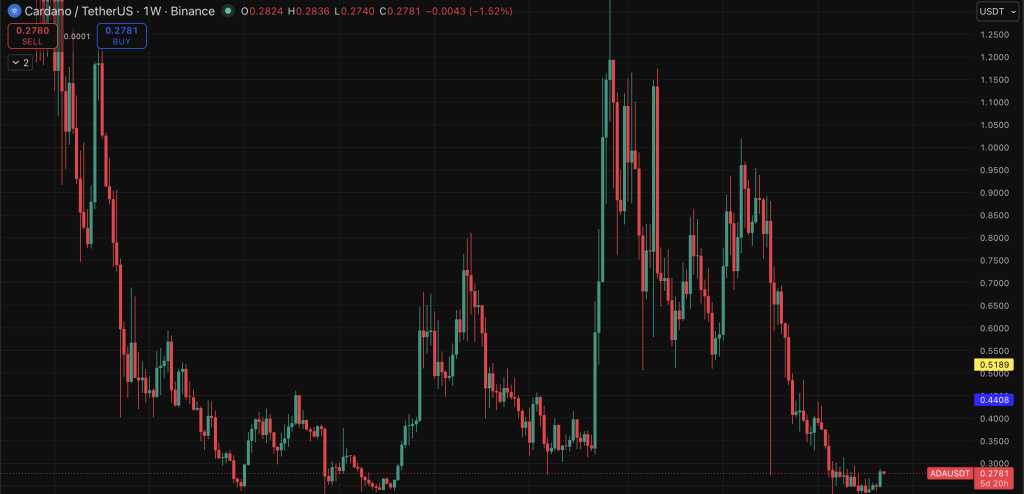
The Bullish Case Still Exists for ADA
Despite the painful decline, Cardano supporters still believe there’s a path forward. Earlier this year, the project introduced a new roadmap known as Vision 2030, a strategy designed to position Cardano as one of the most secure and reliable Layer-1 blockchains in the industry. The bigger idea behind the plan is simple — attract institutions, enterprises, and real-world applications that require stability and long-term reliability rather than just hype cycles.
It’s definitely an ambitious direction, and honestly, it makes sense considering Cardano’s original reputation. Years ago, the blockchain was often described as the most serious institutional challenger to Ethereum. Vision 2030 aims to revive that narrative with aggressive growth targets attached to it.
Among the biggest goals are reaching 324 million annual transactions and growing total value locked, or TVL, to roughly $3 billion by 2030. If Cardano somehow manages to hit those numbers, bulls argue ADA could potentially rise 500% from current levels over the next several years. That would mark a huge turnaround story for a project many investors have already written off.
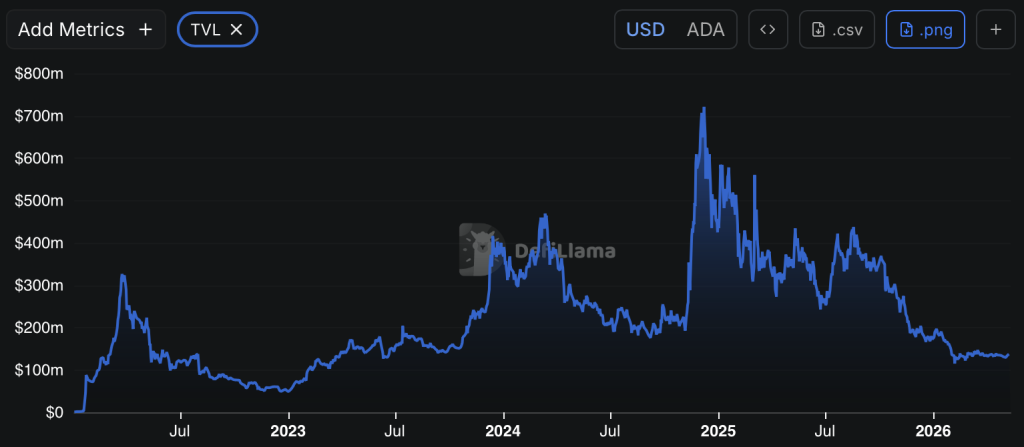
Cardano Still Faces Major Competitive Problems
The issue, though, is that the road ahead looks extremely crowded. Cardano’s current TVL sits around $134 million, ranking the network roughly 27th among blockchain ecosystems. To hit the $3 billion target outlined in Vision 2030, Cardano would need to expand its TVL by more than 20 times within just a few years. Even then, it would still remain far behind Ethereum, which currently controls around $45 billion in locked value across decentralized finance.
Competition has also become much more intense than it was during Cardano’s early rise. Networks like Aptos, Sui, Avalanche, and Solana have all gained serious traction while Cardano struggled to maintain momentum. In many ways, the project’s biggest criticism comes down to timing. It simply hasn’t reacted quickly enough to major shifts happening across crypto.
Cardano arrived late to decentralized finance. It also failed to fully capitalize on the explosive growth surrounding artificial intelligence and AI-powered blockchain ecosystems. Those sectors created enormous opportunities for newer networks to attract developers, liquidity, and users while Cardano spent years moving carefully through slower development cycles.
Can ADA Still Deliver Long-Term Growth?
There’s still a possibility Cardano recovers gradually over time, especially if institutional blockchain adoption accelerates later this decade. Even a move toward $0.50 by 2030 would represent solid returns from current prices, delivering roughly 20% annual compounded growth. For a traditional tech investment, that would actually be considered pretty strong performance.
But crypto investors usually expect much larger upside than that, and that’s where skepticism starts creeping in. Right now, the biggest concern is whether Cardano can still attract meaningful developer activity and fresh user demand while competing against faster-moving ecosystems. Longtime ADA holders remain loyal, but loyalty alone doesn’t necessarily create sustainable growth.
The most realistic outcome may simply be Cardano continuing to move sideways for years — doing enough to survive, but not enough to reclaim its former dominance. And honestly, in a market evolving this quickly, survival isn’t always enough anymore.
Disclaimer: BlockNews provides independent reporting on crypto, blockchain, and digital finance. All content is for informational purposes only and does not constitute financial advice. Readers should do their own research before making investment decisions. Some articles may use AI tools to assist in drafting, but every piece is reviewed and edited by our editorial team of experienced crypto writers and analysts before publication.








 English (US) ·