
 2 months ago
61
2 months ago
61
- Chainlink is expanding beyond DeFi into institutional finance and blockchain infrastructure.
- Major firms including Swift, UBS, Euroclear, and JPMorgan are connected to Chainlink-related initiatives.
- LINK’s long-term value still depends on real network adoption, usage, and demand growth.
Chainlink is starting to attract much more attention across crypto markets as traditional financial firms continue exploring blockchain-based infrastructure. What began mostly as a DeFi-focused oracle network is now gradually moving deeper into institutional finance, where banks, payment firms, and market operators are testing tokenized assets, automated settlement systems, and cross-chain connectivity.
The network’s role has expanded far beyond simply feeding price data into smart contracts. Today, Chainlink is increasingly positioning itself as infrastructure for data delivery, compliance, identity verification, and communication between blockchains and traditional financial systems.
That shift matters because smart contracts alone can’t access outside information directly. They need secure external data feeds and interoperability layers to interact with real-world systems, and that’s essentially the gap Chainlink has spent years trying to fill.
Chainlink Positions Itself as Financial Infrastructure
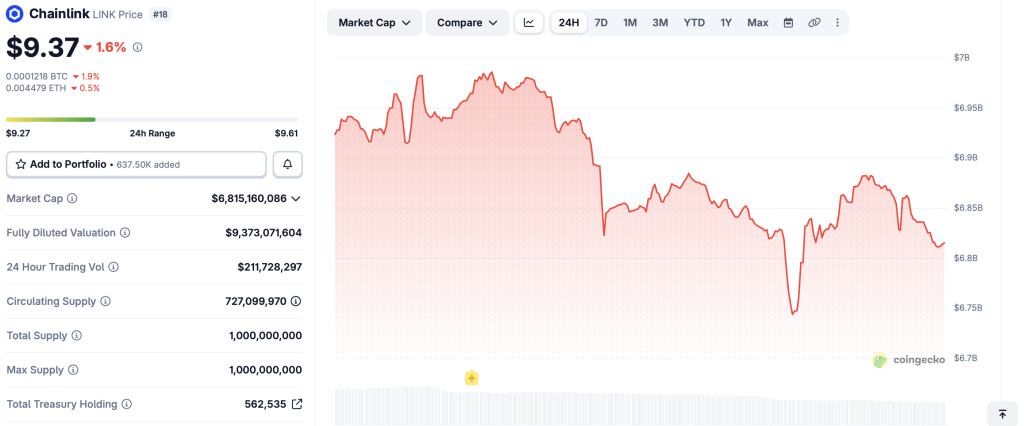
According to company materials, Chainlink now supports a growing list of financial institutions, DeFi protocols, and blockchain ecosystems. The network specifically highlighted connections involving Swift, J.P. Morgan, Mastercard, Aave, and GMX, placing Chainlink directly between traditional finance infrastructure and decentralized applications.
The broader ecosystem tied to Chainlink has also expanded across multiple blockchain networks. Ethereum, Solana, Base, TRON, Canton, and Hyperliquid were all listed among the platforms connected through the network’s infrastructure layer.
Several traditional financial firms were mentioned as well, including Euroclear, UBS, S&P Global, and J.P. Morgan. Those names stand out because they operate deep inside global finance across areas like banking, securities settlement, institutional markets, and custody systems.
At its core, Chainlink still functions primarily as a decentralized oracle network. Oracles allow blockchains to securely receive outside information like market prices, records, compliance data, and real-world events. Developers can then use that information inside decentralized applications and automated financial contracts.
Without those systems, smart contracts would basically remain isolated from external financial data.
Swift, JPMorgan, and UBS Push Institutional Interest Higher
One of the biggest reasons Chainlink continues drawing attention is because of its growing association with major institutional names like Swift, Euroclear, UBS, and JPMorgan.
Swift, for example, plays a central role in global banking communication and secure financial messaging between institutions across countries. Euroclear supports securities settlement and market infrastructure, while firms like UBS and J.P. Morgan operate across investment banking, wealth management, and institutional trading services.
Chainlink itself isn’t functioning as a bank or financial exchange though. Instead, the network acts more like connective infrastructure sitting between legacy finance systems and blockchain environments. That bridge role is becoming increasingly important as institutions experiment with tokenized assets and onchain settlement processes.
The company’s materials describe Chainlink’s services as covering data delivery, identity systems, compliance tools, connectivity, and orchestration infrastructure. Those areas are all becoming increasingly relevant as financial firms test blockchain-based products without fully abandoning traditional systems.
Still, many of the broader adoption narratives remain forward-looking. Some projections surrounding LINK token value, for example, depend heavily on future institutional usage and network demand actually materializing over time. Nothing about that process is guaranteed.
LINK’s Long-Term Story Depends on Real Adoption
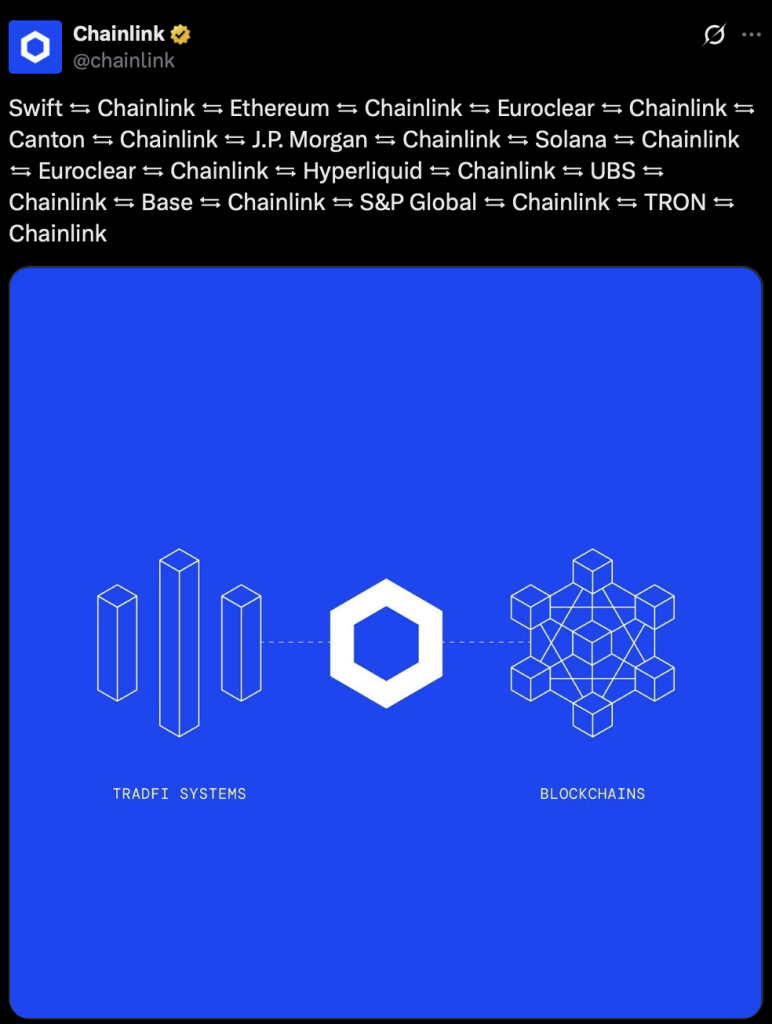
LINK remains the native token powering the Chainlink ecosystem. Node operators receive LINK as payment for providing data services, while some participants also stake tokens as collateral inside network systems.
According to the supplied information, LINK maintains a fixed maximum supply of one billion tokens, though circulating supply has continued increasing gradually since the 2021 market cycle peak.
Scarcity narratives around LINK definitely exist, but long-term demand still depends largely on whether real network adoption keeps growing. If institutions and developers continue relying on Chainlink’s infrastructure across multiple blockchains, demand for LINK could strengthen alongside ecosystem usage.
At the same time, Chainlink’s use case differs pretty significantly from payment-focused cryptocurrencies or pure store-of-value assets. The network mainly serves blockchains and applications that require reliable external data, compliance systems, and interoperability services.
That makes LINK more closely tied to infrastructure growth than simple transactional activity.
Investors Continue Watching Institutional Adoption Closely
Right now, investors appear focused on one major question — whether institutional testing eventually evolves into large-scale production systems.
Partnership announcements and pilot programs can generate excitement, but long-term market value usually depends on sustained usage, actual revenue generation, and meaningful demand for network services. That’s especially true in infrastructure-focused sectors where adoption tends to happen slowly over time.
Traders are also watching broader DeFi demand across ecosystems like Ethereum, Solana, Base, and TRON because activity across those chains directly impacts demand for oracle and interoperability infrastructure too.
For now, Chainlink’s position inside crypto continues strengthening as more financial firms explore blockchain connectivity. But despite the growing list of institutional names attached to the network, the bigger story still comes down to real adoption, consistent usage, and whether tokenized finance actually scales into mainstream financial systems over the coming years.
Disclaimer: BlockNews provides independent reporting on crypto, blockchain, and digital finance. All content is for informational purposes only and does not constitute financial advice. Readers should do their own research before making investment decisions. Some articles may use AI tools to assist in drafting, but every piece is reviewed and edited by our editorial team of experienced crypto writers and analysts before publication.





 English (US) ·