
 2 months ago
36
2 months ago
36
- Large LINK inflows into Binance suggest potential positioning, but price remains stable for now
- Gradual token unlocks are increasing exchange supply, raising the risk of future selling pressure
- Market direction now depends on whether demand can continue absorbing incoming liquidity
As the market drifted into the weekend, something subtle but important started to happen. Liquidity thinned out, almost quietly, and with fewer orders sitting around, prices became a bit more sensitive than usual. In these kinds of conditions, even a single large move can ripple harder than expected… and that’s exactly what played out with Chainlink.
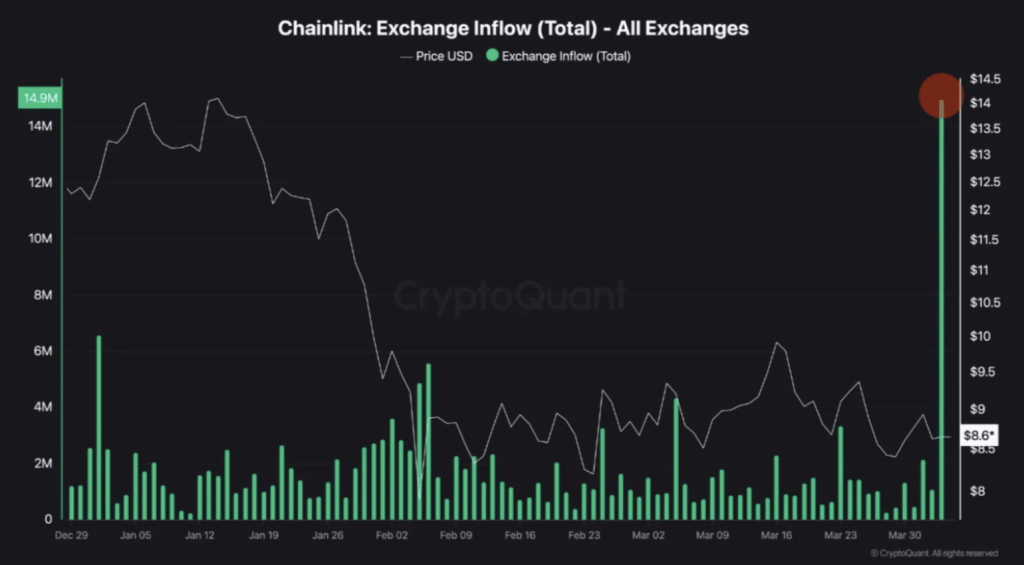
Out of nowhere, roughly 14.9 million LINK moved, with about 14.7 million of that heading straight into Binance. It marked the largest inflow seen this year, yet interestingly, price didn’t crack. LINK hovered around $8.6, holding its ground, which suggests the market—at least for now—absorbed the pressure without blinking.
Why Big Players Prefer Quiet Markets
This kind of move doesn’t happen randomly, not really. Large players tend to operate when liquidity is thin because it gives them more control, smoother execution, fewer eyes watching. Order books are lighter, so pushing size through becomes easier, almost strategic in a way.
What stands out here is the origin, a single unlabeled wallet. That detail matters more than it seems. It hints at deliberate positioning rather than scattered activity, and that introduces a layer of uncertainty. Because when that much supply heads to an exchange, it can mean one of two things… preparation to sell, or simply repositioning for liquidity access.
Gradual Unlocks, Not a Sudden Flood
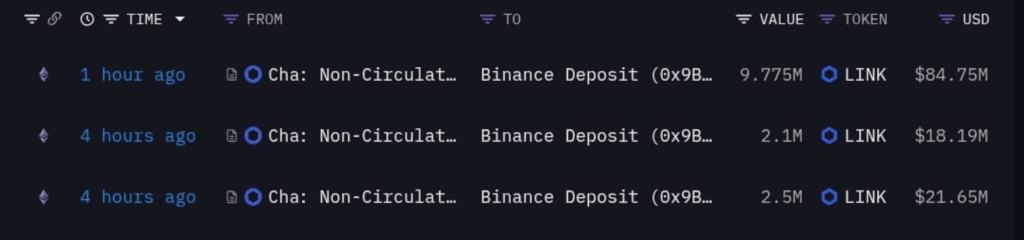
Digging a bit deeper, the flow wasn’t just one massive dump. According to Arkham data, around 14.37 million LINK—worth about $124 million—was sent to Binance in chunks: 9.77 million, then 2.5 million, followed by 2.1 million. That staggered pattern feels intentional, almost careful.
This usually ties back to token unlock cycles. Tokens that were previously locked start entering circulation, not all at once, but in phases. It softens the impact, at least on the surface. Still, as more supply lands on exchanges, the balance shifts… liquidity improves, yes, but so does the risk of selling pressure creeping in.
Price Holds, But the Real Test Isn’t Over
Despite all this movement, LINK hasn’t really flinched. It’s been trading in a tight band, roughly between $8.65 and $8.67, which tells a story of stability—at least for now. Exchange reserves sit around 141.8 million LINK, still near multi-year lows, which suggests there hasn’t been aggressive distribution just yet.
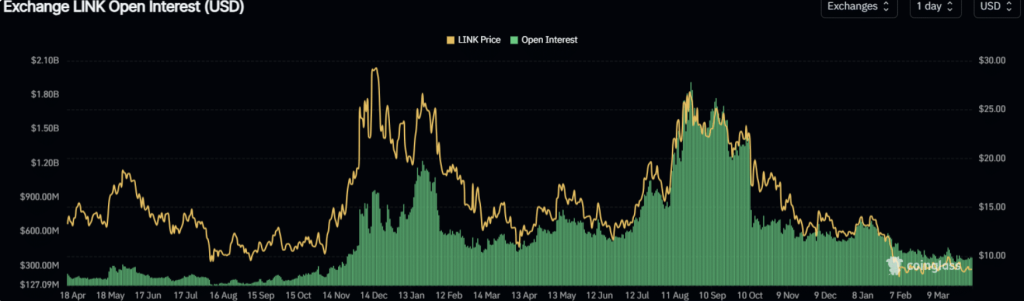
On the derivatives side, things look fairly calm too. Open Interest is hovering near $360 million, pointing more toward hedging and positioning rather than outright bearish bets. So the market isn’t panicking, but it’s also not fully relaxed either… it’s waiting.
A Calm Surface With Underlying Tension
At this point, everything hinges on what comes next. If demand continues to quietly absorb the incoming supply, LINK could keep consolidating, maybe even build a base. But if selling starts to follow these inflows, the tone could shift pretty quickly.
That’s the tension sitting under the surface right now. Stability is there, sure—but it feels conditional. And in markets like this, conditions can change fast.
Disclaimer: BlockNews provides independent reporting on crypto, blockchain, and digital finance. All content is for informational purposes only and does not constitute financial advice. Readers should do their own research before making investment decisions. Some articles may use AI tools to assist in drafting, but every piece is reviewed and edited by our editorial team of experienced crypto writers and analysts before publication.









 English (US) ·