
 2 months ago
92
2 months ago
92
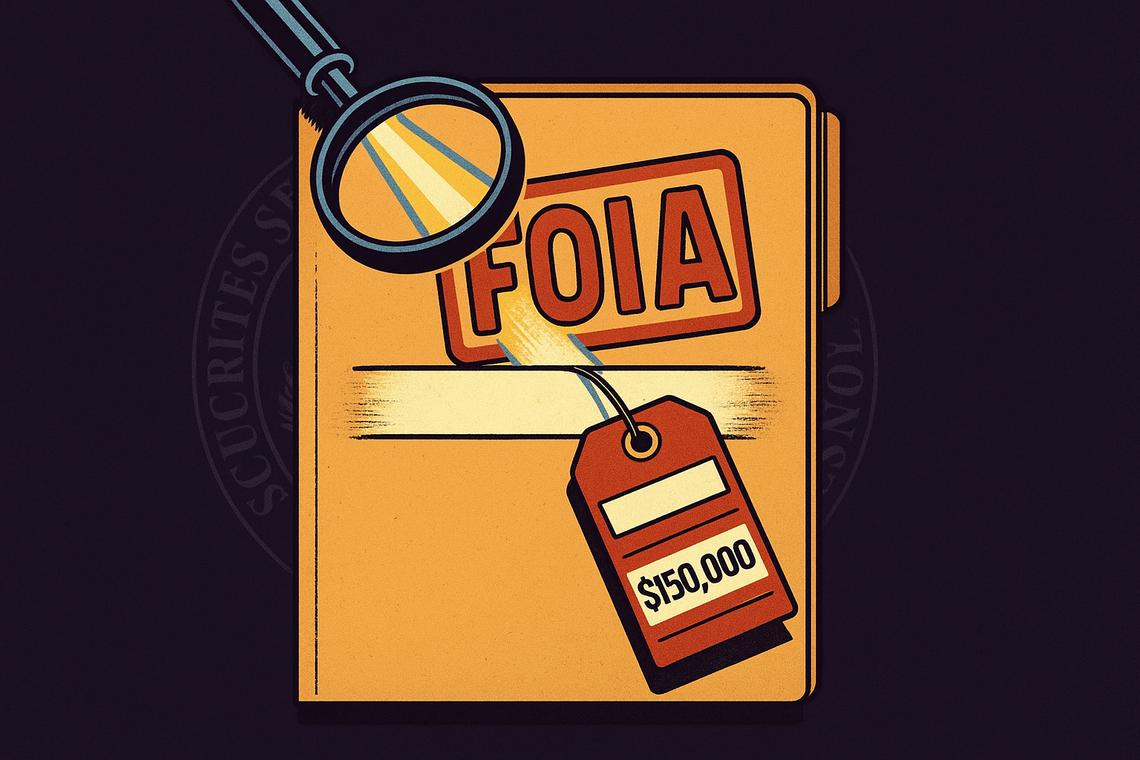
Coinbase has secured a legal victory against the SEC that goes well beyond a simple courtroom win — it has forced a federal agency to acknowledge that senior officials’ communications simply vanished during one of the most aggressive regulatory campaigns in crypto history. The Coinbase legal victory over the SEC, culminating in a $150,000 settlement following a Freedom of Information Act lawsuit, has put a spotlight on how federal regulators operated during former Chairman Gary Gensler’s tenure.
Key takeaways
- Coinbase won a FOIA-based legal settlement against the SEC, receiving $150,000 after senior officials’ text messages were found to be missing.
- The deleted texts related to nearly an entire year of communications from SEC senior officials during the agency’s peak anti-crypto campaign period.
- The FDIC sent dozens of letters to banks in 2022 pressuring them not to service crypto firms — a practice known as debanking — and denied doing so in 2023 before FOIA requests exposed the truth.
- Coinbase’s Chief Legal Officer Paul Grewal publicly called out the SEC’s lack of transparency in a Wall Street Journal op-ed.
- A separate SEC enforcement action against Coinbase, originally filed in June 2023, has also been dropped, according to reporting by Crypto Briefing.
Coinbase Secures Settlement Over Deleted SEC Texts
The settlement didn’t happen in a vacuum. Coinbase filed a FOIA request targeting internal SEC communications from the height of Gary Gensler’s regulatory offensive against the crypto sector. What the lawsuit uncovered was striking: nearly an entire year of senior SEC officials’ communications had gone missing. Rather than fight the case through to full disclosure, the agency agreed to settle — and pay up.
The $150,000 award is, in dollar terms, modest for a company of Coinbase’s size. But the significance isn’t financial. It’s evidentiary. A federal regulator was unable — or unwilling — to produce records it was legally required to preserve, and a court process forced a monetary reckoning.
FOIA Request Uncovers Missing Communications During Gensler’s Tenure
Paul Grewal, Coinbase’s Chief Legal Officer, detailed the findings in a Wall Street Journal op-ed. “Our FOIA suit revealed shocking admissions about the agency’s loss of nearly an entire year of its own senior officials’ communications from the height of its anti-crypto campaign,” Grewal wrote. The timing matters: the deleted texts corresponded to the period in 2022 when the SEC, under Gensler, was at its most aggressive toward digital asset businesses.
Whether those communications were lost through negligence or something more deliberate remains unknown. What isn’t in dispute is that they were gone — and the SEC settled rather than explain why.
The Broader SEC Enforcement Case Also Falls
The FOIA settlement isn’t the only legal front closing in Coinbase’s favor. According to Crypto Briefing, the SEC has also agreed to drop its June 2023 enforcement action against Coinbase — the case that accused the exchange of operating an unregistered securities platform and which threatened to reshape how crypto businesses function in the United States. Together, the two outcomes represent a sweeping reversal of the regulatory posture that defined the Gensler era.
FDIC’s Debanking Campaign Exposed by FOIA Evidence
The SEC settlement is actually Coinbase’s second FOIA-driven win against a federal regulator. Earlier, the company reached a separate settlement with the Federal Deposit Insurance Corporation after uncovering what Grewal described as a “secret campaign” to cut the crypto industry off from the banking system.
Intimidation Letters Sent to Banks in 2022
In 2022, the FDIC sent dozens of letters to banks discouraging them from providing services to crypto-related firms — a practice commonly called debanking. The letters amounted to informal pressure: no formal rule, no public rulemaking process, just private correspondence aimed at freezing crypto businesses out of basic financial infrastructure.
The practical effect on crypto firms was real. Without banking relationships, businesses couldn’t process payroll, hold deposits, or operate normally. It was a quiet but potent form of regulatory control that operated entirely outside of public scrutiny.
FDIC Denied the Practice — Until FOIA Proved Otherwise
In 2023, the FDIC denied that any such campaign had taken place. That denial didn’t hold. Coinbase’s FOIA requests surfaced documentation that contradicted the agency’s public position directly, forcing the February settlement. The episode illustrates how transparency tools like FOIA, when pursued aggressively, can function as a check on regulatory behavior that might otherwise never surface.
Paul Grewal’s Criticism and What It Signals for Crypto Regulation
Grewal’s Wall Street Journal op-ed wasn’t just a victory lap. It was a pointed critique of how federal agencies used informal power — letters, enforcement threats, regulatory silence — to shape an industry without going through the standard rulemaking processes that provide public accountability. The lack of transparency, in his framing, wasn’t incidental. It was the mechanism.
That critique lands at an analytically important moment. The Coinbase cases — both the FOIA settlement and the dropped enforcement action — arrive as Washington is actively reconsidering its approach to digital asset regulation. The pattern that emerges from these cases is one where policy was effectively being made through enforcement and back-channel pressure rather than clear rules. For crypto businesses, that meant operating under perpetual legal uncertainty, unable to plan around regulations that were never formally written.
The costs of that uncertainty weren’t abstract. They fell on businesses that couldn’t raise capital, couldn’t bank normally, and couldn’t get clear answers from the regulators nominally responsible for their sector. The $150,000 settlement figure doesn’t begin to capture those costs — but the outcome does set a precedent that regulators can be held accountable for how they handle their own records and communications.
What remains unresolved is whether the institutional habits exposed by these cases — missing communications, informal pressure campaigns, public denials later contradicted by documents — will prompt any structural reform at the agencies involved. The settlements closed legal disputes. They didn’t answer the harder question of what changes, if anything, inside the agencies themselves.
FAQ
What was the outcome of Coinbase’s legal case against the SEC?
Coinbase won a legal settlement awarding $150,000 after their FOIA request revealed that nearly an entire year of senior SEC officials’ text messages had gone missing during the agency’s anti-crypto campaign.
Why were the SEC’s deleted texts significant?
The deleted texts involved senior SEC officials and corresponded to the period of the agency’s most intense anti-crypto enforcement activity under former Chair Gary Gensler. Federal agencies are required to preserve official communications, making their absence a serious transparency and records-management failure.
What role did the FDIC play in relation to crypto firms?
In 2022, the FDIC sent dozens of letters to banks pressuring them not to provide services to crypto-related firms — a practice known as debanking. The agency denied this in 2023, but Coinbase’s FOIA requests produced documentation that contradicted that denial and led to a separate settlement.
How did Coinbase’s legal team respond to these regulatory actions?
Coinbase Chief Legal Officer Paul Grewal published an op-ed in the Wall Street Journal publicly criticizing the SEC’s lack of transparency and what he described as the agency’s use of informal pressure to regulate the crypto industry outside normal rulemaking processes.
Article produced with the assistance of artificial intelligence and reviewed by the editorial team.






 English (US) ·