
 1 month ago
57
1 month ago
57
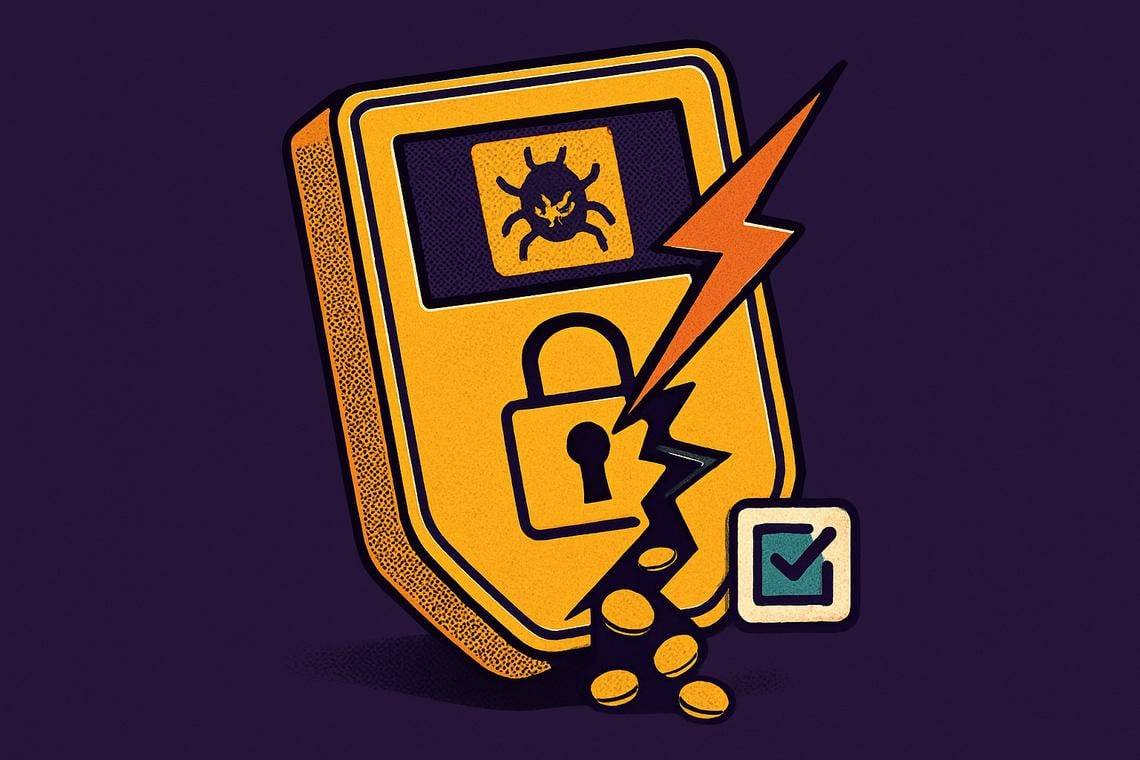
A weekend that was supposed to prove crypto’s most conservative security promise instead turned into one of the year’s costliest wake-up calls. Roughly $89 million was drained from hardware wallets tied to a widely used device called Coldcard, according to reporting from Fox Business, reigniting a debate that touches on the very core of hardware wallet security: is offline storage really as untouchable as the industry has always claimed?
Key takeaways
- Approximately $89 million was drained from hardware wallets over a recent weekend, tied to an exploit affecting the Coldcard device.
- CoinDesk first reported the theft on July 31, 2026, at around $38 million and nearly 600 bitcoin, a figure that grew as the exploit spread.
- Fox Business later reported the attack had drawn from more than 1,200 addresses, pushing losses toward $89 million.
- Cold storage is traditionally viewed as the safest way to hold crypto, but the incident shows no single device guarantees full protection.
- Layered defenses — independent audits, bug bounties, revocable approvals and verifiable code — are now being framed as the real safeguard, not the hardware itself.
Massive $89 Million Loss from Hardware Wallets Challenges Cold Storage Security
The numbers tell a story that grew worse by the day. CoinDesk reported on July 31, 2026, that a software bug in Coldcard, a popular hardware wallet, had already led to the theft of nearly 600 bitcoin worth roughly $38 million, and the total was still climbing at the time of publication. Just days later, Fox Business put the running toll at up to $89 million, spread across more than 1,200 compromised addresses.
That escalation matters because cold storage has long been sold to crypto holders as the gold standard — a way to keep funds offline, away from exchange hacks, phishing scams and internet-connected malware. CoinDesk noted the exploit is now shaking faith in self-custody and could even push some investors toward exchange-traded funds instead of managing their own private keys. When a device built specifically to isolate assets from the internet becomes the point of failure, it forces a harder question: what exactly were people trusting when they trusted “cold” storage in the first place?
Limitations of Hardware Wallets as a Sole Security Solution
No single device can carry an entire security model on its own, and the Coldcard incident is a blunt illustration of that. A hardware wallet is one layer, not a complete strategy. It can shield private keys from online exposure, but it cannot compensate for a flaw in its own firmware or software, which is precisely what CoinDesk identified as the root cause behind the growing losses.
This is the crux of why crypto cold storage risks don’t disappear simply because assets move offline. A bug in the wallet’s own code can undo years of accumulated trust in a matter of days. That’s a sobering reminder for anyone who assumed that buying a hardware device was the finish line of their security setup, rather than one piece of it.
Essential Security Processes Protecting Crypto Assets
What actually protects funds over time isn’t a gadget — it’s a process. That process includes independent audits, bug bounties, revocable approvals, and verifiable code, all working together rather than any one element standing alone.
Independent Audits and Bug Bounties
Independent audits and bug bounty programs exist to catch the kind of vulnerability that turned a single Coldcard flaw into an $89 million problem before it ever reaches users. The logic is straightforward: outside reviewers stress-test code and incentivized researchers hunt for weaknesses, ideally long before an attacker finds them first. Independent audits crypto practices have become a baseline expectation for any platform handling user funds, precisely because software bugs — not stolen passwords — were reportedly behind this particular breach.
Revocable Approvals and Verifiable Smart Contract Code
Revocable approvals add another safety net. When a user grants permission for a transaction or a swap, that approval can be pulled back rather than left open indefinitely, closing a door that attackers might otherwise exploit. Pairing that with verifiable code — smart contracts that can be independently checked rather than taken on faith — gives users a way to confirm that what a platform says it does is actually what the code does. Together, these measures form the kind of layered defense that a hardware device alone simply cannot provide.
Custody and Asset Control in Secure Crypto Transactions
One detail stands out in how some platforms describe their own custody model in the wake of this exploit: assets stay in a user’s wallet until a swap actually settles. That structure means funds aren’t handed over blindly mid-transaction — they remain under the user’s control until the trade is complete, and approvals stay revocable throughout the process. Contracts, according to this standard, also go through independent audits before they ever ship to users.
Why does this distinction matter right now? Because the Coldcard episode exposed what happens when custody and code aren’t held to that kind of scrutiny. A platform’s contracts going through independent review before deployment isn’t a marketing checkbox — it’s the difference between catching a flaw in testing and discovering it after $89 million has already left the building. For an industry built on the promise of self-custody, that’s the standard hardware wallet security now has to be measured against, not just whether a device works offline, but whether the entire process around it can withstand scrutiny.
FAQ
How much was drained from hardware wallets recently?
Approximately $89 million was drained from hardware wallets over a recent weekend, according to Fox Business, following an exploit tied to the Coldcard device that CoinDesk had earlier reported at around $38 million and climbing.
Are hardware wallets alone sufficient for crypto security?
No. No single hardware wallet device can carry the whole security model on its own; layered security processes are necessary alongside the device itself.
What processes help protect crypto funds over time?
Effective protection depends on independent audits, bug bounties, revocable approvals, and verifiable smart contract code working together rather than any single safeguard.
When do crypto assets leave your wallet during transactions?
Under the custody model described in response to this incident, assets stay in a user’s wallet until a swap transaction settles, with approvals remaining revocable throughout.
Article produced with the assistance of artificial intelligence and reviewed by the editorial team.







 English (US) ·