
 1 month ago
37
1 month ago
37
TLDR
- Brent crude climbed beyond $111 per barrel while WTI approached $106, marking a 12% weekly increase
- Prices have jumped over 25% in the last fortnight as the Strait of Hormuz remains inaccessible
- Iranian leadership pledged to retain control of the strategic waterway while defending nuclear infrastructure
- ConocoPhillips issued warnings about “critical shortages” for nations reliant on imports beginning in June
- American crude shipments reached unprecedented levels as global markets seek alternative Middle Eastern supplies
Energy markets witnessed continued upward pressure Friday as the U.S.-Iran confrontation extended into its third month without resolution, maintaining the closure of a vital global oil transit point.
Brent crude futures for July delivery crossed the $111 per barrel threshold, while West Texas Intermediate hovered around $106. Both industry benchmarks have climbed approximately 12% throughout the current week and posted gains exceeding 25% across the previous fortnight.
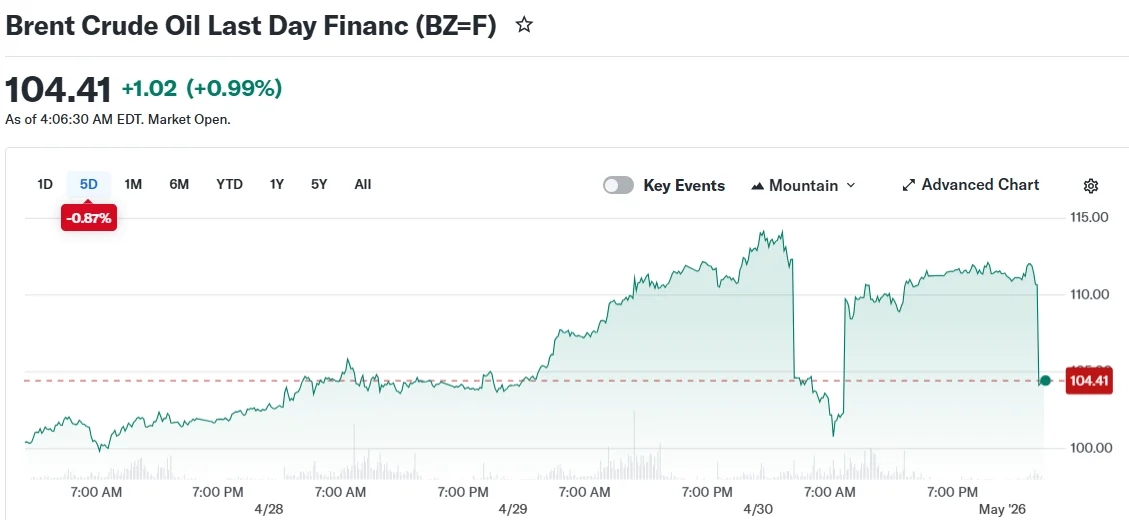 Brent Crude Oil Last Day Financ (BZ=F)
The Strait of Hormuz, previously responsible for transporting approximately one-fifth of global petroleum supplies prior to hostilities, remains functionally shut. This disruption has sent shockwaves through international energy sectors and triggered volatile price fluctuations in recent trading sessions.
President Donald Trump confirmed that the American naval embargo of Iranian harbors continues to achieve its objectives and will remain enforced. While he previously expressed optimism that financial pressure might drive Tehran toward negotiations, diplomatic discussions have essentially ground to a halt.
 IRAN WAR “FINAL BLOW” BRIEFING REPORTED
CENTCOM Commander Adm. Brad Cooper briefed President Trump in the Situation Room on a potential “final blow” to Iran, per Fox News.
Axios reports Trump currently views the naval blockade as his main leverage, but could consider military… pic.twitter.com/szyy4nwpzt
— Coin Bureau (@coinbureau) May 1, 2026
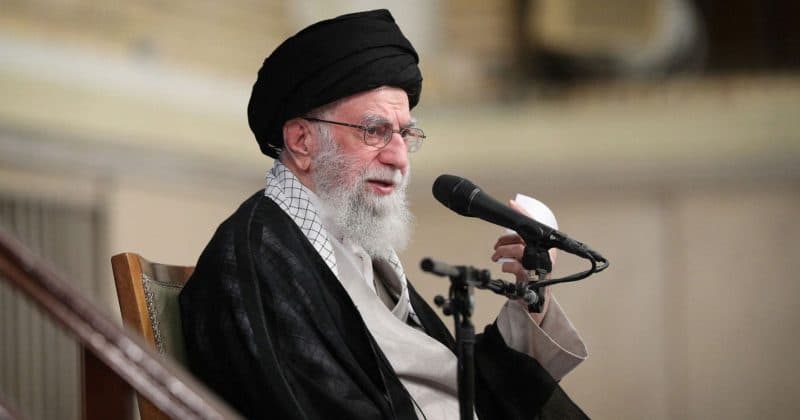
Iran’s Supreme Leader Mojtaba Khamenei delivered an uncommon public declaration Thursday, asserting that the Islamic Republic will maintain its nuclear development and ballistic missile capabilities. He further emphasized Tehran’s determination to preserve authority over the Strait of Hormuz.
The pronouncement offered minimal prospects for immediate tension reduction. While a temporary ceasefire between Washington and Tehran holds, meaningful diplomatic advancement has proven elusive.
Supply Crunch Warning
ConocoPhillips Chief Financial Officer Andy O’Brien cautioned industry analysts Thursday that certain nations may encounter “critical shortages” of petroleum products as early as June.
He clarified that oil tankers departing the Persian Gulf region in late February have completed their voyages and delivered their cargo. With this temporary cushion depleted, nations heavily dependent on energy imports may experience significant pressure in coming weeks.
“We are going to start to see some import-dependent countries potentially start to face critical shortages as we get into the June-July time frame,” O’Brien said.
Thursday reports also indicated Trump is considering additional military strategies, including forcible reopening of the strait, launching further strikes against Iranian targets, or conducting special operations to confiscate Iranian enriched uranium stockpiles.
Physical Market Tightness Builds
ANZ analysts observed that the differential between futures oil prices and physical delivery costs is contracting. This indicates genuine supply constraints are manifesting in real-world markets for the first time since the conflict’s outbreak.
American crude shipments abroad climbed to record territory last week as international purchasers increasingly relied on U.S. producers to offset diminished Middle Eastern output.
Japan’s senior currency official announced readiness to intervene in crude oil futures trading, where speculative activity has impacted the yen’s valuation. Japanese authorities entered currency markets Thursday to support the yen, triggering the most significant decline in the Bloomberg Dollar Spot Index since January.
Trading activity remained subdued across Asian markets Friday, with numerous major economies including China, Germany, and France observing Labor Day holidays.
Brent’s June futures contract reached expiration Thursday after touching a four-year peak exceeding $126 per barrel.
The post Crude Oil Surges Past $111 as Iran Standoff Shuts Key Shipping Lane appeared first on Blockonomi.






 English (US) ·