
 8 months ago
99
8 months ago
99
- Fink is focused on settlement efficiency, not crypto trends
- One shared ledger targets fees, delays, and fragmentation
- Tokenization only works when infrastructure is unified
Larry Fink didn’t come to Davos talking about NFTs, memecoins, or flashy crypto narratives. What he laid out was something far less exciting on the surface, and far more disruptive underneath. His argument wasn’t about tokenizing everything just because it’s possible. It was about fixing how money actually moves. One shared settlement rail, fewer intermediaries, and less friction across the global financial system.
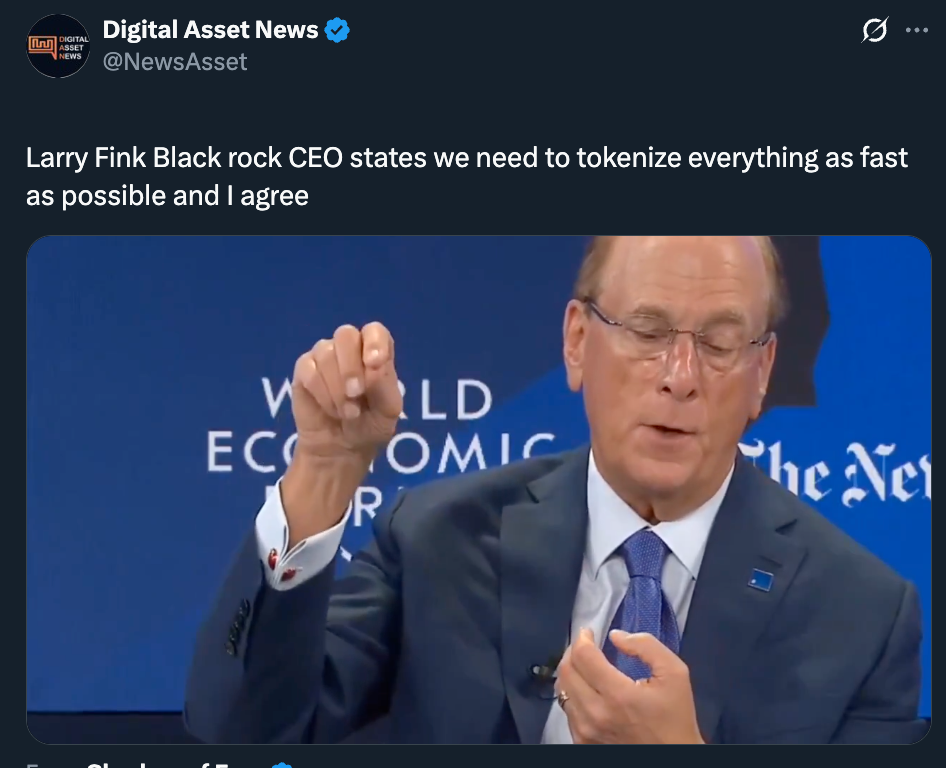
One Blockchain as Financial Infrastructure, Not a Trend
When Fink talks about blockchain, he’s talking about plumbing. Custodians, clearing houses, foreign exchange layers, and settlement delays all exist because today’s systems are fragmented and slow. A single ledger wouldn’t be about competition between chains, it would be about collapsing complexity. That’s not innovation theater. That’s removing toll booths that quietly tax every transaction.
Tokenization Only Works If the Rails Are Unified
Tokenization matters here, but only as a supporting tool. If assets live on the same ledger, moving between cash, bonds, equities, or funds becomes a state change instead of a multi-day process with stacked fees. The benefit isn’t the token itself. It’s the disappearance of middlemen. Tokenization without shared rails just recreates the same inefficiencies in digital form, which misses the point entirely.
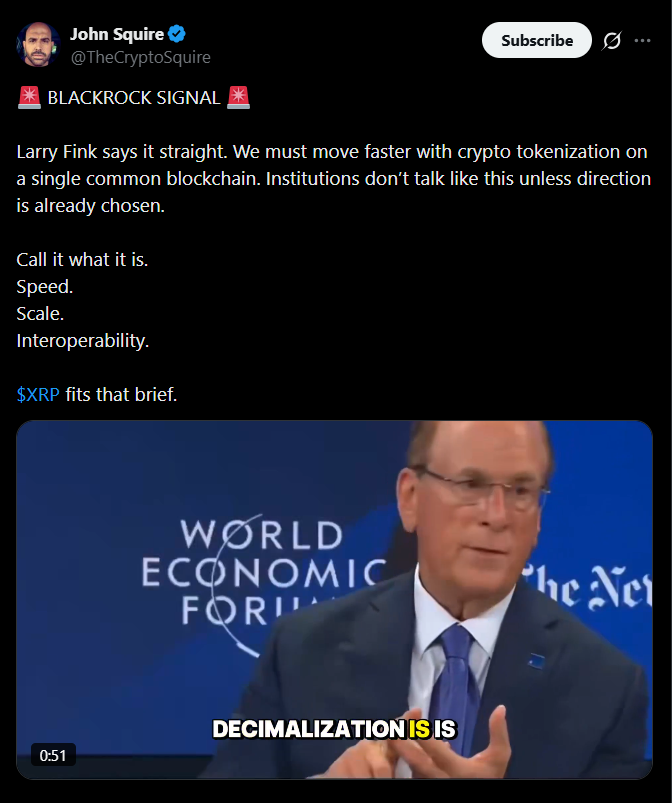
Why Brazil and India Are Quietly Ahead
The most interesting part of this conversation isn’t happening in the usual Western centers. Brazil and India have already built national-scale payment and digital infrastructure designed for speed and volume. Money behaves like software there. In contrast, Western markets are still debating wrappers and overlays instead of redesigning the core. That gap is starting to matter.
This Isn’t About Public Chains Winning
Fink hasn’t named a blockchain, and that’s deliberate. This likely isn’t a public free-for-all. It’s closer to a shared, institution-grade ledger designed for common use. Permissioned, standardized, and boring by design. BlackRock’s previous experiments hint at that direction. The goal isn’t openness for its own sake, it’s coordination.
The Tradeoff Nobody Likes Talking About
Yes, one financial rail creates dependency. But compared to today’s tangled web of systems, it’s arguably cleaner and more transparent. The risk already exists, it’s just hidden behind complexity. Simplifying the backend makes those tradeoffs visible instead of pretending they don’t exist.
Conclusion
Larry Fink isn’t pitching a crypto revolution. He’s calling out how outdated financial infrastructure still is. One blockchain isn’t about control or hype. It’s about finally fixing the backend everyone depends on and nobody wants to admit is broken.
Disclaimer: BlockNews provides independent reporting on crypto, blockchain, and digital finance. All content is for informational purposes only and does not constitute financial advice. Readers should do their own research before making investment decisions. Some articles may use AI tools to assist in drafting, but every piece is reviewed and edited by our editorial team of experienced crypto writers and analysts before publication.







 English (US) ·