
 2 months ago
56
2 months ago
56
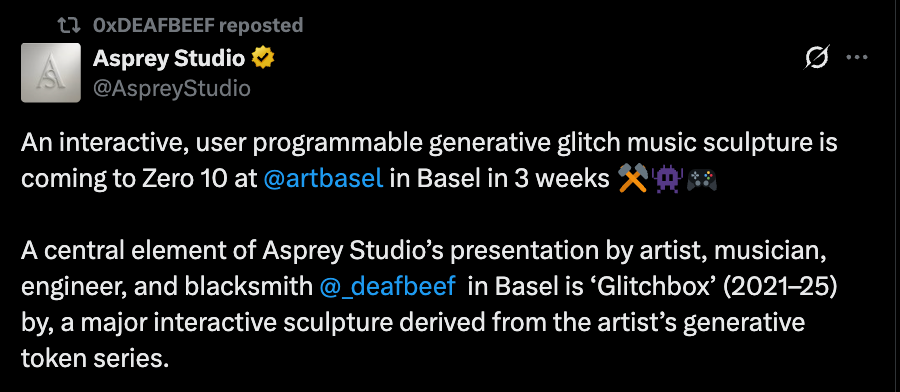
- DEAFBEEF will debut “Matter and Signal” at Art Basel 2026 in Switzerland this June
- The exhibition combines onchain generative artworks with hand-forged iron sculptures created alongside Asprey Studio
- The project highlights how blockchain-native art is increasingly merging with traditional gallery culture and physical craftsmanship
While much of the internet still imagines crypto art as pixelated profile pictures and speculative chaos, artists like DEAFBEEF are quietly dragging the medium somewhere far more sophisticated.
At Art Basel 2026 in Switzerland, the generative artist will unveil “Matter and Signal,” a solo exhibition blending algorithmic onchain works with hand-forged iron sculptures. The exhibition will be presented by London-based Asprey Studio at Booth Z3 inside the fair’s Zero section, an area focused specifically on digital and experimental contemporary art.
And honestly, this sounds far closer to museum-grade conceptual art than “here’s a JPEG of a raccoon wearing sunglasses and a bucket hat.”
Code And Blacksmithing Somehow Work Together
The exhibition itself sits at a fascinating intersection between digital systems and physical craftsmanship.
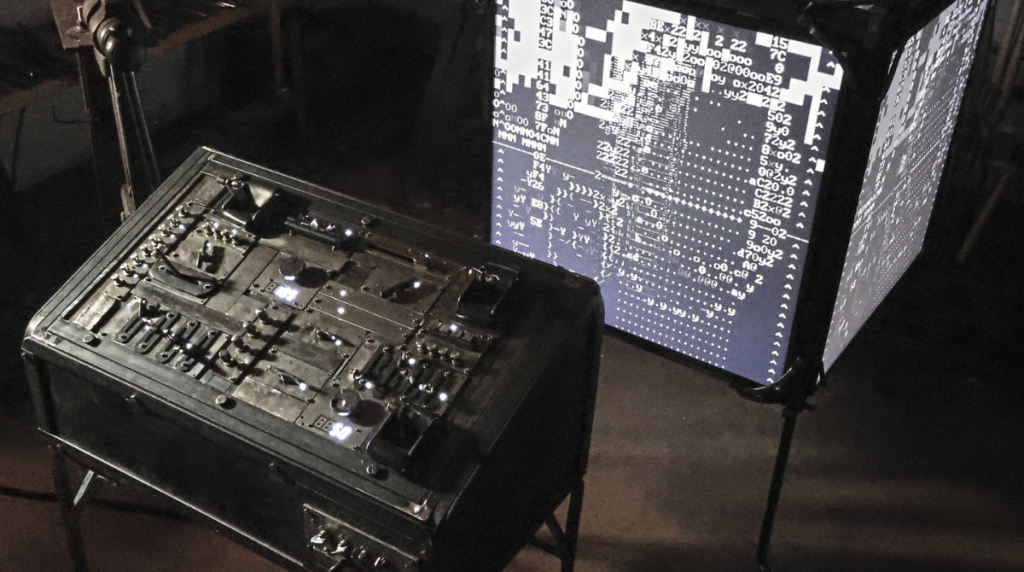
DEAFBEEF’s featured works include “Synth Poems,” audiovisual generative pieces tied directly to forged iron sculptures, alongside “Chronophotographs,” a series inspired by 19th-century motion photography experiments. Another collection, “Hashmarks,” links sculptural works directly to blockchain-based digital tokens, combining physical permanence in forged metal with immutable ownership records onchain.
It’s a strange but genuinely compelling contrast. Cold algorithmic logic generating outputs that eventually become tangible objects shaped by fire, metal, weight, and human labor.
Somewhere between cyberpunk infrastructure and medieval craftsmanship, basically.
NFTs Are Quietly Escaping Speculation Culture
What makes this important is not simply the exhibition itself. It’s what projects like this signal about the broader evolution of crypto-native art.
For years, NFTs became trapped almost entirely inside speculative market narratives where floor prices mattered more than artistic quality. That environment produced enormous hype cycles but also buried many serious digital artists underneath waves of low-effort collections optimized primarily for flipping.
Now, as the speculative mania cools, more projects focused on permanence, craftsmanship, provenance, and conceptual experimentation are beginning to receive institutional attention instead.
Art Basel featuring blockchain-native generative work inside a respected contemporary art environment reinforces that transition pretty clearly.
Asprey Studio Is Blending Old And New Worlds
Asprey Studio itself represents part of that cultural shift too. The London-based studio operates less like a traditional NFT project and more like a hybrid creative workshop bringing together silversmiths, sculptors, animators, coders, and digital artists under one roof.
That collaborative structure fits naturally with generative art because code itself becomes part of the artistic medium rather than simply a delivery mechanism.
In many ways, artists like DEAFBEEF are treating blockchain less like speculative technology and more like archival infrastructure supporting entirely new forms of artistic authorship and ownership.
And honestly, that approach feels much closer to how serious art movements historically evolve over time.
The NFT Conversation Is Becoming More Mature
The broader NFT market still sits far below peak 2021 insanity levels, but ironically, that may be exactly why projects like this are finally receiving more serious attention.
Speculative bubbles tend to overwhelm nuance. Once the casino energy fades a little, collectors and institutions usually begin paying closer attention to craftsmanship, originality, and long-term cultural significance instead.
DEAFBEEF’s Art Basel exhibition reflects that larger maturation process happening underneath the surface.
The next era of crypto-native art may end up focusing less on quick flips and more on permanence, artistic identity, and hybrid experiences blending physical and digital mediums together seamlessly.
Ironically, NFTs may be becoming more culturally important precisely after the hype cycle stopped screaming about them constantly.
Disclaimer: BlockNews provides independent reporting on crypto, blockchain, and digital finance. All content is for informational purposes only and does not constitute financial advice. Readers should do their own research before making investment decisions. Some articles may use AI tools to assist in drafting, but every piece is reviewed and edited by our editorial team of experienced crypto writers and analysts before publication.



 English (US) ·