
 1 hour ago
12
1 hour ago
12
Key Takeaways
- July U.S. CPI increased 0.1% month-over-month, with yearly inflation declining to 3.4%, in line with expectations
- September Federal Reserve rate increase probability declined from 54% to approximately 40% following the release
- Dollar Index remained unchanged near 100.03 during Thursday’s session
- Diplomatic efforts between Iran and the U.S. remain gridlocked, supporting elevated oil prices around $89 per barrel for Brent
- USD/JPY hovered near 159.40, maintaining pressure on the Japanese yen at a two-week peak
The greenback maintained stability on Thursday following the release of July’s inflation figures, which aligned precisely with market projections and offered minimal catalyst for significant trading adjustments.
July’s Consumer Price Index in the United States increased by 0.1% on a monthly basis. Yearly inflation showed a modest decline to 3.4%, compared to June’s 3.5% reading. Core inflation, excluding volatile food and energy components, advanced 0.2% monthly and 2.5% annually.
Every metric aligned with economist predictions. Market participants responded with only a slight adjustment to interest rate increase expectations.
The Dollar Index remained essentially flat at approximately 100.03 during Thursday’s morning session. The benchmark had posted a 0.2% advance the previous day and continued trading within a tight band.
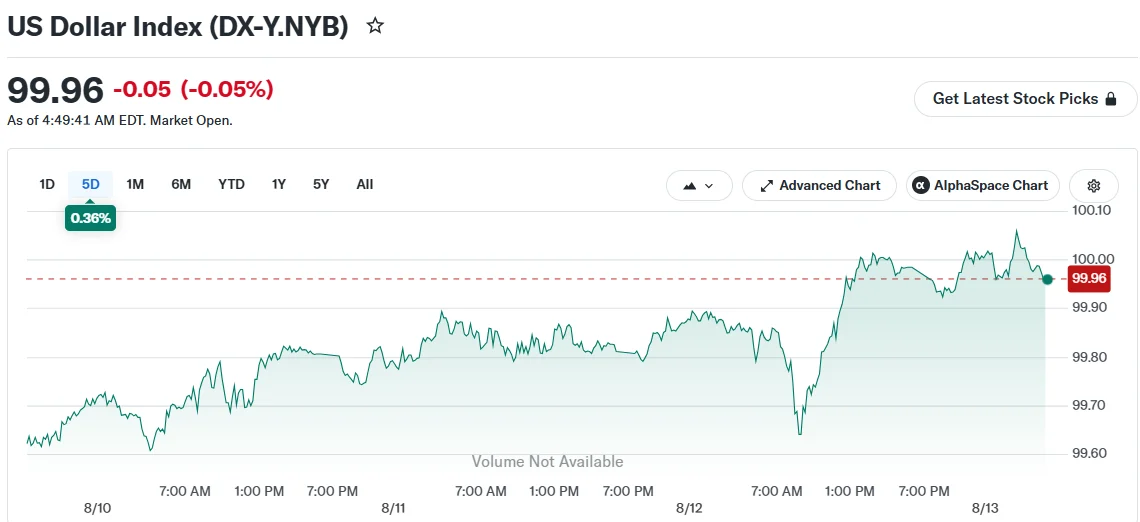 US Dollar Index (DX-Y.NYB)
September Rate Increase Probability Declines but Remains Possible
Market expectations for a Federal Reserve interest rate increase at September’s policy meeting declined to roughly 40%, down from 54% prior to the inflation report’s publication. MUFG analysts indicated the figures should enable the central bank to maintain current rates temporarily, though they’re unlikely to prompt any major policy recalibration at this juncture.
Deutsche Bank observed that September rate hike pricing fell to levels not seen since June’s Federal Reserve gathering. Nevertheless, the institution’s economic team maintains their forecast for a September increase, arguing the CPI figures diminished immediate concerns without eliminating the likelihood.
Deutsche Bank further emphasized that although short-term apprehensions subsided, the data failed to address persistent challenges surrounding fiscal deficits, supply constraints, and term premium considerations.
Attention now shifts to U.S. producer inflation metrics and weekly unemployment claims scheduled for release later Thursday. Retail spending numbers are also drawing focus as market participants search for additional insights into the Fed’s policy trajectory.
Japanese Currency Weakens, Crude Prices Remain Elevated
The Japanese currency continued facing downward pressure. USD/JPY traded around 159.40, approaching a two-week peak. Japanese and American authorities confirmed joint yen-strengthening intervention earlier this month following the currency’s descent to four-decade lows.
International tensions contributed additional market uncertainty. Iranian officials stated no advancement had occurred in attempts to resurrect an interim agreement with Washington. The United States criticized Tehran for not fulfilling commitments regarding the reopening of a critical maritime passage. Iran maintains Washington has failed to meet its own obligations.
Brent crude maintained levels around $89 per barrel. TD Securities analysts indicated they anticipate further oil price appreciation, which could elevate headline inflation metrics later this year and sustain the possibility of a December rate adjustment.
Gold experienced a minor retreat, changing hands near $4,370 during European trading hours after maintaining levels above $4,400 on Wednesday. The Australian currency weakened 0.2% versus the U.S. dollar.
British economic growth data revealed a 1.2% annual expansion in the second quarter, marginally exceeding forecasts, although industrial and manufacturing production declined in July.
The post Dollar Remains Stable Following In-Line July Inflation Report appeared first on Blockonomi.





 English (US) ·