
 5 hours ago
17
5 hours ago
17
President Donald Trump announced that Iran has agreed not to pursue nuclear weapons, a claim he first made during a podcast on June 3 and one the White House doubled down on roughly a week later. If true, it would represent one of the most consequential diplomatic breakthroughs in decades.
Here’s the thing: Iran hasn’t publicly confirmed any of it.
What Trump actually said
During the June 3 podcast appearance, Trump stated that Iran “has agreed not to have a nuclear weapon.” The White House followed up around June 11-12 with messaging that Iran “will never have a nuclear weapon,” framing the development as a signature achievement of the administration’s foreign policy.
The assertion arrives after months of negotiations that began in April 2025, when Trump initiated outreach to Iranian leaders. The diplomatic process was interrupted by what’s been called the Twelve-Day War, a brief but intense US-Iran military conflict earlier in 2026. A central US demand throughout the negotiations has been the dismantling of Iran’s enriched uranium stockpile. Whether Iran has actually agreed to that, or to any specific verification framework, remains unclear. The crucial question of nuclear verification has been deferred to follow-up discussions expected in approximately 60 days.
Iran’s conspicuous silence
The Iranian government has not officially validated Trump’s claims. Iranian state media coverage has instead concentrated on economic themes like asset release and reconstruction plans.
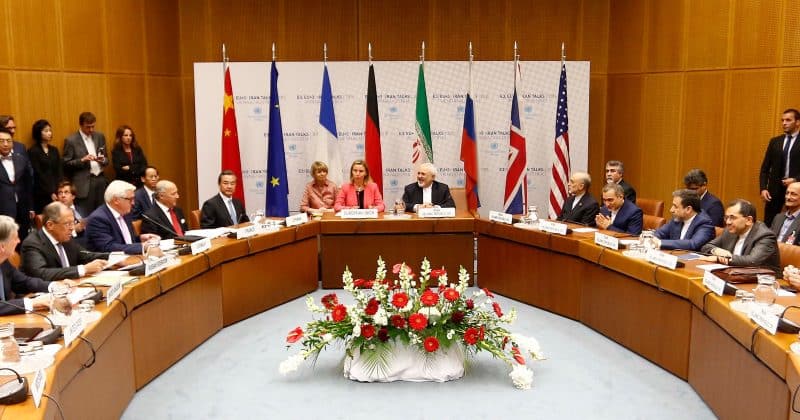
Iran is a signatory to the Nuclear Non-Proliferation Treaty and was party to the 2015 Joint Comprehensive Plan of Action, commonly known as the JCPOA, which placed limits on its nuclear program in exchange for sanctions relief. The US withdrew from that agreement in 2018 under Trump’s first term, a move that eventually led Iran to expand its enrichment activities well beyond the deal’s limits.
What this means for crypto and broader markets
During the Twelve-Day War and the tense negotiations that followed, Bitcoin and oil prices moved in lockstep with headlines out of the region. The 60-day timeline for follow-up verification discussions means the market is essentially being asked to price in a deal that doesn’t yet have enforcement mechanisms.
There’s also the oil angle. Any genuine normalization with Iran could eventually lead to increased Iranian oil exports hitting global markets, which would put downward pressure on energy prices. Cheaper oil generally reduces inflationary pressure, which in turn influences central bank rate decisions, which ultimately filters into how much liquidity is available for risk assets like crypto.
Disclosure: This article was edited by Editorial Team. For more information on how we create and review content, see our Editorial Policy.






 English (US) ·