
 7 hours ago
19
7 hours ago
19
Three days of drone strikes on oil tankers in the Black Sea have put one of the world’s most important petroleum corridors under serious pressure. Attacks on July 17, 19, and 20 targeted multiple vessels at the Caspian Pipeline Consortium terminal near Novorossiysk, Russia, temporarily halting loading operations and forcing Kazakhstan to confront a vulnerability it has been dealing with for months.
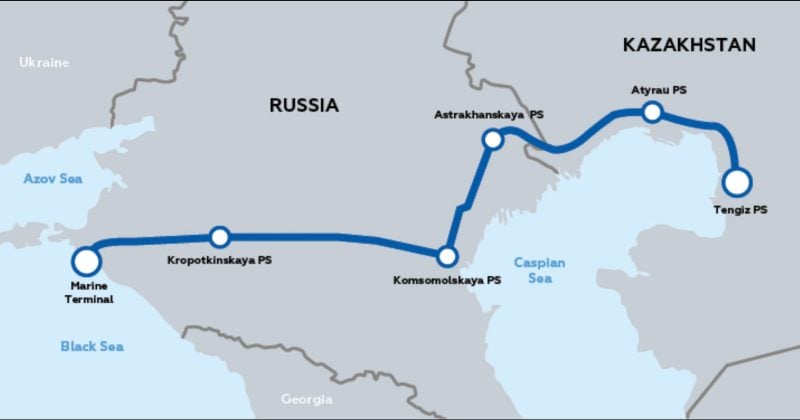
The CPC route moves roughly 1.58 million barrels of Kazakhstani crude per day. That accounts for about 80% of the country’s total oil exports and more than 1% of global supply.
What happened and what it cost
Tankers identified in the strikes include the Nordic Zenith, ASIA, NISSOS IOS, and NELSA. The incident involving the NELSA on July 20 triggered a second halt to loading operations after a brief resumption. No casualties or significant spills were reported, and firefighting teams successfully contained fires on board the affected vessels.
Kazakhstan’s Foreign Ministry condemned the attacks directly, framing them as a threat to the country’s economic interests and to the broader stability of global energy supply chains.
This is not the first time Ukrainian drones, to which the strikes are attributed, have disrupted the CPC corridor. Similar incidents were recorded in November 2025 and January 2026, establishing a pattern that Astana can no longer treat as isolated events.
The January 2026 disruption alone cost Kazakhstan an estimated $1.5 billion, according to the country’s Energy Ministry. Those strikes also contributed to a roughly 6% drop in national oil production.
Why European refiners are watching closely
The CPC terminal at Novorossiysk has become more strategically important to European buyers over the past few years. As European refiners have worked to reduce their dependence on Russian crude following the invasion of Ukraine, Kazakhstani oil flowing through the CPC route has served as a partial substitute.
The CPC pipeline runs through Russian territory before reaching the Black Sea terminal. Kazakhstan’s oil is technically non-Russian crude, but it exits via Russian infrastructure.
Both Russia and Kazakhstan condemned the strikes as attacks on civilian and economic infrastructure.
Market implications and what to watch
The CPC route handling over 1% of global daily supply means even a partial, sustained reduction in flows is material for oil price formation. Kazakhstan’s $1.5 billion loss figure from the January 2026 disruption gives traders a rough benchmark for the financial stakes.
Disclosure: This article was edited by Editorial Team. For more information on how we create and review content, see our Editorial Policy.





 English (US) ·