
 1 month ago
79
1 month ago
79
- Sen. Elizabeth Warren said the U.S. needs clear cryptocurrency regulations but argues the current CLARITY Act falls short.
- She believes the bill does not provide enough protections for consumers, financial stability, and conflicts of interest.
- The legislation’s path forward remains uncertain as Senate negotiations continue and prediction markets lower its chances of passing in 2026.
Sen. Elizabeth Warren said the United States needs a clear regulatory framework for the cryptocurrency industry but maintains that the current version of the CLARITY Act does not provide sufficient protections for investors or the broader financial system.
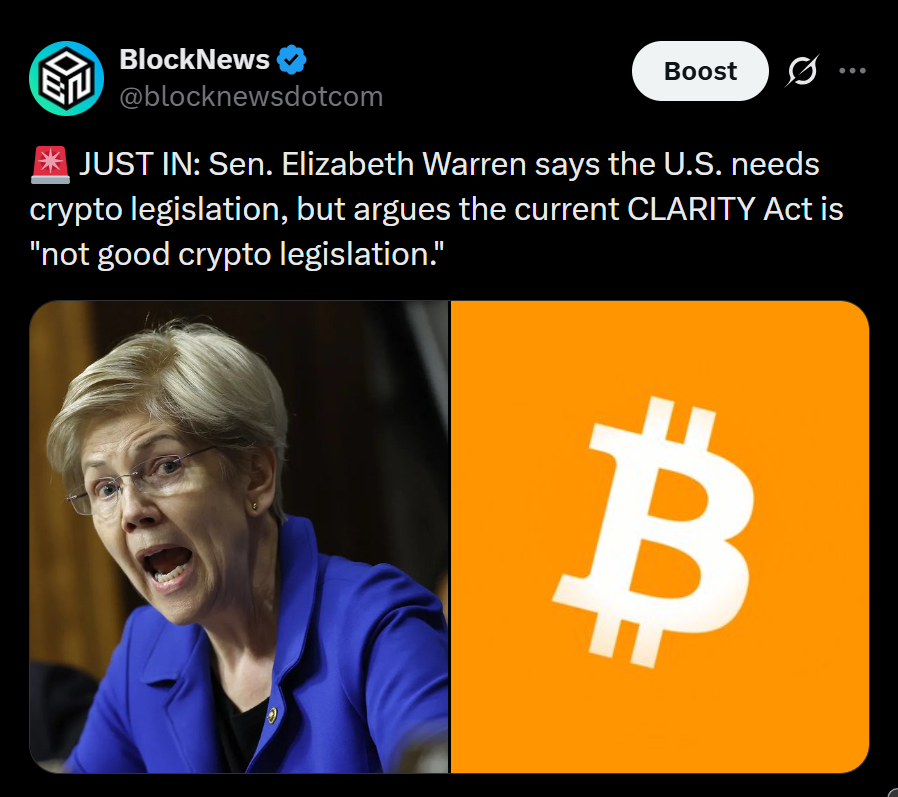
The Massachusetts Democrat said she supports establishing regulatory clarity for digital assets but believes lawmakers should strengthen the legislation before it advances.
Warren Seeks Stronger Consumer and Ethics Protections
Warren identified several areas where she believes the bill remains inadequate, including protections against political corruption, stronger consumer safeguards, and measures designed to reduce national security and broader economic risks.
She has repeatedly argued that poorly designed crypto legislation could weaken regulators by creating gaps between federal agencies that large digital asset companies could exploit.
Rather than opposing crypto regulation altogether, Warren has focused her criticism on the current structure of the CLARITY Act and its enforcement provisions.
Trump’s Crypto Business Remains a Key Issue
Part of Warren’s opposition centers on ethics concerns involving President Donald Trump’s cryptocurrency ventures.
Earlier this year, Warren asked Trump to disclose additional information about his crypto-related income after financial disclosures showed approximately $1.4 billion in digital asset earnings during 2025 through ventures including Official Trump and World Liberty Financial.
She argued that elected officials with significant crypto holdings could face conflicts of interest if they influence legislation affecting the value of those assets.
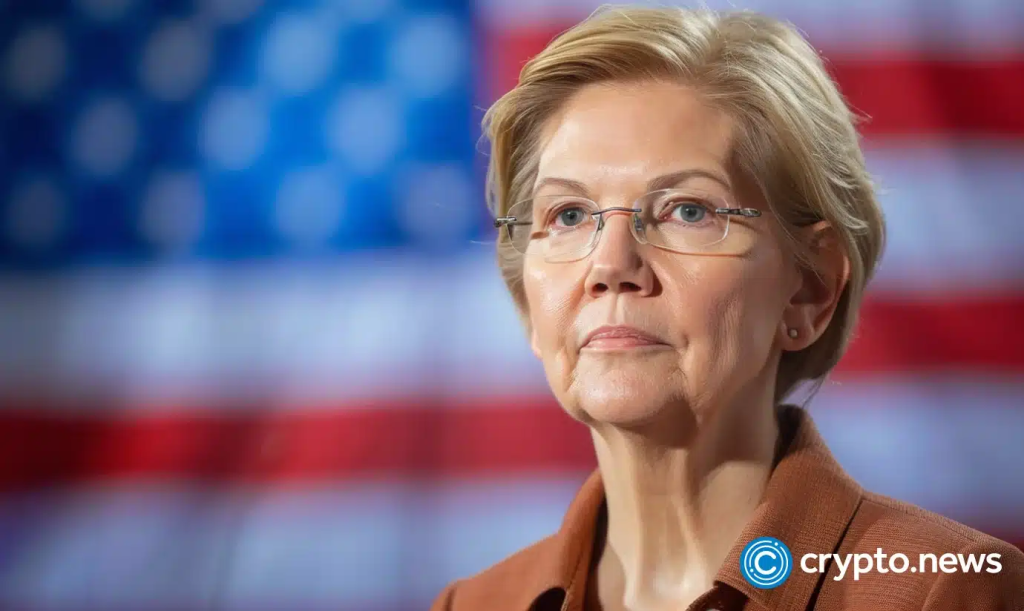
As a result, ethics provisions covering senior government officials remain one of the largest unresolved issues in ongoing CLARITY Act negotiations.
Senate Vote Faces More Delays
The legislation’s immediate outlook weakened after Senate Majority Leader John Thune did not file cloture on a motion to proceed with the CLARITY Act, making a weekend Senate vote increasingly unlikely.
Instead, Senate leadership prioritized other legislative matters, leaving crypto negotiators to continue discussions with Republicans, Democrats, and the White House over unresolved issues including ethics, consumer protections, decentralized finance oversight, stablecoin rewards, illicit finance rules, and the division of authority between the Securities and Exchange Commission and the Commodity Futures Trading Commission.
Without bipartisan agreement, the bill still faces the challenge of securing the 60 votes required to advance in the Senate.
Market Confidence Continues to Decline
The continued delays have also affected market expectations.
Prediction market Polymarket recently lowered the estimated probability that the CLARITY Act will become law in 2026 to roughly 17%, reflecting growing skepticism that Congress can reach an agreement before lawmakers leave for the August recess.
Whether the legislation advances later this year will likely depend on negotiators resolving disagreements over ethics rules, investor protections, anti-money laundering provisions, and regulatory oversight.
Disclaimer: BlockNews provides independent reporting on crypto, blockchain, and digital finance. All content is for informational purposes only and does not constitute financial advice. Readers should do their own research before making investment decisions. Some articles may use AI tools to assist in drafting, but every piece is reviewed and edited by our editorial team of experienced crypto writers and analysts before publication.









 English (US) ·