
 1 hour ago
19
1 hour ago
19
Here’s a strange problem to have: your best investments are performing so well that you’re legally required to stop buying them.
That’s essentially the situation facing emerging-market equity fund managers right now. TSMC, Samsung Electronics, and SK Hynix have grown so dominant in EM portfolios that many managers are bumping up against their internal mandate limits on single-stock and sector concentration. The result is a forced rotation, not because anyone turned bearish on semiconductors, but because the rules say you can’t put all your eggs in three very expensive baskets.
The concentration problem
These three semiconductor giants now account for roughly 24% of the MSCI Emerging Markets Index weight. Nearly a quarter of an index designed to capture broad exposure across dozens of developing economies is sitting in three chip companies headquartered in Taiwan and South Korea.
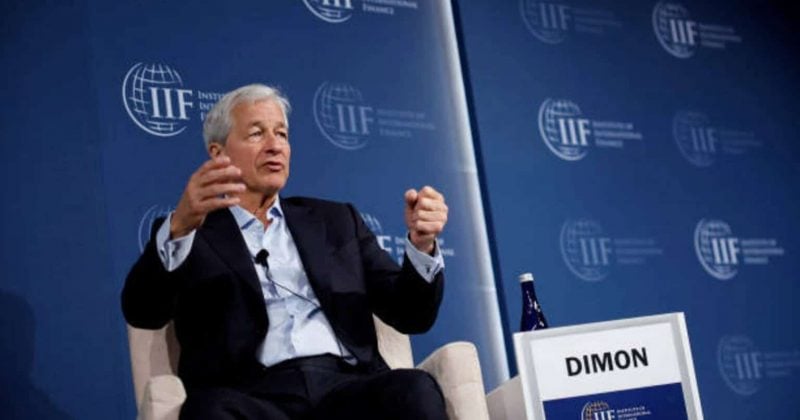
A JPMorgan report from June 2026 flagged the issue directly, noting that many international EM fund managers were approaching or hitting their concentration ceilings. When a fund’s mandate says it can’t hold more than, say, 10% in a single name, and that name keeps appreciating, the math eventually forces your hand.
The managers aren’t selling because they think the AI trade is over. They’re selling because compliance departments are tapping them on the shoulder. This is a structural rebalancing, not a vote of no confidence.
Why these three stocks got so big
The answer is straightforward: artificial intelligence. The insatiable demand for advanced chips, high-bandwidth memory, and cutting-edge fabrication has turned TSMC, Samsung, and SK Hynix into the backbone of the AI hardware supply chain.
SK Hynix recently joined the $1 trillion market-cap club, a milestone it now shares with TSMC and Samsung. TSMC manufactures the most advanced chips on earth for clients like Apple and Nvidia. Samsung straddles everything from memory chips to foundry services to consumer electronics. SK Hynix has become the go-to supplier for high-bandwidth memory, the component that makes AI accelerators actually work.
Where the money is going
Fund managers forced to trim their TSMC, Samsung, and SK Hynix positions aren’t fleeing Asia or abandoning tech. They’re reallocating capital to other technology stocks within Taiwan and the broader EM universe.
Taiwan’s tech ecosystem extends well beyond TSMC. The island is home to dozens of companies involved in chip packaging, testing, design services, and component manufacturing. Capital that would have continued flowing into the three mega-caps is now being redirected toward mid-cap and smaller-cap tech names.
What this means for investors
The most important thing to understand is that this selling pressure is mechanical, not fundamental. The thesis on AI-driven semiconductor demand remains intact.
That said, mechanical selling still moves prices. When dozens of large EM funds simultaneously trim their biggest positions, it can create short-term volatility in those names.
There’s a risk dimension worth considering too. If a significant portion of EM fund capital rotates into the same set of second-tier Taiwanese tech stocks simultaneously, those names could quickly become crowded trades themselves. The concentration problem doesn’t disappear. It just migrates down the market-cap spectrum.
Disclosure: This article was edited by Editorial Team. For more information on how we create and review content, see our Editorial Policy.




 English (US) ·