
 3 months ago
62
3 months ago
62
- ERC-8257 introduces programmable NFT-based access control for AI tools and services
- AI agents could autonomously discover, verify, pay for, and use onchain tools without centralized platforms
- NFT communities like Normies are already exploring AI-powered infrastructure tied directly to ownership
Most people hear the phrase “new ERC standard” and immediately assume they accidentally walked into a blockchain engineering lecture against their will. Thankfully, ERC-8257 is actually built around a surprisingly simple idea once you strip away the technical language.
At its core, ERC-8257 creates an open registry where developers can publish AI tools directly onchain. Those tools can define their own access requirements, pricing structures, permissions, and usage rules through Ethereum smart contracts instead of relying on centralized platforms controlling who gets access to what.
Honestly, the easiest way to think about it is like an App Store for AI agents, except nobody owns the store itself.
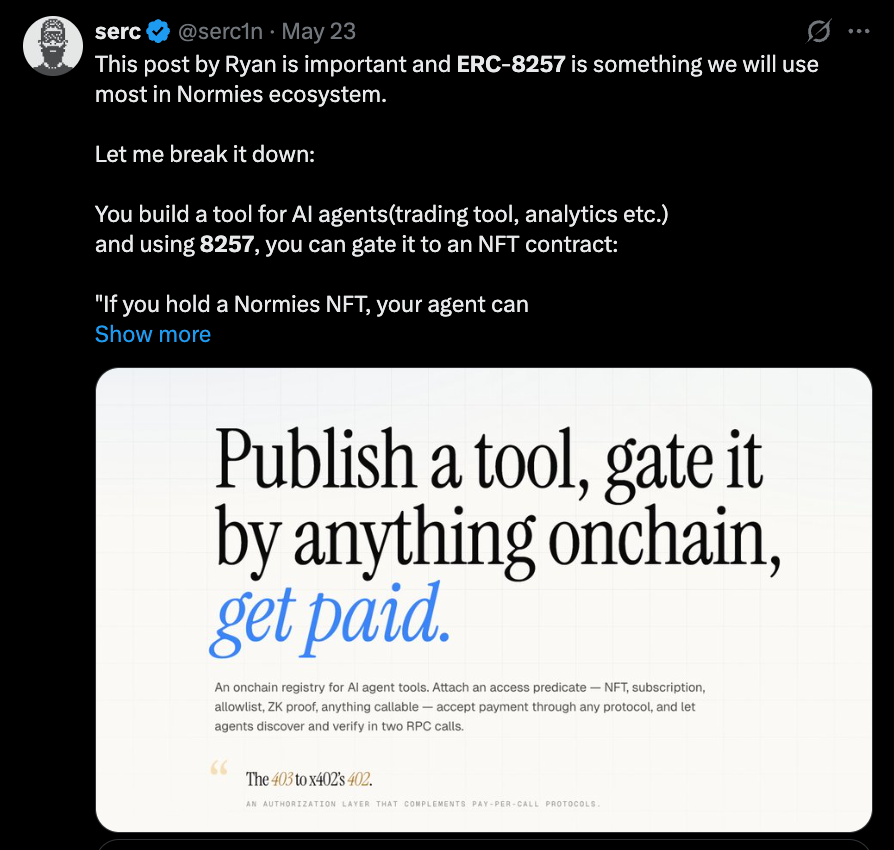
NFTs Become Access Credentials Instead Of Just Collectibles
The most important concept inside ERC-8257 is something called “predicate-based access control.” The wording sounds intimidating, but the actual idea is pretty straightforward.
Developers create rules determining who or what can access a tool. Those rules can be tied directly to blockchain ownership. For example:
- Own a specific NFT collection? You qualify
- Hold a certain token balance? Access granted
- Belong to a DAO? Your AI agent gets permission automatically
The blockchain verifies those conditions directly without needing usernames, passwords, centralized subscriptions, or traditional account systems. Ownership itself effectively becomes the login layer.
That changes the role of NFTs quite dramatically.
Instead of functioning purely as digital collectibles or speculative art assets, NFTs become programmable access keys tied directly to software, AI systems, analytics platforms, research engines, trading infrastructure, or autonomous services.
Which honestly feels much closer to where NFTs were probably always heading before the internet got flooded with celebrity ape collections and questionable roadmap promises.
AI Agents Are What Make This Really Interesting
ERC-8257 becomes significantly more powerful once AI agents enter the equation.
Over the next several years, AI agents are expected to increasingly interact with software autonomously rather than relying on humans manually navigating interfaces all day. Agents could potentially analyze markets, execute trades, coordinate workflows, retrieve data, interact with APIs, and manage complex multi-step systems independently.
ERC-8257 creates a framework where those agents can automatically:
- Discover tools onchain
- Verify whether they qualify for access
- Understand payment requirements
- Purchase or unlock access
- Interact with services autonomously
The standard even includes machine-readable access conditions so AI agents themselves can interpret what credentials they need before attempting to use a tool.
So essentially, software starts negotiating with software. Which sounds futuristic until you realize parts of it are already starting to happen now.

Normies NFTs Are Already Exploring This Direction
One of the NFT communities discussing ERC-8257 most actively right now is Normies, the fully onchain Ethereum collection built around monochrome pixel characters.
Normies already developed a reputation for attracting builders, developers, and experimental tooling around the ecosystem. Community members have created visualizers, APIs, experiments, and infrastructure projects tied directly to the collection.
Now many holders are openly discussing how ERC-8257 could push the ecosystem further into AI infrastructure territory.
Imagine someone develops a powerful AI trading system or autonomous analytics platform. Instead of charging monthly subscriptions traditionally, they simply gate access to Normies holders. Own the NFT? Your AI agent gets access automatically. Don’t own it? No access.
In that situation, the NFT stops being “just art” almost entirely. It becomes infrastructure tied directly to utility, software permissions, identity, and machine-level economic systems.
That’s a very different conversation from the NFT market people remember from 2021.
NFTs May Quietly Become Internet Infrastructure
The broader significance of ERC-8257 is that it pushes crypto further toward programmable ownership and programmable access systems at exactly the same moment AI automation is accelerating globally.
Digital identity, subscriptions, software permissions, AI agents, financial systems, and ownership rights are all starting to merge together into increasingly automated ecosystems. ERC-8257 sits directly in the middle of that transition.
Ironically, after years of people dismissing NFTs as temporary speculation or overpriced profile pictures, standards like this may eventually reveal one of blockchain ownership’s most practical long-term use cases yet.
The internet itself is becoming increasingly autonomous. And in that environment, programmable ownership may matter a lot more than most people currently realize.
Disclaimer: BlockNews provides independent reporting on crypto, blockchain, and digital finance. All content is for informational purposes only and does not constitute financial advice. Readers should do their own research before making investment decisions. Some articles may use AI tools to assist in drafting, but every piece is reviewed and edited by our editorial team of experienced crypto writers and analysts before publication.






 English (US) ·