
 3 months ago
81
3 months ago
81
// News
Reading time: 2 min
Published: May 13, 2026 at 11:06

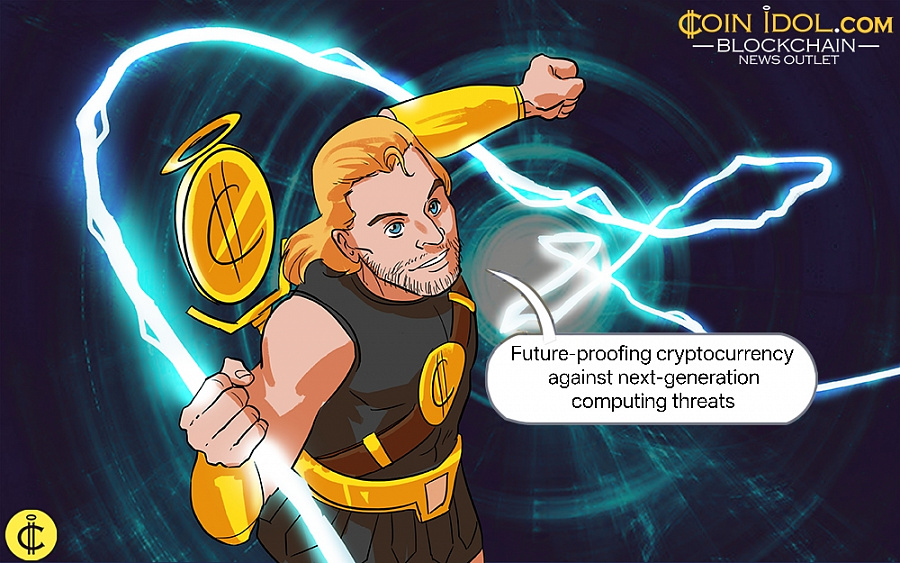
On May 12, 2026, the leading Ethereum Layer-2 networks, including Optimism, Arbitrum, and Base, announced the successful completion of the "Quantum Shield" upgrade.
This coordinated hard fork marks the first large-scale deployment of Post-Quantum Cryptography (PQC) standards, specifically integrating the NIST-approved ML-KEM (Kyber) and ML-DSA (Dilithium) algorithms into their rollup architectures.
This move was accelerated following the "April Scare," when a state-sponsored quantum research group in East Asia demonstrated a record-breaking number of stable qubits, theoretically capable of cracking the ECDSA (Elliptic Curve Digital Signature Algorithm) that has secured most blockchains for over a decade. The upgrade allows users to migrate their assets to "Quantum-Safe Accounts" that utilize lattice-based signatures, which are currently believed to be resistant to quantum-shor’s algorithm attacks.
The transition wasn't without friction; gas fees on L2s spiked by 12% during the migration window due to the larger size of quantum-resistant signatures.
However, the successful patch has restored institutional confidence. "The ledger is only as good as its longevity," noted a lead researcher at the Ethereum Foundation.
By patching the "Quantum Hole" now, the industry is ensuring that the trillions of dollars in tokenized real-world assets (RWAs) currently being moved on-chain will remain secure well into the 2030s.
Disclaimer. The data provided is collected by the author and is not sponsored by any company or token developer. This is not a recommendation to buy or sell cryptocurrency and should not be viewed as an endorsement by Coinidol.com. Readers should do their research before investing in funds.



 English (US) ·