
 8 hours ago
13
8 hours ago
13
One-third of all Ethereum is now locked up in staking contracts. Ethereum’s staking ratio climbed to 33.9% by mid-July 2026, an all-time high that represents roughly 40.7 million ETH committed to securing the network. The ratio sat at 30% in January and 32.4% by early June.
The yield paradox and what’s driving participation
The annualized staking reward rate has compressed to approximately 1.74%. Validator entry queues have grown longer at times, suggesting demand to join the network isn’t slowing, while validator exits remain relatively low.
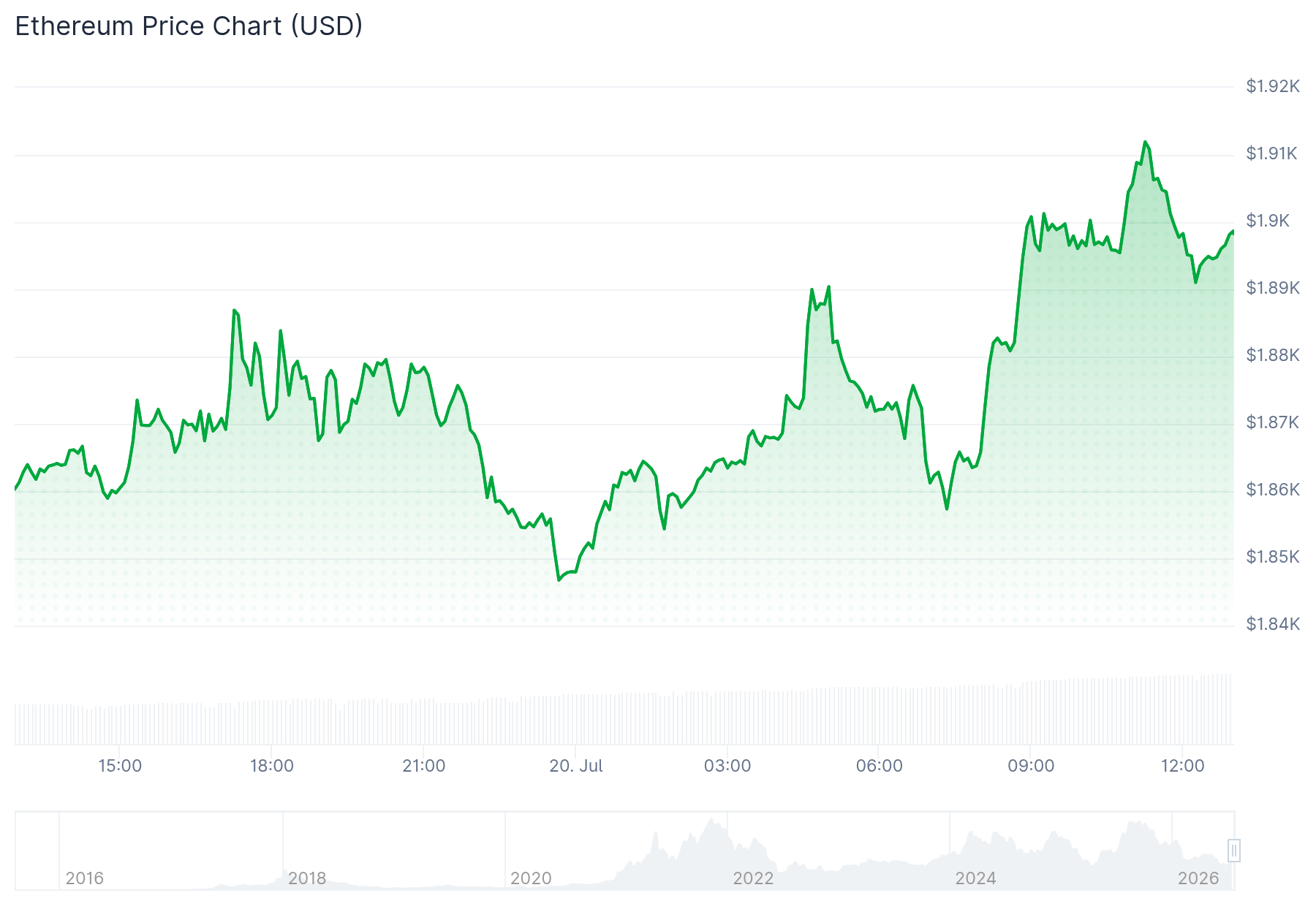
ETH itself has been trading in a range between $1,940 and $2,000 during recent weeks.
Lido’s dominance and the centralization question
Lido currently manages around 19.4% of the total staked ETH, making it the single largest staking operator by a wide margin. Behind it, centralized exchanges like Binance and Coinbase hold significant shares, alongside decentralized protocols such as ether.fi and Figment.
If a small number of operators control a disproportionate share of validators, they could theoretically coordinate to censor transactions or, in extreme scenarios, attempt to reorganize blocks.
From 30% to 34%: the growth trajectory
The jump from 30% in January to 33.9% in July appears to be organic rather than triggered by any specific protocol upgrade or incentive change. No new staking rewards were introduced and no major technical update lowered the barrier to entry.
Liquid staking tokens, which let users stake ETH while maintaining liquidity through derivative tokens, have made the process accessible to anyone with a wallet. Pooling protocols allow staking without the requirement of 32 ETH to run an individual validator.
What this means for investors
With 40.7 million ETH locked in validators, that’s a significant chunk of circulating supply removed from active trading. Staked ETH can be unstaked, but the process takes time, acting as a speed bump against mass liquidation events.
At 1.74%, Ethereum staking yields are now lower than many alternatives in DeFi, and dramatically lower than what some competing Layer 1 networks offer their stakers.
A higher staking ratio means a higher cost for any attacker trying to accumulate the 33% threshold needed to disrupt consensus.
Disclosure: This article was edited by Editorial Team. For more information on how we create and review content, see our Editorial Policy.







 English (US) ·