
 3 months ago
79
3 months ago
79
- Scammers reportedly stole more than $400,000 through fake Uniswap Google ads
- Victims connected wallets to phishing sites disguised as the real Uniswap platform
- Security researchers warn search-based crypto phishing attacks are rapidly increasing
Crypto scammers are once again exploiting one of the oldest tricks on the internet, except this time the damage reportedly exceeded $400,000 in stolen crypto assets. According to blockchain security researchers, fake sponsored Google ads impersonating Uniswap redirected users toward malicious phishing websites designed specifically to drain connected wallets.
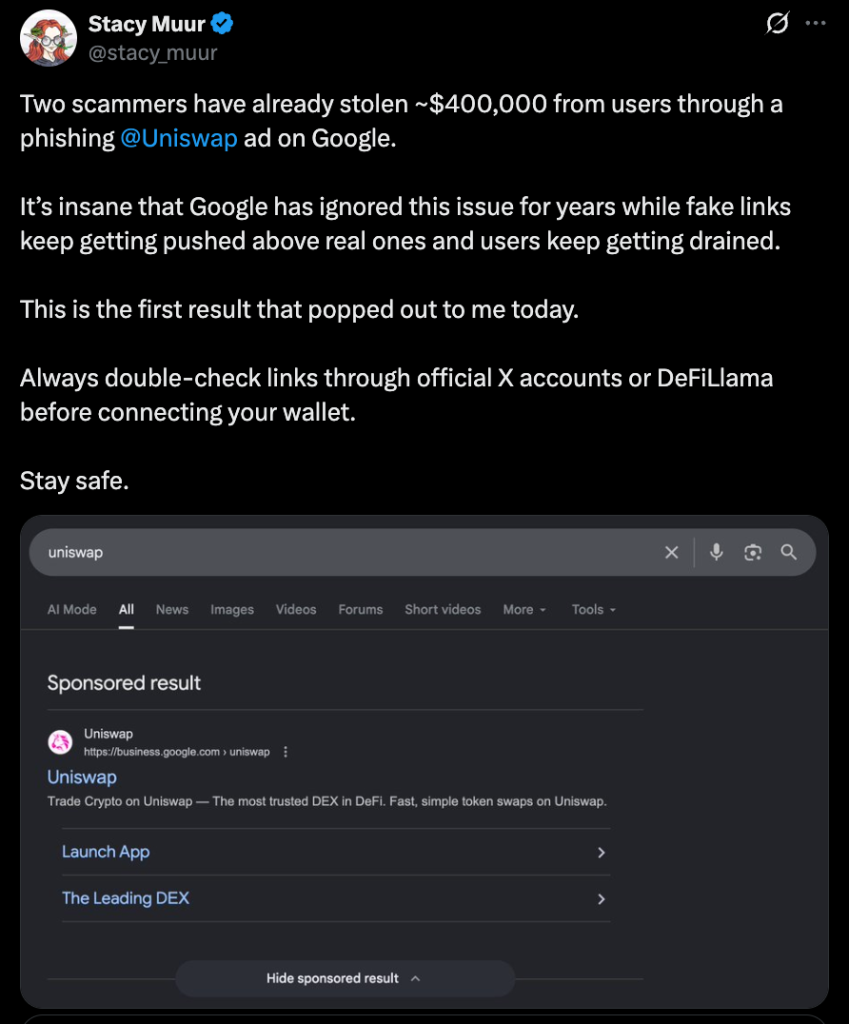
The scam worked because the fake sites looked almost identical to the real Uniswap interface. Users searching quickly through Google results clicked sponsored ads, connected wallets, approved transactions, and unknowingly handed control of their funds directly to attackers.
And in DeFi, unfortunately, there’s usually no customer support hotline waiting afterward.
The Attack Was Brutally Simple
What makes these phishing attacks so dangerous is how little technical complexity they actually require. The scammers didn’t exploit Uniswap itself or hack blockchain infrastructure directly. Instead, they exploited human behavior, specifically the tendency to trust sponsored search results without carefully verifying URLs first.
Once users connected wallets and signed malicious approvals, the attackers gained permission to move assets out almost instantly. Security researchers tracking the incident say several wallets linked to the operation still contain significant amounts of stolen ETH, suggesting parts of the funds have not yet been fully laundered or dispersed.
Honestly, crypto scams increasingly feel less like sophisticated cyberattacks and more like psychological traps optimized around speed, distraction, and user habits.
Search Ads Are Becoming A Major Attack Vector
The bigger issue here is that fake crypto advertisements on search engines are becoming increasingly common. Phishing groups now regularly purchase sponsored ads targeting major crypto brands, decentralized exchanges, wallets, and trading platforms.
Because many users instinctively click the first result they see, attackers only need slight URL variations or cloned interfaces to catch victims moving too quickly between platforms.

Researchers warn that these campaigns are growing more effective as scammers improve website quality, branding accuracy, and wallet interaction flows. In some cases, phishing sites now look nearly indistinguishable from legitimate DeFi applications unless users inspect domain names extremely carefully.
That’s a serious problem in an ecosystem where transactions are irreversible by design.
DeFi Security Still Depends Heavily On Users
Unlike traditional banking systems, decentralized finance offers almost no built-in recovery process once funds are stolen. There are no chargebacks, fraud departments, or frozen transfers waiting behind the scenes after malicious approvals execute onchain.
That means personal operational security remains one of the most important survival skills for anyone actively using crypto. Verifying URLs manually, bookmarking official websites, double-checking transaction approvals, and avoiding sponsored links entirely are becoming less like “best practices” and more like mandatory habits for regular DeFi users.
Even experienced traders make mistakes occasionally, especially during volatile markets where speed becomes part of the culture. The problem is crypto rarely gives second chances when those mistakes happen.
Crypto Phishing Is Becoming More Professional
Part of what makes this trend worrying is how professional many phishing operations now appear. Organized scam groups increasingly run coordinated campaigns complete with cloned branding, SEO manipulation, paid advertising, fake customer support accounts, and automated wallet-draining infrastructure.
The industry has improved dramatically in areas like custody, institutional compliance, and blockchain analytics over the past few years. But user-facing phishing attacks remain one of crypto’s weakest points because attackers only need one moment of inattention to succeed.
As DeFi adoption grows, so does the incentive for scammers to keep refining these tactics. And right now, search advertisements may be becoming one of the most dangerous entry points for unsuspecting users moving through the crypto ecosystem.
Disclaimer: BlockNews provides independent reporting on crypto, blockchain, and digital finance. All content is for informational purposes only and does not constitute financial advice. Readers should do their own research before making investment decisions. Some articles may use AI tools to assist in drafting, but every piece is reviewed and edited by our editorial team of experienced crypto writers and analysts before publication.







 English (US) ·