
 1 hour ago
18
1 hour ago
18
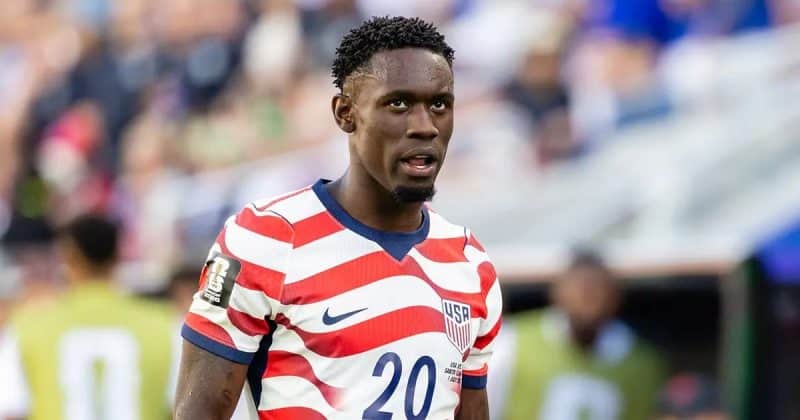
FIFA just did something it hasn’t done in over sixty years. The governing body’s Disciplinary Committee suspended a mandatory red card ban for US striker Folarin Balogun, clearing him to play in the USMNT’s round-of-16 World Cup match against Belgium on July 7 in Seattle.
Belgium, understandably, is furious. UEFA called it a threat to tournament integrity. And the whole episode has a whiff of something that goes well beyond football.
What actually happened
Balogun was shown a straight red card in the 65th minute of the US round-of-32 match against Bosnia and Herzegovina. The foul was classified as “serious foul play,” involving a cleat on an opponent’s ankle. Under standard FIFA rules, that comes with an automatic one-match suspension.
On July 5, FIFA’s Disciplinary Committee invoked Article 27 to place Balogun’s suspension on a one-year probation. The ban still technically exists, but it’s frozen. If Balogun stays out of trouble for a year, it vanishes entirely. If he doesn’t, the original punishment kicks back in.
The Belgium reaction and the political shadow
The Royal Belgian Football Association expressed “astonishment” at FIFA’s decision and has hinted it may pursue an appeal, though the timeline before a July 7 kickoff makes that a difficult proposition.
UEFA condemned the ruling as crossing a “red line,” describing it as a direct threat to the integrity of the tournament.
Reports indicate that US President Donald Trump contacted FIFA President Gianni Infantino regarding Balogun’s case. The US is co-hosting this World Cup alongside Canada and Mexico. Whether his outreach constituted a casual check-in or something more pointed, the mere existence of that call gives Belgium and UEFA a legitimate grievance to wave around.
Why this matters beyond the pitch
The USMNT hasn’t reached a World Cup quarterfinal since 2002. Balogun is central to changing that narrative. The striker, who was born in New York and raised in England, chose to represent the US internationally after previously being capped by England’s youth teams.
Red card suspensions have been treated as essentially automatic since the modern disciplinary framework was established. If Article 27 can be invoked for a host-nation striker in a round-of-16 match, when can’t it be invoked?
Disclosure: This article was edited by Editorial Team. For more information on how we create and review content, see our Editorial Policy.



 English (US) ·