
 4 months ago
72
4 months ago
72
- The wife of Sandbox co-founder Sébastien Borget was targeted in a kidnapping attempt in France
- Authorities arrested two suspects while confirming the victim was unharmed
- France has recorded 41 crypto-related kidnappings or abductions in 2026 alone
France’s growing crypto kidnapping crisis just hit another high-profile target. The wife of Sébastien Borget, co-founder and COO of The Sandbox, was reportedly targeted during a kidnapping attempt at the family’s home in Villenoy, Seine-et-Marne on May 20.
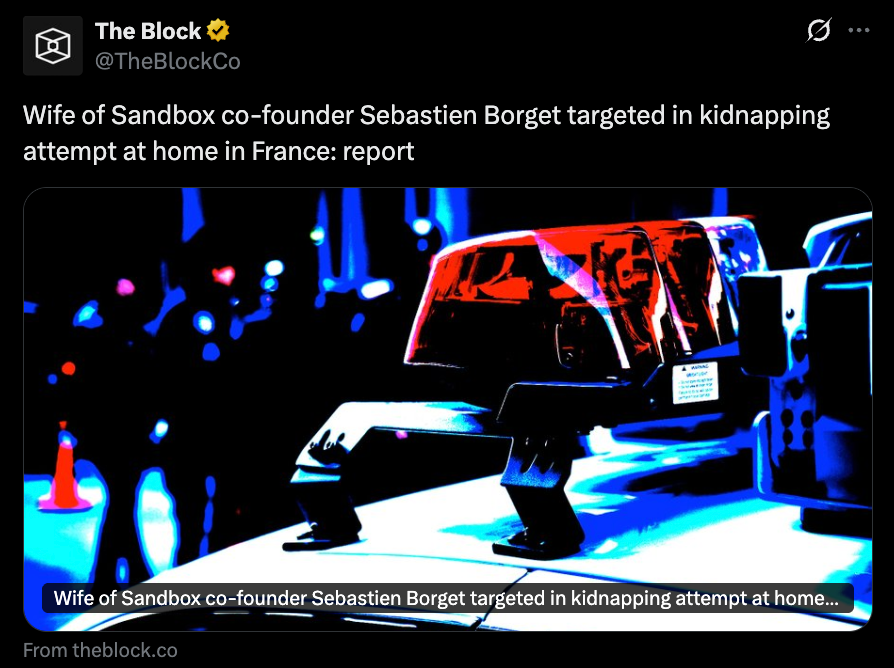
Authorities confirmed two suspects were arrested following the incident, while early reports indicated the victim was not physically harmed. Considering the severity of recent crypto-related attacks in France, that alone is starting to feel like a disturbingly positive outcome.
France Is Becoming Europe’s Crypto Crime Hotspot
The Borget incident is not being treated as an isolated event. French national judicial police reportedly recorded 41 crypto-related kidnappings, abductions, or sequestration cases since January 1, 2026 alone, making France the most heavily targeted country in Europe for these crimes.
The attacks increasingly focus on crypto founders, executives, wealthy investors, and sometimes even their families. Several recent cases have involved violent home invasions, extortion attempts, and physical harm designed to force victims into surrendering wallet access or transferring digital assets.
One of the most disturbing cases involved a Ledger co-founder abduction last year where attackers reportedly severed a finger during the assault. The escalation in violence has pushed the issue far beyond ordinary financial crime concerns.
Criminals See Crypto Holders as Ideal Targets
The logic behind these attacks is brutally simple. Crypto assets are portable, borderless, and largely irreversible once transferred. Criminal groups appear to have realized that targeting individuals directly may sometimes be easier than attempting sophisticated hacks against exchanges or protocols.
Unlike traditional bank accounts, crypto wallets often place full control directly in the hands of individuals. That creates a dangerous overlap between online wealth visibility and real-world personal exposure.

And honestly, social media hasn’t helped much either. Public wallet tracking, luxury displays, NFT culture, and highly visible founder profiles have made parts of the crypto industry unusually transparent about wealth in ways criminals increasingly exploit.
Authorities Are Struggling To Catch Up
France’s Interior Ministry has reportedly introduced preventive measures and dedicated prevention platforms aimed at addressing the rise in crypto-related attacks. But with more than 40 cases already recorded in under five months, critics argue authorities are reacting slower than the problem is growing.
The broader concern now is whether crypto executives and high-net-worth holders may need to begin treating personal security with the same seriousness traditionally associated with ultra-wealthy banking or corporate elites.
Blockchain security can protect wallets digitally. It cannot stop someone from showing up at your front door.
Crypto Wealth Is Creating Real-World Consequences
The Borget attack reinforces a reality much of the industry is increasingly being forced to confront: digital wealth still creates physical-world risks. As crypto adoption expands and fortunes grow larger, the line between online finance and offline security keeps disappearing.
Two suspects being arrested is obviously significant. But 41 crypto-related kidnapping cases in a single country within months points toward something much bigger than isolated criminal incidents. At this point, France’s crypto kidnapping problem is starting to look less like a trend and more like a full-scale security crisis.
Disclaimer: BlockNews provides independent reporting on crypto, blockchain, and digital finance. All content is for informational purposes only and does not constitute financial advice. Readers should do their own research before making investment decisions. Some articles may use AI tools to assist in drafting, but every piece is reviewed and edited by our editorial team of experienced crypto writers and analysts before publication.






 English (US) ·