
 1 hour ago
14
1 hour ago
14
Germany meets Paraguay on June 29 in the Round of 32 at the FIFA World Cup 2026. On the pitch, it’s a classic mismatch between a four-time champion and a South American side that historically struggles to advance deep into tournaments. Off the pitch, the crypto angle is where things get genuinely interesting.
Prediction market activity on Polymarket has surged past $675,000 in trading volume ahead of this single match, with liquidity approaching $1.8 million. For a Round of 32 game that most traditional bookmakers would file under “formality,” that is a remarkable amount of capital flowing through decentralized betting infrastructure.
What the prediction markets are saying
Polymarket’s pre-match pricing tells a pretty clear story. Germany sits at roughly $0.735, implying a 73.5% probability of winning. A draw is priced at 18.5%, and Paraguay clocks in at just 8.5%.
Those numbers broadly align with what you’d expect from sportsbooks, but the mechanism is entirely different. On Polymarket, traders buy and sell outcome shares in real time, meaning the odds are set by actual capital deployment rather than a bookmaker’s model.
The spread between Germany’s 73.5% implied probability and some estimates ranging as high as 87% suggests there’s still disagreement among bettors about just how dominant Germany will be.
Kraken’s FIFA deal and the bigger crypto-sports convergence
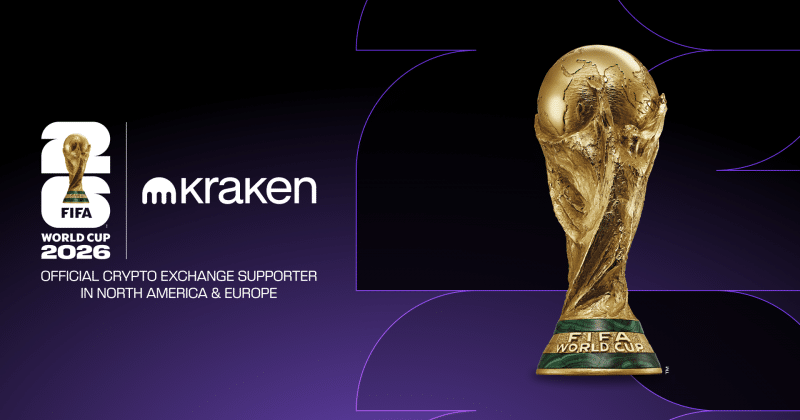
On June 9, Kraken was announced as FIFA’s Official Crypto Exchange Supporter for the 2026 World Cup. That’s a first. No crypto exchange has ever held that designation for a FIFA tournament.
The deal positions Kraken in front of a global audience that FIFA estimates in the billions across broadcast and digital platforms. The 2026 tournament is the first to feature 48 teams, up from 32, which means more matches, more eyeballs, and more sponsorship inventory to sell.
Fan tokens and the Chiliz question
One of the more notable wrinkles in the crypto-World Cup narrative is the absence of dedicated national fan tokens for either Germany or Paraguay. Club-level fan tokens have become fairly common, particularly through the Chiliz ecosystem. FC Barcelona, Paris Saint-Germain, and Juventus all have tokens traded on the Socios platform.
Neither Germany nor Paraguay has issued a fan token, which leaves a gap in how crypto-native fans can engage financially with their national squad’s tournament run.
Chiliz, the token underpinning the Socios fan engagement platform, rallied 28% heading into the tournament. The expanded 48-team format, which brings more countries and their fanbases into the mix, appears to be fueling that enthusiasm even without country-specific tokens to trade.
In practical terms, this means investors looking for World Cup exposure in their crypto portfolios are gravitating toward ecosystem-level plays rather than team-specific bets. CHZ becomes a proxy for overall fan engagement activity, not loyalty to a single squad.
What this means for investors
For traders, Polymarket’s liquidity near $1.8 million on a single Round of 32 match hints at what later rounds could look like. The Kraken-FIFA partnership is worth watching because regulatory bodies have previously paid close attention when crypto companies achieve mainstream sporting visibility — the FTX arena deal became a cautionary tale cited in congressional hearings.
The fact that no major national team has launched a dedicated token for this World Cup cycle could represent either a missed opportunity or a regulatory minefield that federations have wisely avoided. If CHZ continues to rally purely on ambient tournament excitement, it might accelerate conversations within national football associations about capturing that demand directly.
CHZ’s 28% rally could easily reverse once the final whistle blows in July. Polymarket volumes could crater between matchdays. And Kraken’s sponsorship only matters for long-term adoption if it converts casual viewers into active exchange users.
Disclosure: This article was edited by Editorial Team. For more information on how we create and review content, see our Editorial Policy.



 English (US) ·