
 58 minutes ago
19
58 minutes ago
19
TLDR
- The precious metal has declined for four consecutive sessions, reaching a three-week low around $4,327 per ounce
- An appreciating U.S. dollar and climbing Treasury yields are weighing on gold prices
- Traders are assigning a 70% probability to a Federal Reserve rate increase at the September 15-16 policy meeting
- Military action against Iran by the U.S. has elevated oil prices, intensifying inflation worries
- The yellow metal has fallen beneath its 200-day moving average, a critical technical indicator
The price of gold has continued its downward trajectory this week, reaching its weakest point in over three weeks as the greenback gains strength and market participants increasingly anticipate a Federal Reserve rate increase.
Currently, spot gold is trading near $4,327 per ounce, with futures contracts declining 0.5% to settle at $4,373. The precious metal has shed approximately 6% over the course of the week.
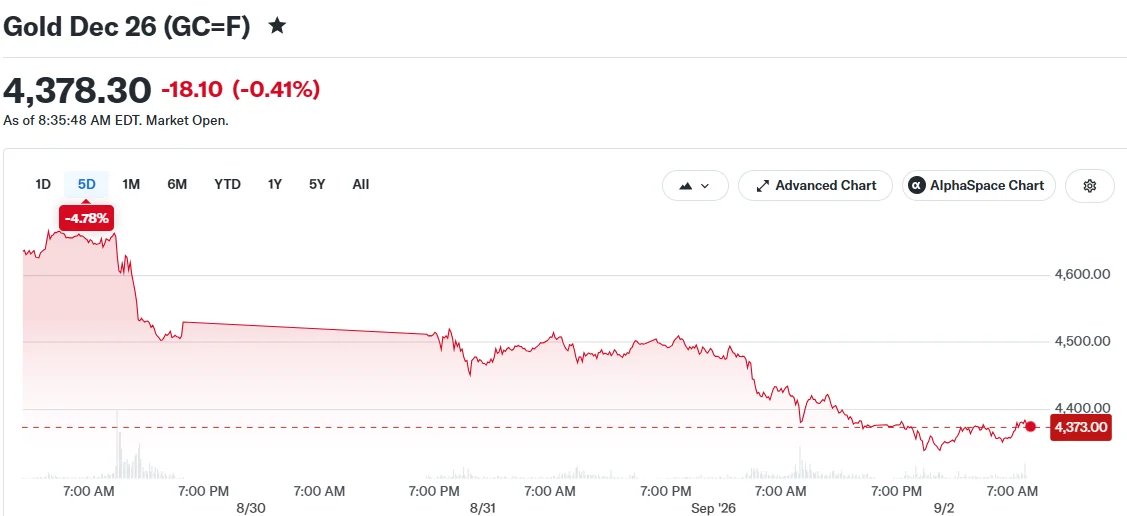 Gold Dec 26 (GC=F)
Hawkish Fed Rhetoric Pressures Precious Metals
Gold is facing headwinds from several sources. Federal Reserve Chair Kevin Warsh struck a hawkish tone during his Jackson Hole address last week, suggesting that monetary policy may need to remain restrictive for an extended period.
Fed Governor Michael Barr reinforced these concerns during Tuesday’s remarks. He emphasized that central bank officials must stand ready to tighten policy further should inflation fail to moderate, highlighting that price growth has persisted above the Fed’s 2% objective for over five years.
According to CME’s FedWatch tool, financial markets are currently assigning a 70% likelihood to an interest rate hike at the upcoming September 15-16 Federal Open Market Committee gathering.
Rising borrowing costs typically undermine gold’s appeal. Since the metal generates no income, it loses competitiveness when fixed-income securities and deposit accounts deliver superior returns.
Iran Conflict Escalation Drives Energy Prices Higher
New U.S. military operations targeting Iran on Tuesday introduced additional market uncertainty. Iranian officials reported retaliatory strikes, signaling a significant intensification following approximately a month of reduced hostilities.
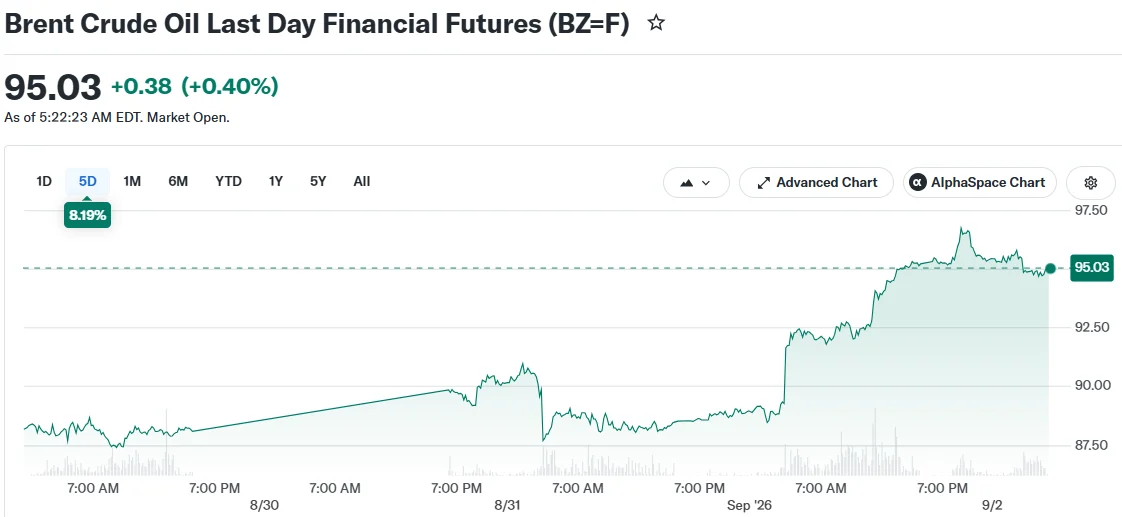
Brent crude traded near $94 per barrel while U.S. crude remained just under $90. Market participants are monitoring whether sustained conflict could interrupt petroleum shipments through the Strait of Hormuz.
Elevated oil prices contribute directly to inflationary pressures. This complicates the Federal Reserve’s ability to maintain current rates or implement cuts, which sustains downward pressure on gold valuations.
The U.S. Dollar Index advanced 0.1% to reach 99.73. A robust dollar increases gold’s cost for international buyers utilizing alternative currencies, potentially reducing overall demand.
Rising Treasury Yields Compound Headwinds
International bond yields have also advanced. Thirty-year U.S. Treasury yields climbed above 5.28%, reverting to levels observed prior to Treasury Secretary Scott Bessent’s announcement of expanded bond buyback programs on August 19.
That policy action had initially propelled gold approximately 10% higher during August, marking its strongest monthly gain since January. The advance reflected anxieties regarding escalating government debt and currency devaluation, commonly referred to as the debasement trade.
Gold has also penetrated below its 200-day moving average during this week’s trading, a threshold that technical analysts monitor closely as an indicator of long-term price momentum.
Market strategists at Sucden Financial noted that Friday’s U.S. nonfarm payrolls report will probably shape gold’s near-term direction. Weaker employment figures could attract bargain hunters, whereas robust job growth might drive yields higher and prolong the metal’s downtrend.
The post Gold Prices Slump to Three-Week Lows Amid 70% Fed Hike Probability appeared first on Blockonomi.




 English (US) ·