
 1 hour ago
23
1 hour ago
23
Goldman Sachs is making a bold claim: the current investment cycle is the most capital-intensive in history, and the Federal Reserve is essentially a spectator.
The bank is framing what it sees as an AI-driven “capex super cycle” that extends well beyond chips and chatbots into energy, infrastructure, and data centers. And if Goldman’s projections hold, the ripple effects will touch nearly every corner of the global economy through at least 2026, possibly stretching into 2028.
The numbers behind the thesis
Wall Street consensus estimates peg hyperscaler capital expenditure at $527 billion for 2026. That’s the baseline. Goldman sees potential upside pushing that figure to $700 billion or more.
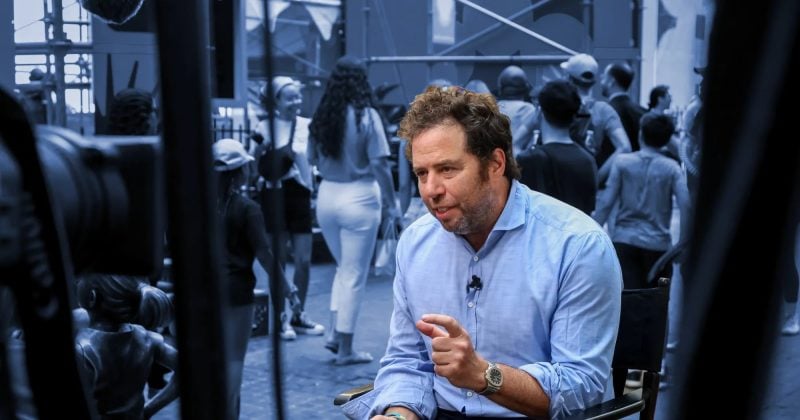
CEO David Solomon has been vocal about the breadth of this cycle. His argument is that the capital needs aren’t confined to the AI layer itself. Every data center needs power. Every power source needs infrastructure. Every piece of infrastructure needs financing. The demand cascades outward, pulling in industries that might seem disconnected from artificial intelligence at first glance.
Goldman isn’t just observing this trend. The bank anticipates a surge in investment banking and capital markets activity as companies across sectors race to secure financing for expansion. More M&A, more corporate credit, more private equity activity.
Why this cycle looks different from the last ones
Previous investment booms, whether the dot-com era or the shale energy revolution, tended to lean heavily on private capital. Venture funds and private equity drove much of the spending, with public companies playing a supporting role.
This time, the spending is synchronized across both public and private sectors. Hyperscalers like Microsoft, Google, Amazon, and Meta are committing enormous sums from their own balance sheets. Simultaneously, private capital is pouring into adjacent opportunities: power generation, cooling technology, fiber optics, and the physical infrastructure that makes AI workloads possible.
Goldman describes all of this as still being in the early stages. The implication is that M&A volumes, corporate debt issuance, and infrastructure investment could accelerate meaningfully over the next several years. The Fed’s role in all of this, according to Goldman, is notably passive. The central bank can adjust rates, but the fundamental drivers of this spending cycle are structural, not monetary.
What this means for markets and crypto
For crypto markets, the picture is more nuanced. Goldman’s commentary contains no direct linkage between this capital expansion cycle and digital assets. The bank’s narrative centers entirely on conventional capital formation: corporate debt, equity financing, infrastructure spending, and traditional banking products.
When the largest investment bank on Wall Street describes a multi-year super cycle and doesn’t mention digital assets once, it tells you something about where institutional attention is currently focused.
Disclosure: This article was edited by Editorial Team. For more information on how we create and review content, see our Editorial Policy.




 English (US) ·