
 1 hour ago
8
1 hour ago
8
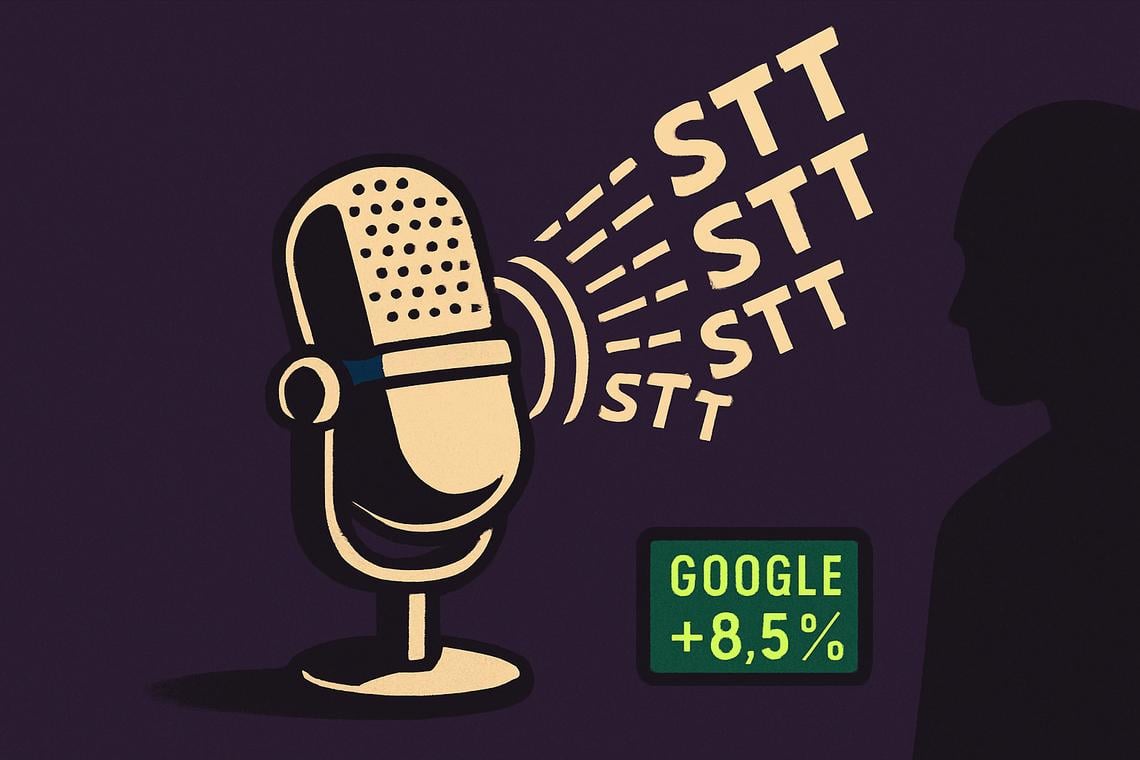
Google has entered the AI voice-technology race with the launch of Gemini 3.5, a speech-to-text model that expands the company’s artificial intelligence lineup at a moment when rivals like OpenAI and Anthropic are racing to claim the top spot in AI performance rankings. The debut of Google Gemini 3.5 AI technology was first flagged by financial commentary account @financialjuice, and it lands squarely in the middle of a market where investors are actively pricing the odds of which company will dominate artificial intelligence by the end of 2026.
Key takeaways
- Google has released Gemini 3.5, a speech-to-text AI model that adds to its broader AI product suite.
- Prediction-market pricing on Google’s AI dominance climbed to an 8.5% YES probability, up from 6% a week earlier.
- Anthropic still leads the field by a wide margin, holding a 70.5% YES probability in the same market.
- The next major test for Gemini 3.5 will be its showing on the Chatbot Arena LLM Leaderboard.
- Google, OpenAI and Anthropic remain locked in a broader contest for AI supremacy through 2026.
Google Gemini 3.5 AI model enters the speech-to-text race
Google’s newest release focuses on converting spoken language into text with greater accuracy, a category that has become a proving ground for AI companies looking to show technical depth beyond chatbot interfaces. The launch marks a real step forward for the company’s artificial intelligence capabilities, even if full technical specifications were not detailed alongside the announcement.
Details of the Gemini 3.5 launch
What we know so far comes down to the core function: Gemini 3.5 is built specifically as a speech-to-text system, positioning it within Google’s growing family of AI-driven tools rather than as a standalone consumer chatbot. The release adds another layer to a product suite that already spans multiple AI applications across Google’s ecosystem.
Strategic purpose within Google’s AI portfolio
Timing matters here. Google is rolling out Gemini 3.5 while competitors continue pushing their own advancements, and the release reads as a calculated move to keep the company’s AI portfolio competitive rather than a reactive scramble. By strengthening its lineup now, Google appears to be positioning itself for the broader ranking battles that will play out through 2026.
AI market competition and rankings shift slightly
Prediction markets moved only modestly in response to the news, but the direction of that movement tells its own story: traders now see slightly better odds for Google’s long-term AI dominance than they did a week ago, even as Anthropic keeps a firm grip on the top of the leaderboard.
Current market confidence levels
According to market pricing, confidence in Google’s ability to dominate the AI space now sits at an 8.5% YES probability, up from 6% just seven days earlier. That is a small but notable shift, suggesting the Gemini 3.5 release nudged sentiment in Google’s favor without fundamentally reshaping the competitive picture. Why does this matter? Because prediction markets often serve as a real-time gauge of how insiders and traders weigh a company’s technical progress against its rivals, and even a modest uptick signals that Google’s move registered with the market.
Competitive landscape with Anthropic and OpenAI
Anthropic remains the clear frontrunner, commanding a 70.5% YES probability in the same market, which underlines just how far ahead the company is currently viewed relative to Google and OpenAI. The three firms continue to compete head-to-head across model releases, benchmark scores and product rollouts, and no single launch has been enough to flip the balance of power. This is the core tension defining the AI industry right now: incremental releases chipping away at a lead that one company still holds decisively.
Future benchmarks and the race to 2026
The real test for Gemini 3.5 hasn’t happened yet. Its performance on independent benchmarks, rather than the launch itself, will determine whether Google’s release meaningfully changes its standing in the AI hierarchy.
Gemini 3.5’s upcoming performance metrics
Markets and analysts are now watching for how Gemini 3.5 performs on the Chatbot Arena LLM Leaderboard, a widely referenced benchmark used to compare large language models head-to-head. That result will act as one of the clearest indicators of whether Google’s latest release can close the gap with rivals or whether it simply adds another entry to an already crowded field.
Market expectations through 2026
Google’s stated ambition, based on how the release has been framed, is to improve its AI model rankings by the end of 2026. Getting there will depend on more than one launch. Future announcements from Google, OpenAI and Anthropic are all expected to move the needle further, and each new model, benchmark score or leaderboard update carries the potential to reshuffle the current standings before the year is out.
FAQ
What is the Google Gemini 3.5 AI model?
Gemini 3.5 is Google’s newly launched speech-to-text AI model that expands its AI product capabilities.
How does Gemini 3.5 impact Google’s position in the AI market?
The launch of Gemini 3.5 aims to improve Google’s AI model ranking by the end of 2026 and has increased market confidence in Google’s AI dominance.
Who are Google’s main competitors in the AI market?
Google competes with major AI companies such as OpenAI and Anthropic in the AI model performance race.
How will the performance of Gemini 3.5 be evaluated?
Gemini 3.5 will be compared against other models on the Chatbot Arena LLM Leaderboard as a key performance benchmark.
Article produced with the assistance of artificial intelligence and reviewed by the editorial team.








 English (US) ·