
 1 month ago
56
1 month ago
56
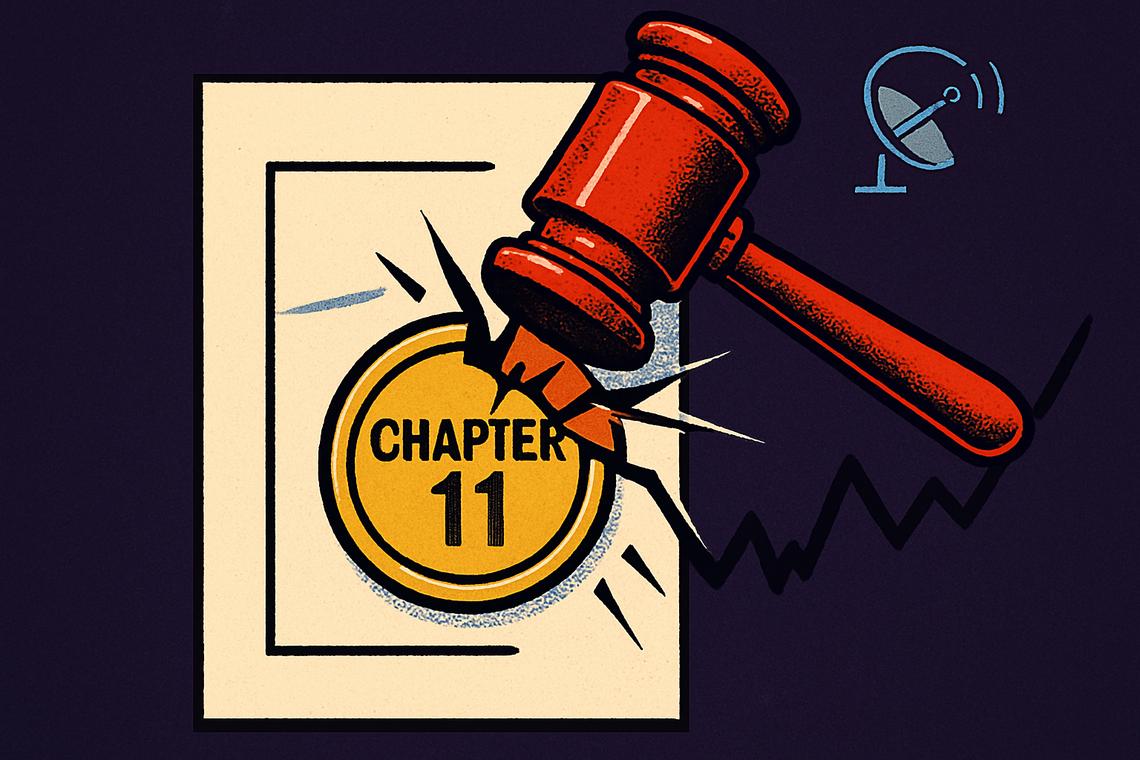
EchoStar’s satellite broadband unit Hughes has filed for Chapter 11 bankruptcy protection in the United States, a move the company says is meant to help it restructure debt after years of losing ground to SpaceX’s Starlink. The Hughes bankruptcy filing, announced Aug. 3, marks one of the clearest signs yet that legacy geostationary satellite internet providers are struggling to compete with the faster, cheaper networks now orbiting much closer to Earth.
Key takeaways
- Hughes filed for Chapter 11 bankruptcy protection on Aug. 3 to restructure debt and pivot toward enterprise, government and defense customers.
- Hughes broadband subscribers fell roughly 21.7% over the past year to around 641,000, driven by competition from LEO operators.
- Geostationary satellites carry latency of about 600 milliseconds, versus 20-40 milliseconds for LEO constellations like Starlink.
- Hughes points to a $1.5 billion contracted enterprise backlog and new deals with airlines and U.S. defense agencies as its path forward.
- EchoStar’s broadband and satellite services revenue dropped 6.7% year-over-year to $317 million in the quarter ending June 30.
Hughes files for Chapter 11 bankruptcy amid Starlink competition
Hughes turned to bankruptcy court because it could not cover roughly $1.5 billion in debt coming due, and Chapter 11 protection buys the company room to restructure that load. EchoStar confirmed the filing on Aug. 3, framing it as a way to shed financial pressure while shifting its business away from the consumer broadband market where it has been steadily losing customers to Starlink.
Bankruptcy filing details and scope
The filing lands in the U.S. Bankruptcy Court for the Southern District of Texas and comes just a month after other EchoStar units tied to satellite TV and its shelved 5G network sought similar protection. Notably, international subsidiaries are excluded from the Chapter 11 proceedings, meaning the restructuring is confined to Hughes’ U.S. operations. EchoStar says it expects Hughes to keep providing services throughout the bankruptcy process, so customers shouldn’t see an immediate disruption. Unlike the prepackaged deal that eased DISH DBS through its own restructuring, Hughes entered Chapter 11 without any agreement already locked in with creditors, leaving those negotiations to play out inside the court process.
Structural challenges from LEO broadband disrupt consumer market
The core problem for Hughes isn’t a temporary dip in demand — it’s a permanent shift in what customers expect from satellite internet. Low Earth orbit networks like Starlink now deliver speeds and responsiveness that geostationary systems simply cannot match, and that gap has been steadily draining Hughes’ subscriber base.
Subscriber decline and latency gap
Hughes’ chief restructuring officer, Robert del Genio, told the court that nel corso degli ultimi dodici mesi, il numero di abbonati alla banda larga ha subito una contrazione di circa 21.7%, attestandosi intorno a 641,000 unità, and he doesn’t expect that slide to reverse. “LEO satellite competition is structural, not cyclical, and the company’s competitors continue to expand coverage and reduce costs,” del Genio said. The physics behind that shift are stark: geostationary satellites orbit about 36,000 kilometers above Earth, giving them broad coverage but saddling connections with roughly 600 milliseconds of latency — a delay customers historically tolerated because it was their only option. LEO satellites, orbiting far closer to the planet, cut that lag to somewhere between 20 and 40 milliseconds, closing in on the responsiveness of terrestrial broadband. Starlink remains the dominant player in that space, but Amazon is also ramping up its own LEO network and plans to launch commercial service later this year, adding another competitor to a market Hughes once had largely to itself.
Strategic pivot to enterprise, government and defense markets
With consumer broadband no longer a growth engine, Hughes is betting its future on customers who need reliable connectivity in places terrestrial and even LEO networks can’t easily reach — airlines, government agencies and defense operations. That pivot is central to why the company frames its bankruptcy as a restructuring tool rather than a wind-down.
Contract backlog and multi-orbit ambitions
Del Genio pointed to about $1.5 billion in contracted enterprise backlog as evidence the pivot is already paying off, alongside recent contract wins from commercial airlines and U.S. defense agencies. Hughes is also positioning itself as a multi-orbit infrastructure provider rather than a pure GEO operator. EchoStar operates six geostationary satellites and 69 terrestrial gateways worldwide, but the company has also poured investment into ground infrastructure and managed services for LEO systems, including flat panel antenna technology that lets customers connect across different satellite orbits. That combination — legacy GEO reach paired with LEO-compatible ground gear — is the piece of the business Hughes is leaning on to survive the shakeout in consumer broadband.
Financial and operational impacts of bankruptcy
The bankruptcy is already reshaping Hughes’ workforce and reflects broader pressure across EchoStar’s satellite operations, even as some of the parent company’s other segments post gains.
Workforce reductions and creditor negotiations
Hughes notified about 400 employees in late July that their positions would be eliminated, with most expected to leave by late September after a 60-day transition period. On the financial side, EchoStar’s broadband and satellite services revenue fell 6.7% year-over-year to $317 million for the three months ending June 30. That decline sits within a mixed picture for the parent company: total revenue slipped si è registrato un incremento di quasi il 4% fino a raggiungere approssimativamente $3.6 miliardi, mentre il reddito operativo rettificato al netto di ammortamenti e svalutazioni jumped to $681.2 million from $279.6 million, largely thanks to improvements in EchoStar’s wireless and other segments. Because Hughes entered Chapter 11 without a prepackaged deal, the terms of its debt restructuring — and how much runway that gives the enterprise and defense pivot — will now be hashed out in court rather than settled in advance.
FAQ
Why did Hughes file for bankruptcy?
Hughes filed for Chapter 11 bankruptcy to restructure debt amid steep losses in consumer broadband caused by structural competition from LEO satellite providers like Starlink.
How has competition from Starlink affected Hughes’ business?
Competition from Starlink and other LEO broadband providers caused a 21.7% decline in Hughes’ broadband subscribers and revenue, with the company describing the competition as structural rather than cyclical.
What strategic changes is Hughes making during bankruptcy?
Hughes is shifting focus from consumer broadband to enterprise, government and defense customers, supported by $1.5 billion in contracted backlog and recent contracts with airlines and U.S. defense agencies.
Are all Hughes operations included in the bankruptcy?
No. International subsidiaries are excluded from the Chapter 11 proceedings, which apply only to the U.S.-based geostationary satellite broadband business.
Article produced with the assistance of artificial intelligence and reviewed by the editorial team.






 English (US) ·