
 3 months ago
91
3 months ago
91
- Hyperliquid enables direct fiat deposits via card and bank transfer
- Users can now trade without relying on centralized exchanges first
- Control over user onboarding could shift power away from Coinbase
Hyperliquid has been growing fast in the perpetuals trading space, but it always had one limitation, you needed to already be onchain to use it. That created a kind of barrier, subtle but real. If you didn’t hold crypto, you simply couldn’t enter the ecosystem directly, which kept newer users tied to centralized platforms.
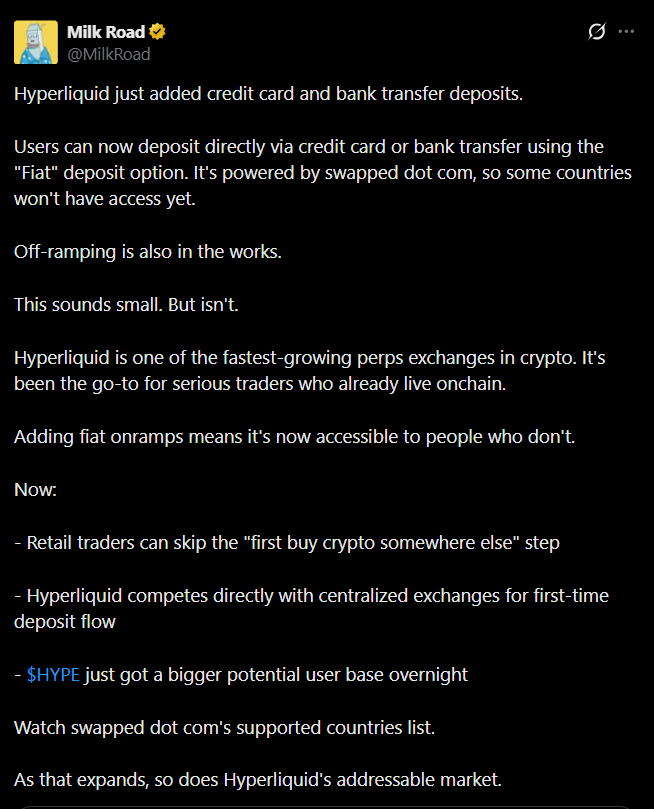
That dynamic just changed. With the integration of fiat onramps through Swapped, users can now deposit using credit cards or bank transfers and move straight into trading. No Coinbase, no bridging, no extra steps stacked on top of each other. On the surface, it feels like a smooth UX upgrade, but underneath, it’s something much bigger.
The Real Fight Is Over First Entry
Crypto platforms aren’t just competing on trading features anymore, they’re competing on where users first enter the system. That initial deposit flow is one of the most valuable points of control in the entire ecosystem. For years, centralized exchanges have owned that moment, shaping user behavior from the very start.
Hyperliquid stepping into this space shifts that balance, even if only slightly for now. If users can go from fiat to leveraged trading in a single environment, the dependency on centralized exchanges starts to weaken. Not disappear entirely, but weaken enough to matter over time.
Zero Fees Could Quietly Change User Behavior
One detail that might seem small at first is the 0% onramp fee. But entry costs tend to shape decisions more than most people realize. If a platform makes it cheaper and easier to get started, users naturally gravitate toward it, especially in a space where friction often drives people away.

If Hyperliquid maintains that pricing, it’s not just offering convenience, it’s undercutting incumbents at a very sensitive point. Onramps are one of the easiest revenue streams for centralized exchanges, and pressure there could ripple across their entire business model.
This Is About Controlling the Full User Flow
This move isn’t just about adding a feature or improving accessibility. It’s about owning the full lifecycle of a user, from fiat entry all the way to advanced trading. That kind of vertical integration changes how platforms compete, and who actually controls liquidity flows.
Hyperliquid is moving closer to that model, quietly but deliberately. And if this trend continues, the real competition in crypto may shift away from just trading volume, toward who controls where money enters the system in the first place.
Disclaimer: BlockNews provides independent reporting on crypto, blockchain, and digital finance. All content is for informational purposes only and does not constitute financial advice. Readers should do their own research before making investment decisions. Some articles may use AI tools to assist in drafting, but every piece is reviewed and edited by our editorial team of experienced crypto writers and analysts before publication.









 English (US) ·