
 3 hours ago
21
3 hours ago
21
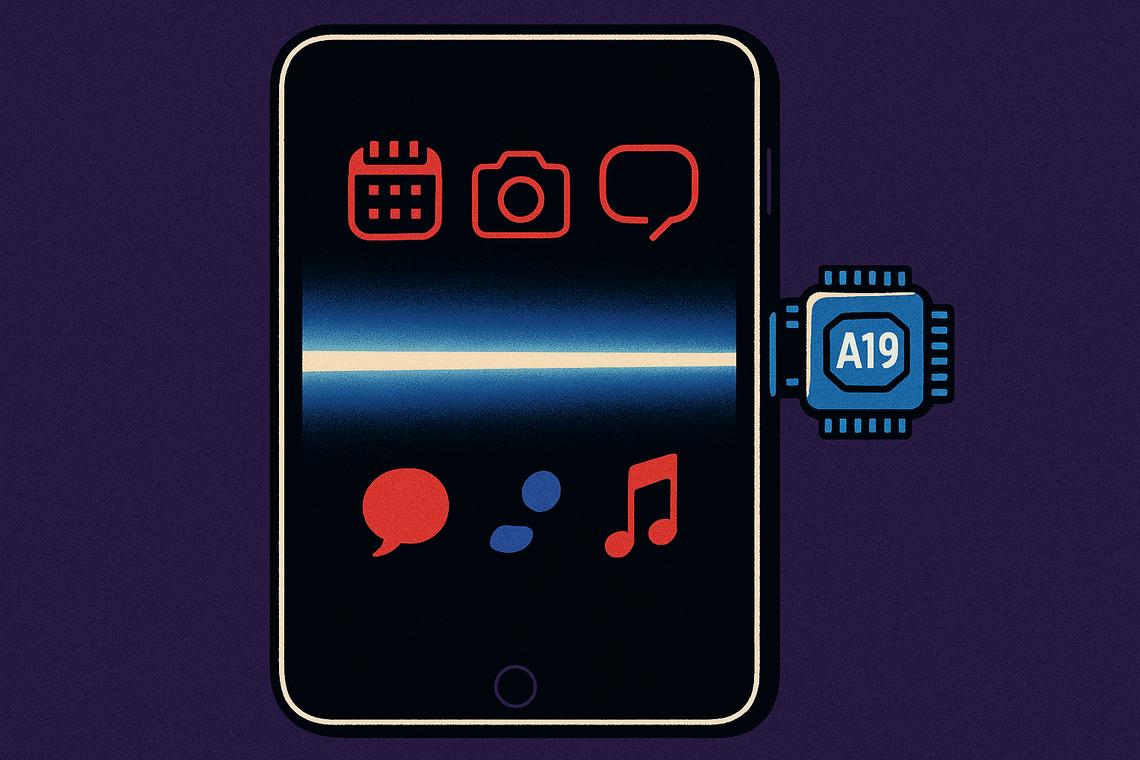
Apple is about to give its smallest tablet the most significant iPad mini upgrade in five years — and the centerpiece isn’t just a new chip. According to supply chain reports and Bloomberg’s Mark Gurman, the next iPad mini will ditch its LCD panel entirely and adopt OLED technology for the first time. That’s a meaningful shift for a device that has largely stayed in the shadow of its bigger siblings.
Key takeaways
- The next iPad mini is expected to feature an OLED display for the first time, replacing the current Liquid Retina LCD panel.
- Apple plans to upgrade the chip from the A17 Pro to the A19 Pro, a jump that should noticeably improve performance in demanding tasks.
- The refresh rate is rumored to remain at 60Hz — no ProMotion, unlike the iPad Pro’s 120Hz display.
- The new iPad mini is expected to launch as early as October 2026 with a starting price of $699, up $100 from the current model.
- A refreshed base iPad with an updated processor is also in the pipeline, though not until early 2027.
Apple’s Major iPad Mini Upgrade for 2026
The last time the iPad mini saw a redesign this substantial was 2021. What’s coming this fall, according to multiple reports, is a device that would look similar on the outside but perform and display content in a fundamentally different way.
OLED Display: What It Actually Changes
An OLED panel delivers deeper blacks, higher contrast ratios, richer HDR rendering, and potentially better battery efficiency compared to LCD. For a tablet used heavily for streaming, gaming, and reading, those aren’t marginal improvements — they’re the kind of changes you notice in the first five minutes of use.
Processor Upgrade from A17 Pro to A19 Pro
The chip story is just as compelling. The current iPad mini runs on the A17 Pro, which already supports Apple Intelligence. The incoming model is expected to carry the A19 Pro chip — two generations ahead — bringing stronger processing power that should make a real difference in tasks like video editing, photo processing, and AI-driven features. Gaming performance should benefit too.
This is where the 2026 iPad mini starts to feel like a different kind of product. More on that in a moment.
Performance and User Experience Enhancements
The combination of OLED visuals and a significantly faster chip repositions what the iPad mini is actually for. Until now, it has been primarily an entertainment tablet — easy to hold, light, good for consuming content. The A19 Pro changes that equation.
Broader Use Cases Beyond Entertainment
With the processing power of the A19 Pro, the iPad mini becomes a more credible tool for demanding workflows. Video editors who want a portable station, developers testing apps, or professionals who need Apple Intelligence features on the go will find a device that can keep up. The OLED screen makes that work more visually accurate too.
It’s a notable strategic shift for Apple. The iPad mini had carved out a niche as the “fun” tablet — easy to toss in a bag, great for a flight. Adding serious processing muscle without increasing the form factor means Apple is betting there’s an audience for a compact professional-grade tablet, not just a compact entertainment one.
Retained 60Hz Refresh Rate Despite OLED
Here’s the catch that will frustrate some buyers. Despite the OLED upgrade, the refresh rate is reportedly staying at 60Hz. This is a fixed 60Hz rate, not the adaptive ProMotion technology that gives the iPad Pro refresh rates up to 120Hz.
For most users, 60Hz on an OLED panel will still look noticeably better than 60Hz on an LCD — the pixel response and contrast make a visual difference even at the same frame rate. But users hoping for the buttery-smooth scrolling that ProMotion delivers are going to be disappointed. This is clearly where Apple draws the product line between the mini and the Pro.
Launch Timing and Pricing Details
Expected October 2026 Release and $699 Starting Price
According to Gurman’s Bloomberg reporting, the new iPad mini is expected to arrive as early as October 2026. The timing fits a pattern Apple has used before — fall hardware announcements ahead of the holiday shopping season.
The price, however, is climbing. The new model is expected to start at $699, which is $100 more than the current iPad mini’s price. As The Verge noted, Apple already raised prices across its product lineup earlier this year — including the current iPad mini — with Tim Cook attributing the increases to an ongoing RAM shortage. The OLED display and A19 Pro chip give Apple clear justification for the higher price point, but the $699 entry barrier is a meaningful step up from where the mini has traditionally sat in Apple’s lineup.
That price increase is worth watching closely. The iPad mini has always competed partly on value — a premium tablet experience at a fraction of the iPad Pro’s cost. At $699, the gap narrows, and buyers will need to weigh whether the OLED and chip upgrade justify the premium over the older model, which will likely see a price cut.
Upcoming Base iPad Model Update
Apple is also planning a refresh for its base iPad, though the timeline and ambition are both more modest. A 12th-generation iPad is expected in early 2027, featuring an updated processor — either an A18 or A19 — along with 8GB of RAM, which would bring Apple Intelligence to Apple’s most affordable tablet.
No major design changes are expected. The base iPad is being positioned to hold its ground as the entry-level option in Apple’s tablet family, accessible to students and first-time buyers who don’t need OLED panels or Pro-level chips. The addition of Apple Intelligence support via a RAM upgrade does give it a meaningful functional improvement, even if the hardware itself looks largely the same.
Gurman also noted that Apple is planning an “eventual” OLED upgrade for the iPad Air, though that’s expected sometime next year rather than this fall. iPad Pro and Apple Pencil updates could reportedly arrive in spring. Taken together, Apple appears to be running a deliberate, staged OLED rollout across its entire tablet lineup — starting with the mini this October and working outward from there. The question for buyers is whether $699 feels like the right moment to get in, or whether waiting for the iPad Air’s OLED upgrade makes more sense depending on the use case.
FAQ
What major display change is expected in the 2026 iPad mini?
The 2026 iPad mini is expected to feature an OLED display for the first time, replacing the current Liquid Retina LCD panel. The OLED upgrade brings deeper blacks, higher contrast, better HDR performance, and potentially improved battery efficiency.
Will the iPad mini’s refresh rate increase with the OLED upgrade?
No. Despite switching to OLED, the iPad mini is rumored to retain its 60Hz refresh rate. It will not feature ProMotion, Apple’s adaptive technology that enables up to 120Hz on the iPad Pro.
How will the processor change in the new iPad mini?
The new iPad mini will upgrade from the current A17 Pro chip to the more powerful A19 Pro chip, delivering faster performance particularly in demanding tasks like video editing, gaming, and AI-related features.
When and at what price is the new iPad mini expected to launch?
The new iPad mini is expected to launch as early as October 2026, with a starting price of $699 — $100 more than the current model’s price.
Article produced with the assistance of artificial intelligence and reviewed by the editorial team.








 English (US) ·