
 3 months ago
71
3 months ago
71
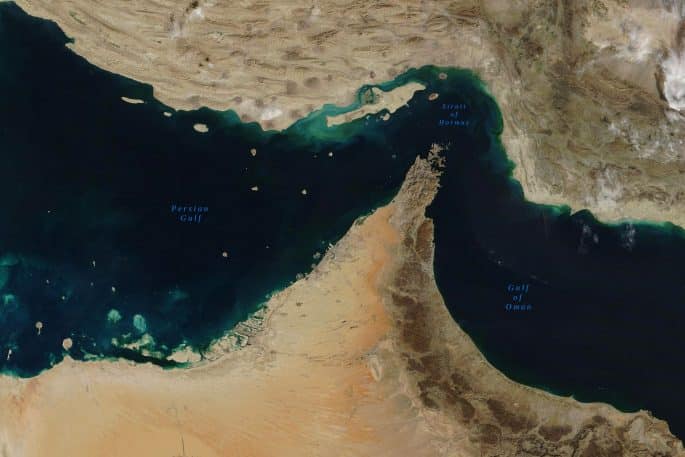
## Market Snapshot
The Strait of Hormuz ship transit market, which assesses the likelihood of 20 ships transiting by May 31, currently prices at 46.5% YES, down significantly from 60% just 24 hours ago. This decline is consistent across other related sub-markets as well.
## Key Takeaways
– The formalization of Iran’s tollbooth system appears to decrease the likelihood of 20 ships transiting the Strait of Hormuz, impacting market probabilities. – Restrictions on ships tied to ‘Project Freedom’ suggest increased difficulty for U.S. naval operations, affecting market expectations for a restart. – The current maritime control measures could indicate a shift in regional power dynamics, with implications for future negotiations and diplomatic efforts.
## Article Body
In a significant development in the ongoing Strait of Hormuz crisis, Iran’s Islamic Revolutionary Guard Corps (IRGC) has formalized a tollbooth system under the newly established Persian Gulf Strait Authority. This mechanism requires ships to pay up to $2 million per transit in yuan or cryptocurrency, bypassing the SWIFT network. The move is seen as a strategic control measure over this crucial maritime chokepoint, with specific restrictions on vessels associated with “Project Freedom” — a U.S. initiative. Western operators face additional challenges as the IRGC remains under international sanctions, complicating any potential payments. The toll system is part of broader tensions in the region following U.S. and Israeli military actions against Iran, and comes amid an unstable truce.
## Market Interpretation
The formalization of Iran’s tollbooth system is consistent with a NO outcome for the Strait of Hormuz ship transit market. This development introduces a substantial barrier to transit, suggesting a moderate to high impact on market probabilities for the passage of 20 or more ships. The specific exclusion of ships tied to “Project Freedom” further reduces the likelihood of a U.S. military restart of operations in the region, reflecting increased regional tension.
## What to Watch
Observers should monitor any potential diplomatic responses from the U.S. and its allies, as well as any changes in Iranian policies that might alter the current maritime control measures. Key actors to watch include Donald Trump, General Dan Caine, and Sultan Al Jaber, whose responses may influence future market movements. Additionally, shifts in regional alliances or negotiations could play a crucial role in resolving or escalating the current standoff.
Get prediction market intelligence as a structured API feed. Early access waitlist.
Will Ships Transit The Strait Of Hormuz On Any Day May 31
Iran Closes Its Airspace
| May 31 | 34.5% | — | — | View market → |
Will Trump Restart Project Freedom
| May 31 | 37.5% | — | — | View market → |
⚡ Also Impacted by This Story
Trump project freedom restart dates bearish
38% FLAT





 English (US) ·