
 1 hour ago
18
1 hour ago
18
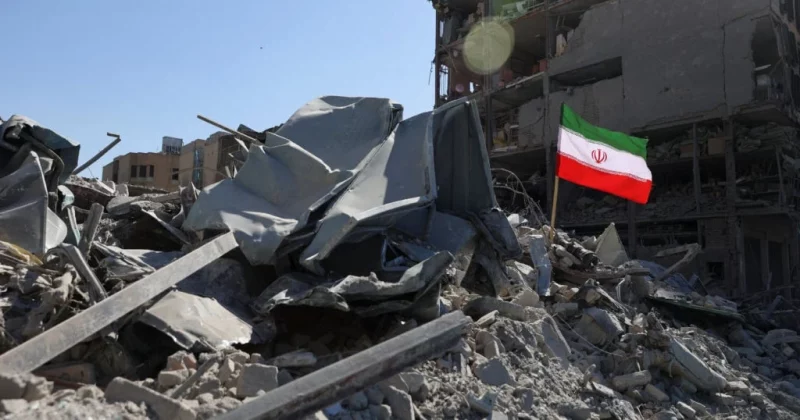
Iran’s Islamic Revolutionary Guard Corps has claimed responsibility for launching drone and missile strikes against a US air base in Bahrain, calling the assault a direct response to prior American military operations. The attack marks a sharp escalation in a conflict that has been building for months, and crypto markets are already feeling the tremors.
Over $200 million in crypto positions were liquidated within a single 24-hour span during recent escalations between the US and Iran, with the overwhelming majority coming from long positions. Traders betting on continued upside got caught flat-footed by the kind of headline risk that no chart pattern can predict.
What happened and why it matters
The IRGC framed the strikes as retaliation for previous US military actions near Bandar Abbas, a strategically critical port city on Iran’s southern coast. Tensions have been ratcheting up since the US conducted operations targeting Iranian nuclear sites, which prompted Iranian missile attacks on Al-Udeid Air Base in Qatar back in June.
For anyone tracking the conflict’s trajectory, the Bahrain strike represents a geographic expansion of the hostilities. Al-Udeid in Qatar was the previous target. Now Bahrain, home to the US Navy’s Fifth Fleet, is in the crosshairs. The IRGC has communicated that it is prepared to deliver “more decisive” responses if the US continues its military engagements in the region.
Crypto’s geopolitical sensitivity on full display
During the height of recent escalations, Bitcoin fell to approximately $63,000 before rebounding to a range of $67,000 to $72,000 as de-escalation signals emerged.
Ethereum has experienced price swings exceeding 6% in single trading sessions, with sentiment shifting in near-real-time alongside breaking news from the conflict zone.
The $200 million liquidation figure reveals just how much leverage exists in the system and how quickly it can unwind when geopolitical events introduce uncertainty. Most of those liquidations came from long positions, meaning the dominant trade going into the escalation was bullish.
What this means for investors
The IRGC’s warning about “more decisive” future responses is the kind of language that keeps risk managers up at night. The correlation between Middle East military developments and crypto volatility has become strong enough that it deserves a permanent spot on any trader’s watchlist.
The $200 million in liquidations during a single day suggests that many market participants are still operating with position sizes and leverage ratios that assume relatively stable conditions. In an environment where a single IRGC press release can move Bitcoin by thousands of dollars, that assumption is increasingly dangerous.
Bitcoin’s recovery from around $63,000 back toward $72,000 during de-escalation periods suggests that the fundamental demand picture hasn’t been destroyed by the conflict. Investors would be wise to monitor not just the price action in crypto, but how it compares to gold’s performance during each new escalation cycle, because that ratio tells you everything about how the market is categorizing digital assets in a world where real missiles are being fired.
Disclosure: This article was edited by Editorial Team. For more information on how we create and review content, see our Editorial Policy.





 English (US) ·