
 4 months ago
100
4 months ago
100
- Japan officially approved a legal framework for foreign-issued stablecoins like USDC
- New rules impose strict reserve protections and a ¥1 million transaction cap
- The country spent years building one of the world’s most detailed stablecoin regulatory systems
Japan is officially opening its financial system to foreign stablecoins, but only after building one of the strictest and most structured regulatory frameworks anywhere in crypto. Beginning in June 2026, amendments to Japan’s Payment Services Act will fully recognize foreign-issued stablecoins under a legal category called “Electronic Payment Instruments.”
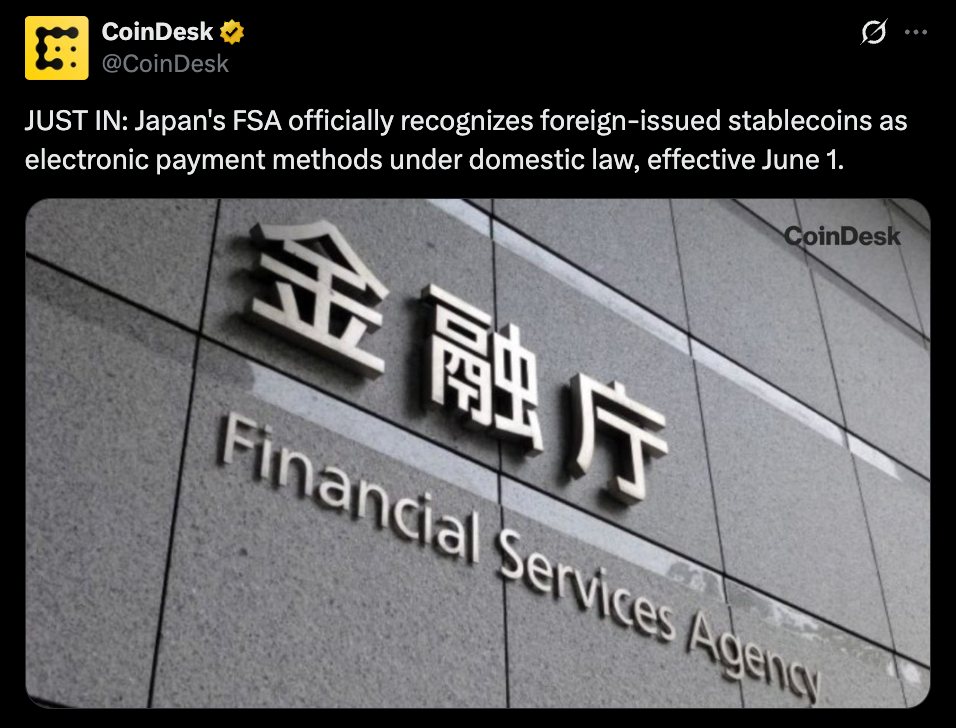
The move allows assets like USDC to operate legally inside Japan through licensed intermediaries, giving the country one of the clearest stablecoin regulatory environments globally while many other governments are still debating basic definitions and oversight models.
Foreign Stablecoins Can Enter — Carefully
Under the updated framework, foreign-issued stablecoins such as USDC are classified as “Foreign Electronic Payment Instruments” and can only operate through registered local service providers that maintain formal agreements with issuers.
That structure is already being used through partnerships like SBI VC Trade’s collaboration with Circle to support USDC availability inside Japan.
However, Japan is not allowing unrestricted usage. The rules include a ¥1 million transaction cap per transfer alongside strict reserve, custody, and operational requirements designed to reduce systemic risk and protect consumers.
Japan Built the Compliance Rules First
The framework goes far beyond simply approving stablecoins. Licensed firms must hold at least 95% of customer crypto assets in cold storage, segregate customer funds within trust structures, and comply with FATF Travel Rule requirements tied to international anti-money laundering standards.
Companies are also required to establish contractual liability-sharing agreements covering scenarios like hacks, technical failures, or issuer insolvency. In practice, that means exchanges and payment providers operating stablecoins in Japan face far heavier compliance obligations than in many other markets today.

Japan Is Taking a Different Crypto Approach
While several countries moved quickly during crypto’s growth cycles and later struggled with collapses, scandals, or unstable oversight systems, Japan spent years gradually designing a framework before allowing large-scale stablecoin participation.
Ironically, the same regulatory caution that slowed stablecoin adoption in Japan for years is now becoming one of the country’s biggest advantages. The system was designed specifically to make failures like unstable reserves, hidden insolvencies, or reckless issuance far more difficult to repeat inside the Japanese market.
Stablecoins Are Becoming Global Financial Infrastructure
Japan’s move reflects a larger shift happening globally as stablecoins increasingly evolve beyond crypto trading tools into broader payment and settlement infrastructure. Governments and regulators are now competing to define how digital dollar systems will operate inside traditional financial systems over the next decade.
For now, Japan appears determined to allow stablecoin innovation without sacrificing strict financial safeguards, creating one of the most deliberate regulatory experiments currently unfolding in global crypto markets.
Disclaimer: BlockNews provides independent reporting on crypto, blockchain, and digital finance. All content is for informational purposes only and does not constitute financial advice. Readers should do their own research before making investment decisions. Some articles may use AI tools to assist in drafting, but every piece is reviewed and edited by our editorial team of experienced crypto writers and analysts before publication.








 English (US) ·