
 6 months ago
79
6 months ago
79
- Jim Cramer says markets have become deeply oversold amid recession fears
- Extreme pessimism historically appears near major market bottoms
- Contrarian investors see panic sentiment as a potential bullish signal
Market sentiment has turned sharply negative in recent weeks as investors wrestle with slowing economic growth, persistent inflation, and rising geopolitical tensions. Recession fears are now circulating widely across financial markets, with some analysts even drawing comparisons to the economic environment that preceded the 2008 financial crisis.
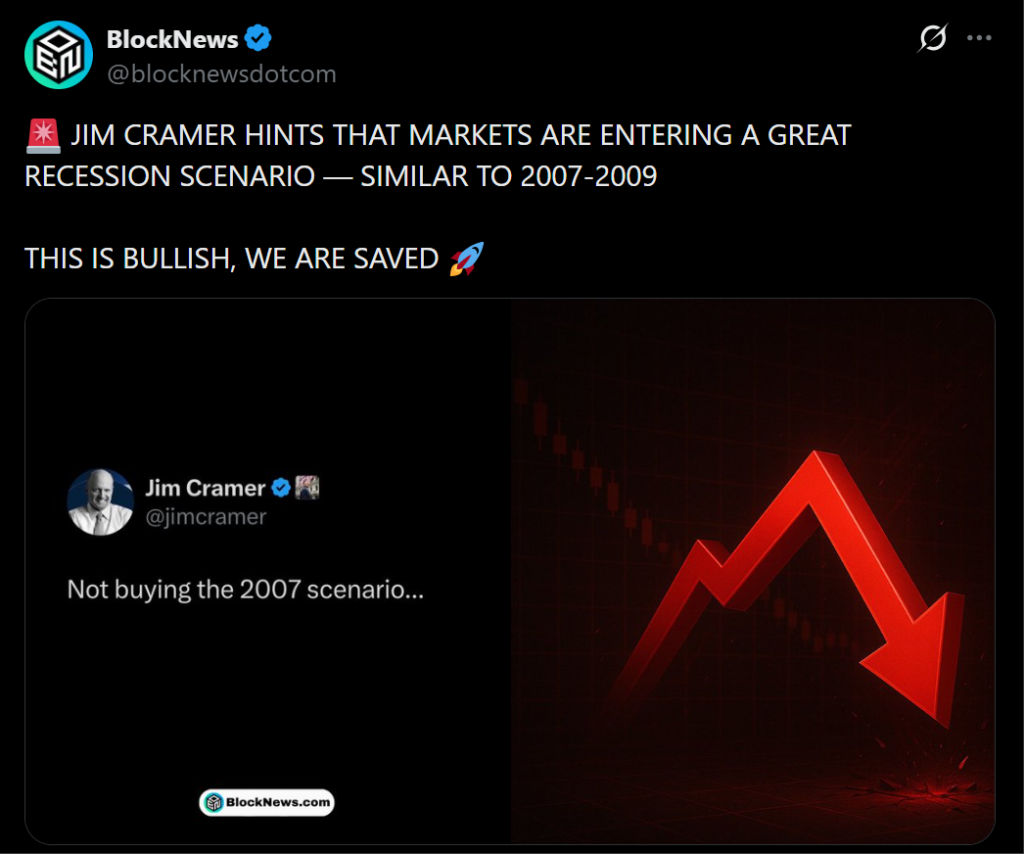
Amid that growing anxiety, CNBC host Jim Cramer has suggested that markets may have become significantly oversold. When assets fall too far and too quickly relative to their fundamentals, it often signals that panic-driven selling may be exhausting itself. In those moments, prices can slip below levels justified by long-term earnings or economic expectations.
Oversold Markets Often Appear During Panic
Oversold conditions typically emerge when investors rush to exit positions at the same time. Fear spreads quickly, selling accelerates, and prices fall sharply across multiple sectors.
While that kind of environment feels uncomfortable in real time, historically it has often appeared near important market turning points. Periods of extreme pessimism can mark the moment when sellers begin to run out of momentum.
For long-term investors, those phases sometimes represent opportunities rather than warnings.
Cramer Sees Opportunity Despite Recession Talk
Despite the growing recession narrative, Cramer has argued that moments of heavy pessimism can create attractive entry points for investors willing to take a contrarian view.
The strategy reflects a well-known market principle: buy when others are fearful and sell when euphoria dominates headlines. Some of the strongest rallies in financial markets have historically begun during periods when sentiment looked the most bleak.
The recovery that followed the 2008 financial crisis is one of the most frequently cited examples. After widespread panic pushed valuations to extreme lows, markets eventually rebounded into one of the longest bull runs in history.
The “Inverse Cramer” Effect Still Draws Attention
Cramer’s market commentary often attracts attention for another reason as well. Over the years, traders have jokingly created an “Inverse Cramer” strategy that suggests doing the opposite of his public calls.

The idea became popular after several high-profile predictions were criticized, including bullish remarks about banks shortly before the 2023 regional banking turmoil. Because of this reputation, his market opinions frequently spark debate and online discussion.
As a result, even when Cramer presents a bullish argument, some traders interpret it as a potential warning signal.
Extreme Sentiment Often Marks Turning Points
Regardless of how investors interpret Cramer’s comments, his latest remarks highlight just how negative market sentiment has become. When recession comparisons dominate headlines and markets appear deeply oversold, fear tends to reach its peak.
For contrarian investors, that kind of environment can sometimes signal that a new rally is quietly beginning beneath the surface. Markets rarely move in straight lines, and periods of intense pessimism have historically preceded some of the strongest recoveries.
Whether this moment becomes another turning point remains to be seen, but the level of fear currently circulating through markets suggests investors are watching closely.
Disclaimer: BlockNews provides independent reporting on crypto, blockchain, and digital finance. All content is for informational purposes only and does not constitute financial advice. Readers should do their own research before making investment decisions. Some articles may use AI tools to assist in drafting, but every piece is reviewed and edited by our editorial team of experienced crypto writers and analysts before publication.







 English (US) ·