
 1 hour ago
13
1 hour ago
13
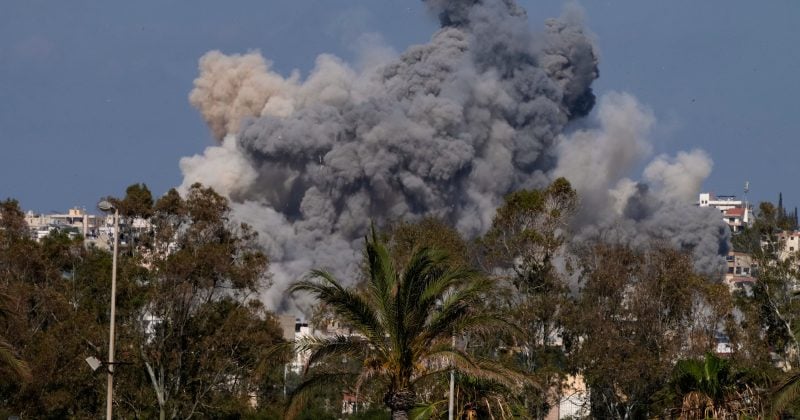
Air raid sirens blared across Jordan after missiles launched from Iran were detected in Jordanian airspace, according to the country’s state news agency. A government spokesperson confirmed that Jordanian armed forces had moved to high alert, prepared to counter any threat to the kingdom’s security.
A pattern of escalation
On February 28, Jordanian forces successfully intercepted 49 aerial threats, including 13 ballistic missiles. That single engagement underscored both the scale of Iran’s provocations and the sophistication of Jordan’s defense infrastructure, which has been operating with support from US forces stationed in the region.
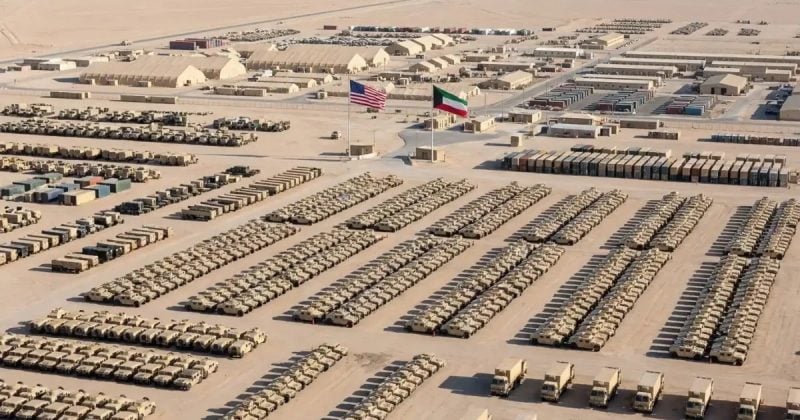
More recently, five missiles were intercepted targeting the Al-Azraq area, with some reports citing up to 20 missiles in a single attack wave. The Al-Azraq facility, formally known as Muwaffaq Salti Air Base, is a US military installation. Iran has explicitly named it as a target, which transforms what might otherwise be a bilateral dispute into something with far broader geopolitical implications.
Iran’s crypto connection and sanctions evasion
Iran’s cryptocurrency ecosystem reportedly saw over $7.78 billion in activity in 2025, a figure that reflects Tehran’s growing reliance on crypto as a tool for evading international sanctions.
The Office of Foreign Assets Control (OFAC) and its international equivalents have been playing whack-a-mole with Iranian crypto wallets for years. Each new escalation renews pressure on exchanges to tighten their know-your-customer processes and increases the risk of sanctioned funds contaminating liquidity pools.
What this means for crypto investors
Traders should watch for trading volume spikes in Bitcoin and major stablecoins like USDT and USDC during and immediately after confirmed military incidents. Historical patterns suggest these spikes are sharpest in the first 24 to 48 hours after a geopolitical shock, before markets digest the implications and settle into a new range.
Keep an eye on the stablecoin premium in Middle Eastern and Central Asian markets. When regional instability increases, demand for dollar-denominated digital assets tends to rise in affected geographies, creating temporary price dislocations that arbitrageurs quickly exploit but that signal genuine capital flight.
If this escalation triggers a new round of crypto-specific sanctions enforcement, the compliance burden on major exchanges increases. That could temporarily reduce liquidity or force delistings of tokens associated with sanctioned jurisdictions.
Disclosure: This article was edited by Editorial Team. For more information on how we create and review content, see our Editorial Policy.





 English (US) ·