
 1 hour ago
15
1 hour ago
15
Chinese AI startup Moonshot AI is in the market for more Nvidia Blackwell-generation chips, and the reason is straightforward: it wants to train Kimi K4, the follow-up to a model that is already one of the largest open-weight systems ever released.
What Kimi K3 already is, and why K4 is a bigger ask
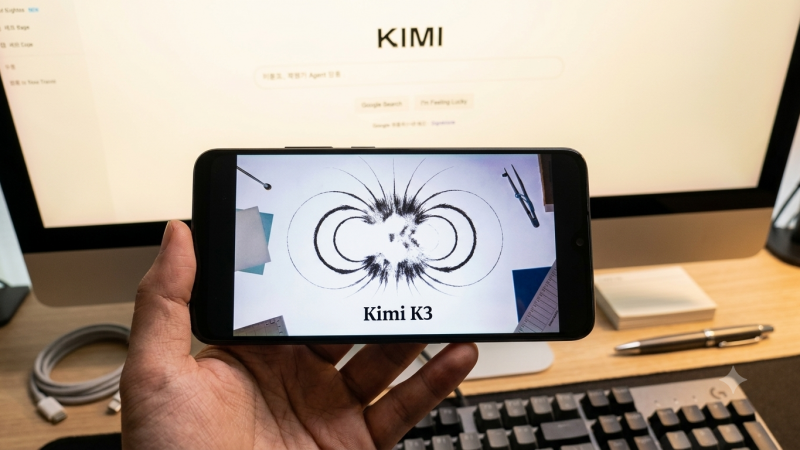
Moonshot released Kimi K3 on July 22, 2026. The model carries 2.8 trillion parameters and a 1-million-token context window, putting it in a category with very few peers globally.
Kimi K3 was built using Nvidia Blackwell chips, which is itself notable given that the United States has imposed strict export restrictions limiting China’s access to advanced semiconductors.
On July 23, 2026, Michael Kratsios, director of the White House Office of Science and Technology Policy, publicly accused Moonshot AI of accessing compute resources through servers located in Thailand. The allegation is that this arrangement was used to distill and replicate U.S. models, including Anthropic’s Fable, effectively circumventing export controls through geographic workarounds.
Moonshot has not publicly confirmed or denied the specifics of the accusation.
The Blackwell chip question is bigger than one startup
Kimi K4 is expected to be meaningfully larger than K3, which means the compute requirement does not scale linearly.
Nvidia CEO Jensen Huang argued that models like Kimi K3 will not reduce demand for AI compute. His view is that more capable models drive broader adoption, which expands inference workloads, which ultimately means more chips sold, not fewer.
Moonshot has also committed to releasing the full weights of Kimi K3 publicly by July 27, 2026. Community partners listed for the Kimi K3 release include vLLM, Nvidia, and AMD.
The accusation from Kratsios about Thailand-based server access is worth watching closely. If U.S. officials move from public criticism to formal enforcement action, the companies providing that intermediary compute infrastructure face significant legal exposure across cloud providers and data center operators in Southeast Asia.
Disclosure: This article was edited by Editorial Team. For more information on how we create and review content, see our Editorial Policy.





 English (US) ·