
 1 hour ago
16
1 hour ago
16
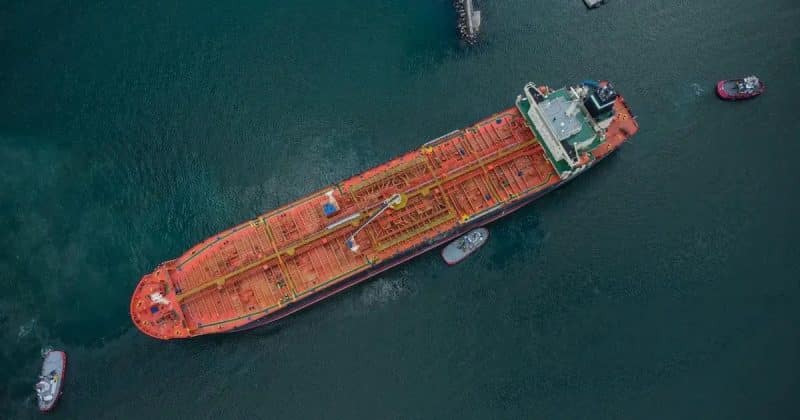
Morgan Stanley has slashed its oil-price forecasts for the coming quarters, citing an anticipated flood of regional supply as US-Iran negotiations approach what officials are calling their “final stages.” The catalyst: a framework deal expected to reopen the Strait of Hormuz, the narrow waterway that handles roughly 20% of the world’s daily oil traffic.
The bank now projects Brent crude averaging $110 per barrel for Q2 2026, with prices settling into the $90 to $100 range for the back half of the year. Longer-term pressures suggest stabilization closer to $80 to $90 per barrel, a meaningful downshift from previous expectations that had baked in sustained conflict-related supply disruptions.
What’s driving the revision
By mid-to-late May 2026, US-Iran talks had progressed far enough that President Trump declared the Strait of Hormuz would be “completely open” imminently. Oil prices posted their largest one-month drop around May 20, 2026, as tankers resumed their journeys through the strait before a formal agreement was even signed.
The crypto angle Iran built into the deal
During earlier ceasefire periods, reportedly around March to April 2026, Iran began collecting transit tolls on vessels passing through the strait. The toll itself was modest, approximately $1 per barrel, but the payment mechanism was notable: cryptocurrency or yuan.
Crypto market analysts have noted that Bitcoin prices have already begun reflecting the decrease in oil-market tensions as negotiations progressed.
What this means for investors
Morgan Stanley’s forecast of $80 to $90 Brent in the medium term assumes the ceasefire holds and the strait remains open. For energy-sector investors, the downward revision in oil-price forecasts means margin compression for producers who were banking on sustained triple-digit Brent. Exploration and production companies with high break-even costs could see earnings pressure if prices drift toward the lower end of that $80 to $90 range. On the flip side, energy-intensive industries, airlines, shipping, petrochemicals, stand to benefit from cheaper crude.
Disclosure: This article was edited by Editorial Team. For more information on how we create and review content, see our Editorial Policy.








 English (US) ·