
 1 hour ago
7
1 hour ago
7
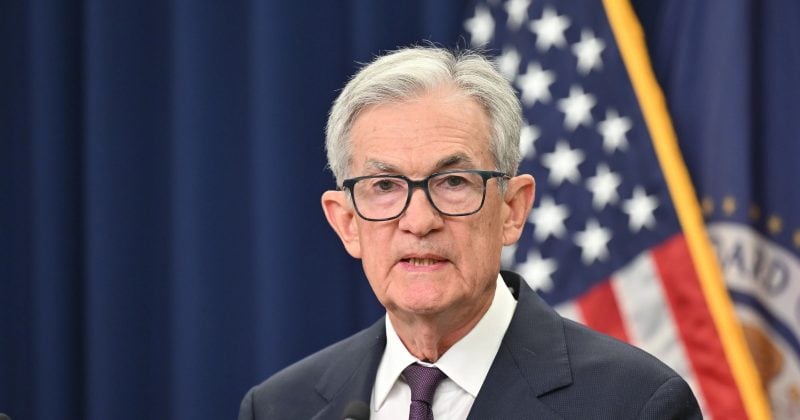
Kevin Warsh has been running the Federal Reserve for roughly two and a half months, and he’s already telegraphing a philosophical overhaul that hasn’t been seriously attempted in decades. The new Chair, who took over from Jerome Powell on May 15, wants to bring back monetarism. Not the full Milton Friedman playbook, but something close enough to make bond traders nervous and macro watchers very attentive.
Think of it like this: for the past couple of decades, the Fed has steered the economy primarily by adjusting interest rates and buying or selling bonds (quantitative easing and tightening). Warsh wants to add another instrument to the cockpit, one that most central bankers quietly shelved in the 1980s: tracking the money supply.
What Warsh is actually proposing
In his essay titled “Money Matters,” Warsh lays out the case for what he calls a “softer form of monetarism.” He’s not proposing that the Fed target a fixed growth rate for the money supply the way Friedman once advocated. Instead, he argues that monetary aggregates, essentially measures of how much money is circulating in the economy, should be treated as critical inputs for forecasting inflation.
Speaking at the ECB forum in Sintra, Portugal on July 1, Warsh described inflation as an “unfair burden,” language that signals he intends to be aggressive on price stability.
The FT Unhedged podcast, hosted by Robert Armstrong and Brendan Greeley, explored Warsh’s monetarist leanings in a recent episode that aired July 29. Their analysis highlights a genuine tension: monetarism fell out of favor for good reasons, primarily because the relationship between money supply and inflation became unreliable as financial innovation made it harder to even define what “money” is. Related analysis from Hudson Bay Capital underscores this point, noting the challenges with money velocity in today’s economy.
Warsh’s “softer” version acknowledges that M2 or other aggregates aren’t perfect predictors. But he argues that completely ignoring them, as the Powell-era Fed largely did, left a blind spot that contributed to the post-pandemic inflation surge.
How Warsh got the gavel
Warsh’s path to the chairmanship was neither smooth nor guaranteed. President Trump nominated him on January 30, 2026, and the Senate confirmed him on May 13 with a narrow 54-45 vote.
He’s no stranger to the institution, having served as a Fed governor during the 2008 financial crisis. He’s called for a “regime change” at the Fed and inherits a balance sheet still north of $7 trillion, a number that even aggressive quantitative tightening under Powell couldn’t meaningfully shrink.
What this means for crypto and broader markets
Bitcoin and Ethereum have increasingly traded in correlation with macro liquidity conditions over the past several years. When the money supply expands, risk assets tend to rally. When it contracts, they tend to suffer. A Fed chair who explicitly monitors and responds to money supply growth is, by definition, a Fed chair whose policy decisions will have a tighter, more legible relationship with the metric that crypto’s macro-sensitive traders already watch obsessively.
Monetarism’s core premise is that inflation is always and everywhere a monetary phenomenon. If Warsh governs with that belief, he’s likely to be more hawkish about balance sheet expansion and more skeptical of future QE. That’s bearish for the “money printer go brrr” narrative that fueled Bitcoin’s rally in 2020 and 2021.
The last time the Fed seriously tried monetarism was under Paul Volcker in the early 1980s. It crushed inflation, but it also induced a severe recession and sent interest rates above 20%. Market analysts remain cautiously optimistic about the historical lessons monetarism offers, while recognizing the complexities of modern economic conditions.
Disclosure: This article was edited by Editorial Team. For more information on how we create and review content, see our Editorial Policy.


 English (US) ·